
Blog

Think Different: The Business Case for LGBT Diversity

images (15)Coming out at work has always been something of a sensitive subject. But as you probably know, last week this often overlooked issue moved into the headlines and, at last, into our collective consciousness.

The cover story in question, of course, is Tim Cook, CEO of Apple, came out to the world in a BusinessWeek article with the apropos title, “I’m Proud to Be Gay.” Which is a pretty powerful statement, considering the source.

If you’re not gay, or happen to live in a progressive city, or even have liberal leanings, you’re unlikely to have thought that Cook’s big announcement was really big news to begin with.  Most of you probably just saw the story appear in your news feed or as a trending topic and thought something along the lines of:

“Good for him. Being gay is pretty normal, and living life out of the closet seems like it’s getting pretty easy.”  

Which, in some ways, is an encouraging sign of how far our society – and mindsets – have come in what amounts to the most important unresolved Civil Rights issue of our era.

But even in left-leaning bastions like the Bay Area or Boston, the world of business has unfortunately lagged behind mainstream society.  Lost in the headlines and noise surrounding Cook’s announcement is a surprising, sad fact: Tim Cook is the only openly gay CEO in the Fortune 500. 

This means, until just last week, there were a grand total of zero.  Which gives you a sense not only of the true magnitude (and fortitude) Cook exhibited in coming out, but also how far we’ve still got to go in the fight for equality.  The Fortune 500 not only represents a list of the world’s most profitable companies, but also, the most influential, setting something of the standard for success as a business benchmark.

Come on. Out of those companies’ 500 CEOs, there’s only 1 gay guy in the bunch? That just doesn’t seem right to me.

Then I realize that, as much progress as we’ve made, the workplace is still one of the final frontiers; the office remains one of the only places where it’s still not 100% safe for gay people to come out. I can’t help but assume, statistically speaking, that list of Fortune 500 CEOs includes at least a few other smart, savvy senior leaders who happen to be gay, but for now, they’re staying silent about their sexuality.

That must be one crowded closet in the C-Suite at many major multinationals.

Out at Work: Shattering the Other Glass Ceiling

gay-tomIt’s difficult for me to believe that anyone who’s able to rise to the top of the cut-throat, competitive world of corporate America – from graduating from blue chip business schools to building billions of dollars in assets all around the world – can remain trapped by the lingering misperceptions and societal conditioning that have created a concept of what a “gay person” should be, what a gay person “can’t do.”

It’s a lengthy list – and it’s all BS, as Tim Cook’s announcement pretty much definitively proves. I sincerely hope that having Tim Cook playing for the gay team means that a few more minds are changed about issues involving equality, particularly the fact that gay people are equally qualified to achieve the same success as straight ones.

Of course, you can’t totally eradicate ignorance, bigotry or homophobia – those biases are likely to remain entrenched at many employers – and many of their employees, too.  These managers and coworkers who explicitly or implicitly treat homosexuality as a barrier for success continue to reinforce the myth that gay people can’t have the same level of success every day by forgetting that this is a personal, not professional, issue in the first place.

Yet, the crap continues – and has become an emerging topic in thoughtless “thought leadership.”

Out at Work: The Business Case for LGBT Diversity

A new report from Outworking set for release this Thursday, The Business Case for LGBT Diversity, actually measures the financial impact of inclusion and diversity initiatives specific to sexual orientation.  It also amalgamates that quantifiable data with qualitative stories, collecting perspectives on what employees are actually offended by at the office.

Talk about offensive; this report is downright disgusting.  First, we’re measuring how much money homosexual workers are worth to our company, ascribing a dollar value to a protected class – which, if you think about it, likely would not play well were this exercise cross-applied to, say, African-American workers. Furthermore, the things that the study finds that employees think it’s OK to say to a gay person are mind-blowing.  Saying I’m shocked, even as an out of the closet lesbian, at some of these gems is something of an understatement, to say the least.

So, if you ever feel like saying any of these things is acceptable at work, remember – you’re also saying them about the CEO of the world’s most profitable company and most recognizable brand.  But since ignorance is apparently endemic, here’s a handy guide for homophobes – please feel free to consult this next time you feel the uncontrollable urge to talk to a honosexual coworker about something you shouldn’t be bringing up in the first place.

Shit You Should Never Say To Tim Cook (Or Any Gay Person at the Office, Ever)

Screen Shot 2014-10-31 at 4.39.16 PMThe recap of the report published by the Huffington Post in advance of its release this week included just a few of the hundreds of comments written, verbatim, from the US respondents surveyed for the LGBT2020 research.

These comments, from real people using the words they really use to describe what’s pissing them off right now in their workplaces, reads like Mein Kampf fan fiction, frankly.

It’s shocking, disturbing and, sadly, all real shit people say every day.

To all you liberal urban elites (or just well informed, open minded, progressive people) out there, prepare to have your minds blown:

“I can’t add your wife to your health insurance because your marriage isn’t ‘real'”

“It’s just a decision, I don’t support the choice to be unnatural. Just be straight like the rest of us”

“You are not angry enough to be a real lesbian: you’re not like the other girl who works here”

“Now you and that other f*g can add your boyfriends to the work medical plans, that way when you get AIDS you will all be covered”

“I don’t like those kind of people with ‘scary’ sexual preferences”

“Please, I don’t want to hear the details of your lifestyle”

Yeah…so, those are real.  I’m not quite sure what to say – and if you know me, you know that it’s not often I’m almost speechless about anything. Of course, if you’ve been watching or following the news, you’d think the tides of legal and public opinion had changed, particularly when it comes to marriage equality.

The good news is that gay marriage is legal in more states than ever before, and more Americans are in favor of gay marriage than oppose it. In fact, even my grandmother has come around, and her ultimate acceptance of this issue is something of a microcosm of our larger societal attitudes surrounding gay marriage. But as much progress as we’ve made, the gay marriage headlines hide the fact that when it comes to work, things have not gotten better for LGBT employees.

Out at the Office: The Struggle for LGBT Employees Continues

0620_lgbt_workplace_970-630x420Sure, gay marriage is a great start, but that sadly hasn’t translated to creating a more welcoming, accepting and safer workplace for LGBT employees.

In fact, in the two years since Out Now released their last study, this most recent report finds that the percentage of LGBT employees in the U.S. who feel they could come out at work has actually declined.

Think about that for a moment. Two years ago, gay marriage remained a hot button, highly contentious issue and something of a lightning rod of a litmus test for LGBT equality, legal in only a handful of states.

Two years ago, there was not a single professional athlete out of the closet, and the federal government didn’t yet recognize LGBT Americans as a separate, protected class – even then, more people felt safe coming out at work than they do today.

The reason behind this seeming paradox between personal and professional progress is probably the fact that people still say stupid shit like the comments listed above, creating an environment of intimidation and harassment for LGBT employees. While we’ve become more comfortable talking about sexuality in the open, that conversation at work, sadly, seems stuck in the status quo.

Now, it’s important to understand these situations aren’t one-off anomalies or isolated anecdotes.  In fact, the OutNow survey showed that one in six LGBT employees reported being harassed at work. Do you realize how many professionals that staggering statistic suggests were personally affected by on-the-job harassment?

If you’re like me, and you suck at math, consider the fact that according to the Huffington Post, there are 10 million LGBT employees currently working in full-time jobs in the United States.  That means a total of 2.5 million Americans were harassed for being gay at work in the past year alone.  Think about that. 2.5 million of your colleagues, clients and coworkers were adversely affected professionally because of a personal choice – in one year.  Translating that to HR terms, that’s one annual performance review that fails to meet expectations – and spectacularly so.

These findings, frankly, piss me off.  And hopefully, they piss you off, too.  But here’s the thing: I don’t have some big answer or quick fix for solving this pressing problem.  There’s no immediate cure, and change isn’t going to happen overnight.

But this is one issue that, whenever I bring it up, seems to be answered with some broad statement of hope that change will happen, someday. Just not today.

But here’s hoping that Tim Cook’s announcement makes a difference in the findings of this report next year, and at least does a little bit to expedite that day when ‘some day’ finally arrives. Because it’s about time that we all “think different” about LGBT employees in the workplace.

Global Recruiting: Getting Ahead When Hiring Abroad

No matter where in the world of work you work, structuring a global recruiting and selection process is anything but easy. In fact, putting the required policies and processes in place required for global recruiting can be an administrative headache.

That’s because when attracting talent overseas, global employers must navigate the often complicated compliance requirements, dramatically disparate cultural or business norms and a litany of other issues that make attracting and selecting top talent across markets a daunting task for even the most experienced recruiting organization.

Here are some global recruiting considerations every employer needs to think about before hiring job candidates abroad:

interconnected-worldRecruitment Marketing: Each country has its own laws governing advertising and marketing, and these regulatory requirements extend to traditional recruitment marketing as well as online advertising.  When attracting overseas talent, a global employer must ensure its advertising methods comply with all local and national laws pertaining to issues such as required disclosures, intellectual property rights and user privacy protections.

In addition to complying with these regulations, employers must also ensure that any recruitment marketing or advertising campaigns or content, including something as simple as posting a job to a local job board, remains non-discriminatory and abides by any country-specific employment-related quota requirements, which are common in many multinational markets.  They must also determine the language requirements for the job postings and ensure that, before posting, nothing is lost in translation.

Job Applications: Similarly, global employers need to ensure any written job applications, whether online or on paper, fully comply with local laws, which can vary significantly from jurisdiction to jurisdiction.  That means making sure which, if any, questions are mandatory or prohibited, such as questions that seek information regarding a candidate’s protected class or characteristics.

That’s why it might not always be feasible for multinational employers to create a standardized, one-size-fits-all application to use across markets; most organizations will find it easier to create applications specific to every country in which it’s recruiting and employing staff (the same rule of thumb goes for really any HR related documentation).

Additionally, not only do employers need to determine whether or not the job application is legally compliant, but also whether or not multiple languages are required before drafting this basic documentation for use in global recruiting. If applications are completed in additional languages, or the main stakeholders in the recruiting organization aren’t fluent in the same language as the applicants they’re looking to hire, it might be necessary to hire an interpreter to assist with the application process.

compCompensation: Another significant challenge facing global employers is determining how to structure salary for a position that exists in multiple countries.

Employers will need to ensure that the total compensation package is competitive with the local market, is robust enough to actually attract prospective candidates in each country where the position is posted.

They’ll also want to make sure beyond looking simply at salary that the benefits and perks associated with the position are consistent with the business culture and candidate expectations for each respective market. To that end, an employer may need to level set by building a baseline for compensation across its multiple markets.

Companies may want to consider beginning with a benchmarking exercise in each country, factoring in things like labor market demand, specific salary ranges by position or function, cost of living, foreign currency exchange rates and similar considerations required to determine whether or not any compensation and benefits package offered remains in line with local employers competing for the same pool of talent.

If the compensation is below average or misaligned with market expectations, employers will find attracting the most qualified candidates for any position extremely difficult.  And global recruiting is hard enough already.


global workInterviewing: 
Global employers also need to carefully consider how to structure the interview process, particularly when it involves scheduling across time zones or making travel or reimbursement arrangements for candidates requiring in-person interviews or on-site meetings as part of the hiring process.

It’s also important to understand any customs or interviewing practices in any particular country, which can vary greatly, as well as any language requirements involved in the interviewing process, which might require the involvement of an interpreter or intermediary.

If an employer and candidate are not physically located in the same location, it might be a good idea for employers to consider leveraging a technology like video interviewing or VOIP conferencing to reduce the associated travel expenses involved in multinational hiring.

With today’s technological capabilities, these options are far more cost effective and efficient for a majority of candidates, allowing companies to reserve interview-related travel for senior level candidates or those being considered only for the most-business critical roles. Alternatively, companies can save costs by having a key stakeholder travel on site and subsequently strategically scheduling important interviews to coincide with this senior leader’s stay.

Whatever method an employer chooses to cut down on the costs associated with global recruiting, it’s essential for employers to remember that when it comes to asking sensitive questions during the interview, such as marital status or religious affilion, could be a costly compliance mistake in any market.

Pre-Employment Screening

While commonplace in most hiring and onboarding processes, global recruiting requires a cautious approach to pre-employment screening.  Every country has a different set of rules and requirements with respect to medical or drug tests.

Before attempting to implement any such screening initiative, global employers must research the local labor laws and legal experts to understand which measures are permitted as well as any associated issues such as timing (e.g. whether or not a formal offer must be extended before initiating), what documentation or consent from the prospective worker is required, or what notifications the employer is obliged to provide during the screening process.

Similarly, background check laws vary widely in global markets, particularly when it comes to requiring candidates to disclose previous criminal convictions, which is illegal in many countries around the world.

Employers must remain fully cognizant of these restrictions as well as any related regulations governing background checks before initiating a request for this information.

Once an employee is onboarded, if relocation is required, than an employer’s onboarding process should include assigning an internal colleague or manager as a “buddy” or mentor to help them navigate safely into their new role and new life in a new country, in some cases.  This will not only help ensure that global recruiting ends with a candidate being smoothly assimilated into your company culture, but a better understanding of the culture of the customers, clients and connections they’ll need to make in their new market.

You can’t be a global business without a global perspective – or a scalable, sustainable global recruiting strategy.


Melissa-A-Silver_PictureAbout the Author: Melissa A. Silver is the legal editor for the employment offer, terms of employment, new hire paperwork, negligent hiring, onboarding and orientation, recordkeeping and minimizing liability content in the recruiting and hiring chapter of XpertHR.

Prior to joining XpertHR, Melissa practiced law for 10 years. During the last 8 years, Melissa engaged in private practice and focused on the defense of clients in cases involving harassment, discrimination and retaliation claims, as well as the enforcement of restrictive covenants.

Melissa has successfully litigated cases before the New Jersey Superior Court, US District Court, the EEOC and the New Jersey Division on Civil Rights.

Archively: Sourcing CRM Tool

 What is Archively ?

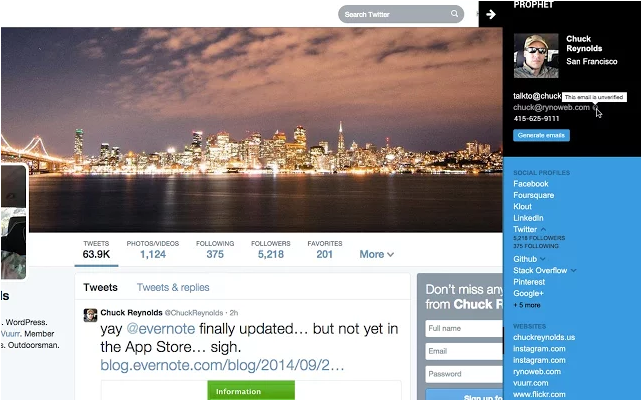
Archively is a beautifully designed bookmarklet that allows you to track, grab, and build information profiles on leads that you are sourcing. It’s built for recruiters but can be used by any lead tracking nympho online. This covers sales people, marketing professionals, recruiters, sourcers, even PI’s.

Are you using spreadsheets to maintain candidates? Are you unable to share candidate information with team members without having to email back and forth? Do you have ALL the information on that person you really want to hire?  Enter Archively.

Built for sourcers and recruiters, Archively captures the workflow and best practices of discovering people in a web based world.

Note: Archively offers 2 versions at this time. The Free forever version and of course they offer paid subscription models.

How Archively Works

Archively  is a bookmarklet that sits on your browser allowing you to grab the profile information from any page, within any site anywhere online.  I love this tool because it’s fast and easy to create a file on someone you see from any site your are browsing.

What makes this bookmarklet so intriguing is that you can grab this information from any site, and not just social networks. For example you can aggregate information from sources like LinkedIn, Github, Corporate sites, Videos, News articles, White papers the person has written as well as anywhere else you can think of with a URL.

[youtube url=”https://www.youtube.com/watch?v=68mdyiiAvnQ” width=”500″ height=”300″]

The details in 3 easy to understand steps:

  1. Archively  has the ability to recognize people and the context by which the content is related to the person on the page you are archiving.
  2. Archively grabs the persons information that is available creating a CRM style record linked (archived) to the the source of information where the lead was first identified. This information is easily edited in your notes section for additional tracking.
  3. If available, Archively  will append the records data with social profile information such as the persons LinkedIn, Facebook and Twitter profiles.

Archively has an organization system called Collections which can be completely customized.  This is ideal for recruiters who like to group people into multiple categories like skills, education, location, project etc, which are view-able in an editable spreadsheet view.

Why Use Archively?

On boarding takes less than 5 minutes.  Really, it is that simple.

This is a tool that you can use on the fly while sourcing on the internet. No more copying hyperlink and then cutting and pasting to a spread sheet for later use. All you do is click and boom it is loaded to the profile. All the information about that person right at your finger tips, resume, profiles etc. All of your data is exportable in a format that can be uploaded to an ATS if necessary.

The more research you do, the higher quality engagement you are more likely to have, which translates into more hires.

Search firms have been saving their data and tracking people for decades.  The future of people data is online and Archively let’s you start building a lasting database for yourself and your organization with that in mind.

Archively was built by a former recruiter who cares about innovating while also preserving the best practices of the industry. So check it out and sign up, heck its free! Just hit the link below.

[button_link size=”medium” src=”https://www.archively.com/”]Try the free version of Archively here[/button_link]

Candidate Experience: Why High Touch Beats High Tech

2014-10-30_13-10-53If you think about the myriad steps required in full cycle recruiting, the fact that we’re so focused on that very small slice of stuff that happens before a candidate even actually applies underscores how much of the talent acquisition conversation seems misplaced.

In fact, until a candidate is actually captured in an ATS (or proprietary database), it’s not recruiting – it’s marketing.

And whatever trending topic we’re talking about in talent today generally falls outside of the core recruiting process, not to mention core competencies.

That’s because for some reason, looking at what’s next has overtaken looking at what really works in recruiting.

The thing is, in the world of HR technology, products are developed not to meet a demand, but to create it. This has resulted in an endemic of employers with the recruiting equivalent of FOMO. Not to mention the somewhat misinformed belief that technology is the key enabler of keeping up with the Joneses in the ubiquitous “war for talent.”

The Cloud’s The Limit: Much Ado About Nothing

2014-10-29_17-50-35From social platforms to big data solutions to video interviewing, there’s a whole layer of solutions solving problems that didn’t exist prior to their relatively recent category creation.

That’s why what really matters isn’t what happens before the point of apply; it’s during (obviously) and most importantly, after the application that really matter.

You just wouldn’t know it looking at the recruitment technology landscape today.

The rise of SaaS has lowered the barriers to entry and increased the already cutthroat competition for the billions spend every year on recruiting technologies. This has led to a proliferation of VC-backed vendors more focused on developing sleek UX and UI than developing software that meets the daily needs of actual end users.

It’s also led many enterprise employers to develop something of an unhealthy fixation on technology, entirely forsaking the fundamentals of recruiting in the process of getting swept up by shiny object syndrome.

Because in the new world of recruiting, old school skills still make the biggest difference– and it really all comes down to communication. You can’t hire if you can’t get through to the talent you’re targeting. That’s why, in a time where recruitment automation is becoming increasingly prevalent, moving more or less from the HR technology margins to the mainstream, when it comes to separating a new hire from a missed opportunity, personalization still matters most.

Like a lot of things these days, we’ve got the data to prove it – and the story behind the statistics is pretty revealing when it comes to recruiting.

Back To the Candidate Experience Basics: Looking for Luddites

According to the most recent research from CareerBuilder, respondents resoundingly reinforced the fact that for candidates, a positive experience is inexorably intertwined with a personalized experience. In their brand spanking new study, “How The Candidate Experience Is Transforming HR Technology,” hundreds of job seekers were surveyed about what attributes they ascribe to having a positive experience with an employer.

Turns out, technology has nothing to do with the candidate experience problem – one that it purports to solve, but likely only exacerbates. It turns out, the best way to destroy the “black hole” is by closing the loop:

  • 61% of job seekers reported “employers responded quickly throughout the process, tied as the top overall attribute of a positive candidate experience with “I am being notified if I am not the correct fit for the position.”
  •  58%, meanwhile, place a premium on “I am updated where I am in the hiring process” as defining a positive experience with a potential employer. In sum, these suggest that the maxim “no news is good news” is old news in recruiting and hiring.

Moreover, even bad news leads to a good candidate experiences – and potentially powerful brand advocates. Remember: in the world of online marketing, word of mouth matters the most. No software could ever automate the positive sentiment and organic goodwill generated by simply saying “thanks, but no thanks.”

What a "good" experience means to an applicant (via CareerBuilder)
What a “good” experience means to an applicant (via CareerBuilder)

Personalize It: 3 Things Recruiters Can Do Right Now To Improve Candidate Experience

The good news is, recruiters can be on point even without the myriad of emerging point solutions proliferating on the market – because the cool thing about pretty much every recruiting technology out there, no matter how outdated or obsolete, is capable of immediately improving the candidate experience.

Here are three quick fixes almost any recruiter can do today to make an impact:

MjAxMi04MzFkYWI3MTc0NDhlOTA11. Rejection Letters: 9 out of 10 job seekers in the CareerBuilder study report that they expect an automated confirmation when they apply for a job, a capability that’s pretty mundane and mainstream even by HR system standards. The thing is, the same feature that triggers a notification e-mail as soon as an applicant enters a system can easily be configured so that same candidate is notified immediately when they’re no longer under consideration in your ATS.

Why companies don’t build this easy fix into their process is mind boggling, but being proactive about creating a template to let applicants know when they’re no longer being considered is a no brainer. So too is setting up this feature; in most on premise and legacy systems, sending a mass notification is as easy as checking a box next to a candidate record while dispositioning incoming applicants.

That’s a pretty quick fix for the nearly 6 out of 10 job seekers who say that this simple act of just letting them know would translate into a good candidate experience. And no one has to know it was easy to automate. Of course, automation without personalization is pretty pointless. That’s why you’re better served having personal interactions with qualified candidates – from adding a personal message to an e-mail to actually picking up the phone – than you are spending your time figuring out how to more effectively message en masse.

Remember, recruiting isn’t about consistently generating new leads – it’s about segmenting and nurturing qualified ones. No machine on earth can ever replace a relationship, nor can you ever automate an authentic individualized interaction. That’s where recruiters come in, after all.

turnt2. Make Career Sites About Careers, Not Culture: Only a third of respondents in the CareerBuilder study say being able to easily find information about what it’s like to work at a company important defines a “good” experience. By contrast, nearly half of job seekers surveyed (48%) say that easily being able to search for open jobs on a career site is important to improving their experience – meaning most a higher premium on careers than culture.

That’s likely because the critical question candidates want answered is a simple one: what’s in it for them? For most, “a good job” is a good enough answer – so it’s incumbent on employers to make it as easy as possible for users to see these active listings. No one really cares all that much about culture fit if there’s no job fit there in the first place.

The purpose of a careers site, simply stated, for a sweeping majority of visitors is a simple one: to see what jobs you currently have open. The primary design element and UX/UI consideration of any career site, therefore, should be on search – look no further than Google or Indeed to get an idea of what consumers (and candidates) expect when searching online.

If search isn’t center on your careers site, and is lost in crappy copy about your culture, it’s time to take immediate action. You’ll lose enough candidates during your Byzantine application process as it is, so at least make it as painless as possible to get them there.

By the time they’ve decided to apply for a job, they don’t care about employer branding – they just want to get through the application process as easily as possible.

ae08d99ce5113a4e34779be0d901bf0c3a09e1f9145830dac3eb40a9b0a1c9553. Put Social Media To Work: The nice thing about social media is that while it’s not proven it’s a particularly effective source of hire or method of sourcing candidates, it’s still a public, scalable communications platform.

With CareerBuilder’s study suggesting that the key driver of candidate experience is simply keeping them informed through timely communications, social media provides an ideal outlet for instantly letting everyone know where you’re at in the process.

Most ATS or HRIS systems automatically create a requisition number each time a new position is open, a number that’s tied to each candidate record on the backend. That legacy of legacy systems, however, actually is the perfect way to keep applicants in the know about where you are in each phase of the hiring process.

One easy way to do this is to let candidates know that you’ll be posting each time you move to the next step in the process on Twitter (or Facebook) using the requisition number as a hash tag; similarly, you can use this strategy to keep your LinkedIn network looped in, too. Simply tell them the hashtag at the front end of the process, and post every time you move from one stage of the process to the other, in 140 characters or less. Many systems are actually able to automate this easy fix for candidate experience, but even the busiest recruiter should find the minimal time doing this manually requires.

These social media updates not only give real time insight into the process as well as closure to candidates who weren’t selected, but also put the onus on candidates to check on their status on platforms that don’t require credentials to log in. That’s all the engagement most job seekers really want on social.

The fact of the matter is, automation and personalization have to work together. But technology has to be an enabler, not a replacement, for personalized interactions and individualized experiences. Automated messages might help close the gap, but without personalized communication, they’re more or less worthless.

Because in recruiting, high tech will never be a substitute for high touch.

To learn more about how candidate experience is transforming HR Technology, click here for a full copy of CareerBuilder’s latest study, along with the insights, observations and action items talent pros need to know in order to put the human back in Human Resources.


HRTech-Ads728x90a_28229

Disclaimer: Recruiting Daily was compensated by CareerBuilder for this post. But their data and action items are actually pretty priceless, so in this case, the facts and opinions contained herein do, in fact, represent those of the publisher. Because we’re all about making candidate experience better, too.


Ello: Is There Anybody Out There?

Ello2Unless you live under a rock (or at least somewhere far from Silicon Valley or social media), you’ve probably been unlikely to escape all the coverage recently devoted to the launch of the new social platform and crusading startup, Ello, a new site that’s positioning itself as a simple, ad-free alternative to Facebook – the “anti-Facebook,” as it were.

Ello is heavily geared towards creative professionals (and maybe programmers); their founding members, in fact, are all artists, adding to the site’s Bohemian branding and Ello’s ethos.

And as for the name? Probably, when you’re not making money off of advertising, you need to make some sacrifices.  Like skimping on the ‘H,” for instance.  Keep those donations flowing in, people, the English language is counting on you.

Ello, to their credit, doesn’t seem to be embracing the absolutely opaque “transparency” and back-stabbing, data-robbing “authenticity” that form the business model of most social platforms, evidenced by a recent update to their aptly named ‘wtf’ section:

“Ello’s major impetus for coming into being was that social media users (read: Facebook) are tired of being bombarded by advertisers and having their data sold to 3rd parties with reckless abandon. Now you could argue that enough people don’t take advantage of their security settings on Facebook, but that’s for another day, and frankly, that’s not likely going to stop the train that is Facebook. They are so far imbedded in our data already that to reverse that would be as likely as stopping fighting in hockey. Said a different way, it probably not going to happen.”

Currently still in Beta, Ello remains an invite only platform – a common practice among most new social sites before they move to the mainstream market, which makes sense, when you think about it – restricting access helps create a false aura of exclusivity while building buzz, fostering that same, “what is this new toy everyone’s talking about and how can I get in?” mentality that’s apparently the reason people still buy Google Glass. This approach also gives the development and leadership teams at Ello a little breathing room, ensuring their data center doesn’t melt down like a Domino’s Chocolate Lava Cake or the New York Jets in a playoff game.

In fact, they actually are transparent talking about their business model in their onsite FAQ, a refreshing change from the PR doublespeak that normally populates this section of websites. But you have to wonder if it’s a viable long-term platform that is going to compete with Facebook, or if it’s going to go the way of Friendster, MySpace, MySpace-Timberlake.0, and the other bodies buried in the backyard of 1 Hacker Way.

Facebook hauled in almost 8 Billion dollars last year, anchored heavily by the sale of advertisements. They can do a lot with $8 Billion, including squash most competitors within a few weeks.

The Business of Ello: Making It Rain or Drowning In The Noise?

say-elloThat doesn’t even mention Facebook’s most lethal weapon in their already formidable arsenal: a completely captive audience. In fact, Facebook users spend, on average, a half hour a day on the site, which accounts for about 6% of all time spent online, a pretty whopping statistic, considering over 800 million users log onto Facebook worldwide each and every day. Take into account how many users leverage its features for groups and events, and you’ve got a value prop that should give smaller tech players like Evite or Ning nightmares.

The question also needs to be asked: is Ello just a hobby? Is this some kind of performance art piece for the internet age?  Or is it the start of something bigger in social?  And what does it mean for the future of social media as we know it?

Ello is free(ish), relying partially on voluntary user donations (similar to Wikipedia) to fund its growth. In the future, however, the site has been clear that it’s going to switch to the familiar “freemium” model by incorporating some paid features (purportedly only costing “just a few extra collars each”) with each new release.

But if the founders are really building a sustainable, scalable social business, there’s only one thing they neglected to calculate in their monetization model: how to pay themselves.  Because diving into this headfirst and surfing on the tsunami of press they’ve generated means that not only are they going to have to have the funds to get from closed beta to paid platform, but are going to have to figure out how to pay the salaries of the talent they’re going to eventually have to hire to grow and evolve their business.

That’s not tilting at windmills – that’s Business 101.  Of course, this is a moot point if the end game is go just get eaten up by Facebook or another existing platform and retire to a private island somewhere. Which, given their confrontational positioning with the industry’s biggest player, might be a distinct possibility – getting noticed and getting bought out are the end-game at many startups, after all.  And it’s a legitimate question Ello will need to address sooner rather than later – even just in passing.

Ello for Sourcing and Recruiting: Cool Tool or Exotic Sourcing Syndrome?

if i had a dollarOf course, for us recruiters and sourcers, whenever a new network launches, we take notice and try to figure out how to apply it to talent acquisition before anyone else, as a hedge for our social recruiting strategies in the off chance that it’s actually a hit.  Of course, it’s just as likely to fall flat on its face as it is to make it in this market – just more “noise,” as Ello’s copywriters seem wont to call it.  So what does the future of Ello look like?

Depending on what kind of user base Ello can ultimately build, and how robust the features and functionalities are that Ello develops and offers, it could eventually emerge as a useful platform for sourcing – particularly given the increasing aversion of many recruiting professionals to sites like LinkedIn and Facebook, where you’ve got to shell out beaucoup bucks to make (literally) an impression.

Of course (and a helpful hint to Ello), that’s going to require they actually develop some sort of search capability.  Seriously, Ello – you all need to give search a little love, because done right, it will love you back.

But, as always, you have to balance the possibilities of Ello with the wisdom of Glen Cathey and remember that it’s just another tool that’s unproven and still in its infancy – and it’s wise for all of us in recruiting and sourcing to avoid coming down with a case of exotic sourcing syndrome, which is a professional epidemic for those of us in this industry (sorry, not sorry, Ebola).

So whether you love Ello, hate it, don’t know what the hell to do on it or don’t even know what the hell it is, stay tuned. While there are as many people writing its obituary as are singing its praises at the moment, the buzz is still strong enough where they should have the necessary momentum to implement some new features and add value to end users beyond their business model.

While it’s probably a safe bet to say that no one over at Facebook is ready to dial up a Defcon 1 watch for Palo Alto, you can bet that the social media Death Star is at least watching with a little interest.  Of course, that’s not what Ello is about – it’s about the user, as evidenced by their founding credo and most salient selling point – advertisers and low-hanging revenue streams be damned.

Which leaves us with a final question: is anyone actually using Ello in the first place?  Is it worth believing the hype or is the buzz BS? Let us know by leaving a comment below – or by sharing your @Ello username so the rest of us Quixotian early adopters finally have someone there to follow.

radloffAbout the Author: Pete Radloff has over 13 years of recruiting experience in both agency and corporate environments, and has worked with such companies as Comscore, National Public Radio and Living Social.

With experience and expertise in using technology and social media to enhance the candidate experience and promote strong employer brands, Radloff also serves as lead consultant for Exaqueo, a high-end workforce consulting firm.  An active member of the Washington area recruiting community, Radloff is currently a VP and sits on the Board of Directors of RecruitDC.

Follow Pete on Twitter @PJRadloff or connect with him on LinkedIn.

Experiencing the Candidate Experience: A Recruiting Reality Check

funny-reality-checkIt seems that, if the chatter from the HR Technology Conference and LinkedIn Talent Connect are any indication, that everyone in talent today is talking about Candidate Experience – and seemingly won’t shut up about this ubiquitous trending topic.

So, this whole Candidate Experience thing must be a big deal, right?

You bet it is.  Think about it.  The Candidate Experience has implications for every part of every employer’s hiring process. For example, if applying for jobs is harder than actually doing the job, what signal does that send to your applicant pool? What does it say about your company culture?

Sure, we’ve got enough “big data” to build an infinite amount of bar charts on time-to-fill and fancy infographics on “flow” and “recruiting optimization” or whatever visualization most of us need to make metrics mean something, but that doesn’t reflect the data that recruiters really need: knowing how your tools, processes and people stack up against your competition.

The answer is everything.

Candidate Experience: Auditing Your Application Process

candidate experience onlineIf you’re not entirely sure of the answer, there’s one way to get a very good idea of how you’re doing. Log off Twitter.  Close LinkedIn.  Stop sending spam to your “talent networks” or building “brand advocates” for a minute and do yourself – not to mention your clients, candidates and company – a huge favor and actually apply to some of your job openings.  Seriously.

Try it from the beginning of the application process and ride it through, as far as you can, to the end. See if you can get through to successfully submit to any of your posted reqs. Yes, I know for most of you, this is probably going to be painful.

Already done that? OK, nice work – you’re actually in the minority of recruiters who have survived this painful – but painfully necessary – exercise in candidate experience.

Pass “GO,” and try applying for jobs at one of your direct competitors, or at one of the recent companies recognized as CandEs award winners or really any company career site you come across online – they’re all more or less equal for the purposes of this particular exercise.  After all, there’s no better way to learn about the candidates experience than actually experiencing being a candidate.

Before starting to submit applications, you’ll probably want to block off some time, clear the cookies on your browser and sign out of any account, like Google, that explicitly identifies you as the end user.  Next, you’ll want to open a blank Powerpoint (or Keynote or Prezi, for all you geeks out there) to drop some screenshots into.  With me? Then you’re now ready to roll.

Next, pick a job – ideally, one you’re at least minimally qualified for and have some modicum of interest in learning more about. Pretend you’re an average job seeker and start where most of them go when they look for jobs: with a search engine.  Enter a job related keyword AND hashtag, and you’ll immediately return results from across social networks, job boards, and company career pages.

When you review these initial results, take a moment to notice if the job titles and locations are accurate.  This is, after all, likely the first thing most candidates see when they look for jobs online.  If you have to tweak the search a number of times before returning anything relevant, you’ve already identified one significant opportunity for improvement.

Also, notice if the job titles returned in your search results are truncated or otherwise shortened.  For example, is there an acronym that employers expect you to intuitively or implicitly “get” (e.g. “Spec” for “specialist,” or “BAE” for “Business Account Executive”)? If so, how did that keyword search work out for you?

Sucks, doesn’t it?  Yeah.  Welcome to the candidate’s world.

Now, when you finally find a relevant result returned with your search, consider this: would you actually click that link, much less apply, to any role in any company that has a strange acronym or specious abbreviation in the title if there’s another, clearly marked, well-branded job posting clearly delineated (like an “Apply From Indeed” or “Apply With LinkedIn” icon) as easy to apply?

It’s just something to think about – if only because it’s likely your competition already is, too.

Candidate Experience: Search or Seizure?

Next, it’s time to actually read the job description – which is something that relatively few candidates and fewer recruiters actually do.  But this is a learning exercise, so humor me and take the time to go through the boilerplate and bullet points.  The critical question: what the actual hell does the job entail?  If you think that recruiters and employers would at least make this basic question clear before posting a job, well, think again.

For example, Here’s an example of a gem I stumbled upon recently:

Employee Technology Experience Technology Specialist acts as the primary contact within Employee Technology Experience/Digital Workspace Services for our business partners that includes roles that focus on understanding current experience, defining technology experience design, identification and implementation of improved experience solutions and strategies as it relates to personal computing devices and technology.”

Whoa. That’s ONE sentence, and I’m out of breath from running through that particular run on.  I think this is a UI Job?  But maybe it’s an HRIS job?  Wait, I have an idea – I’m moving onto the next search result, along with probably almost every other potential applicant who’s even remotely qualified or hirable. We’ve got options, after all – unlike, say, the recruiter responsible for such a vacuous posting.

But, if you find one that’s at least somewhat clear on what the role involves (bonus points if it outlines the requirements and responsibilities, too – although that’s likely too much to ask for), then you’re ready for the good part.

Let’s hit apply!

Candidate Experience: Keep It Simple, Stupid

chewNow, typically, once you’ve determined to submit an application for a posted position, you’ll be required sign into a preexisting account in order to access the Applicant Tracking System. Creating these normally requires a simple e-mail or user ID, as well as choosing a password so that you can sign back in.  Don’t have one?  Well, you better click “new” and get ready to fill out even more blank fields – don’t worry, there’s more where those came from.

That’s why having an ATS with the capability to auto-populate or authenticate your information from a third-party site, like Facebook Connect or Google account, is so imperative to improving the candidate experience.

The simple ability to synch with social sites is a huge time saver, not to mention much less painful than the online root canal that is filling out page after page of required fields to apply for a single position.

Of course, as nice as these features are, it’s also important to offer a variety of ways applicants can apply – for instance, not everyone has a completed LinkedIn profile, and many people explicitly refuse to use Facebook for anything job related.  But go ahead and try applying for roles at a company that requires a manual application process and one that offers the ability to log-in using an existing social profile (or both for the same role, using different browsers and e-mails).

Which are you more likely to choose in the future? Yeah. Same goes for your candidates.

Of course, if you’re using an ATS that requires every one of them to go through your application process manually, including creating credentials and logging in before they can even express interest, you likely don’t have a whole lot of them these days.  But at least now, you’ve probably got a good guess as to why.

Surviving simply logging into the system is hard enough, but we’re just now getting to my favorite part of the application: assessments. Because the employer who makes you spend hours just to submit a resume into their system is likely too busy to actually reciprocate by taking the time to review said resume.  That’s why we’ve got to automate the screening process through adding yet another layer of unnecessary complexity.

You having fun yet? I know I am.

In fact, I applied for a job a few months back that was, for all intents and purposes, essentially a recruiting manager gig.  I mean, I knew enough about recruiting to at least figure that much out from the job description and that I was qualified. I even took the time to start the application process – one that I immediately abandoned once I got to an assessment that was absolutely ridiculous.  Seriously, I just stopped.

Because while the role sounded superficially interesting, I didn’t know enough about it – I just knew there was no way in hell I was going to answer 9 pages of random math problems involving train speeds or wholesale tire markups and margins.  Because obviously, applied algebra is an essential skill for any recruiters’ success.

Next!

Candidate Experience: Shining A Light On The “Black Hole”

help-wanted-now-hiringIt should come to no surprise to most of you that, 3 odd months later, that particular job is still posted. Of course, while I’m sure that as that employer frets about days to fill and stresses over sourcing strategy, they didn’t take the simple step of checking their system for incomplete applications. I’m guessing mine isn’t the only one sitting idle in there. In fact, I’d bet on it.

But supposing you did survive the assessment process and actually applied for a job (and have the automated confirmation e-mail to prove it) – then congratulations! You’ve just successfully completed a job that’s probably more complex and challenging than any job you’d ever apply for. So, what happens next? The answer, in short: typically, nothing. Cue the crickets.

Yeah, even after all that – the confirmation that your application is received is likely the last you’ll ever hear about said application.

Which is really bad, frankly.

With years of experience as a recruiter, I know that this “black hole” often ascribed to applications isn’t as simple as we often suggest – and that there are normally multiple issues in play; so many, in fact, that’s probably another blog post entirely. For now, let’s just say that if you’re one of those candidates who wasn’t referred in or directly sourced, your odds of hearing anything at all probably aren’t very good. Just a tip, in case you were going to take even more time following up – you’ve probably wasted enough of that as it is getting through the initial submission, so at this point, consider cutting your losses and move on.

Moving on, think about this scenario for a minute.  What if a candidate who was really well qualified for a job applied for it a while back, and received that automated e-mail saying, “Thanks but no thanks, but we are moving forward with another candidate.”

Right there, the fact that you’ve acknowledged they were no longer under consideration would put you light years ahead of most employers (hint: it’s as easy to set up and automate as the application confirmation one that you’re already sending).  But what if, at that point, those well qualified candidates immediately received another e-mail saying, “Thanks for applying – we’d like to speak with you.  Please click the below link to schedule.”

Pretty cool, right?

I thought so, too – at least when I received one from another recent application I’d submitted. But then I tried to click the link – and of course, it didn’t work.  So, I put my mad sourcing skills to work and tracked down the name and contact information of the recruiter of record to try to get some sort of clarification, or at least, a working link. The recruiter apologized, assured me the earlier was correct, and manually sent me another one just in case.  Naturally, that link didn’t work, either.  The point is this:

No matter how slick or sexy your tools or technology might be, all bets are off when your recruiting process is broken.  

The only sure bet is that until you fix those broken processes, you’ll never even hope to be able to fix candidate experience, either.

OK.  So, now we’ve gone through the whole application process.  That was so much fun, right?

Well, you need to try to do it all again – on your phone.  And then again, on an iPad or other tablet.  And, last but not least, try it from a computer at your local library or other publicly accessible machine – because your candidates are coming from all of these places, and each platform is critical for informing their experience.

I’m serious.  You better get going. Trust me, this is going to take some serious time.  But it’s going to pay off.  I promise.

Candidate Experience: What’s In It For Recruiters?

candidate experinence quoteThe thing is, when thinking about the Candidate Experience, you have to put in the legwork required to gain an intimate understanding of your entire process.  You’ve got to go through every scenario, every step, that you’re requiring of your candidates to see what they’re actually experiencing.

There’s a good chance if your process sucks, then this is the only way you’ll find the holes, because you can’t talk to those would-be candidates who simply gave up before even successfully submitting an application.

You’ll also need to intimately understand everything about the demographics of your candidates, and tailor your application process around the behaviors and habits of that audience.  You need to know where and how they’re applying, what devices they’re using and what keywords they’re searching for.

You need to know how likely they are to break out a calculator to answer idiotic assessment questions during their downtime or how likely they are to give up entirely and move onto applying for a similar role at one of your direct competitors. Talk about losing the war for talent without even putting up a fight.

Of course, once you’ve figured that out, you can start slicing stats and evaluating recruiting ROI by analyzing your agency spend, dicing drop-off rates from your ATS, and stacking those against industry and internal benchmarks to make metrics somewhat meaningful – and analytics actually actionable.

I know, if you’re like most talent acquisition professionals, you’re probably thinking that you don’t have the time for doing all this, or that somehow, the candidate experience doesn’t make any measurable difference in everyday recruiting and sourcing.  But it’s amazing what a big difference having a little empathy makes.

Having to go through the same process as your candidates should, if nothing else, give you a new perspective and new ideas on what you can fix in your process – not to mention, a new appreciation for the work your candidates put into looking for work.  The least you can do is return the favor.

And, if you take screenshots, build a Powerpoint and a few suggestions in there for fixing what’s broken, you might actually help improve the candidate experience at your company – something that, if every recruiter made a meaningful effort to do, would solve the candidate experience crisis once and for all.

But if you’re not willing to take the time to think about jobs from the candidate’s perspective or do the legwork to see what candidates really experience, you’re not part of the solution, you’re part of the problem. So stop talking about the candidate experience and start doing something about it – and there’s no better place to start than with process.

Now get going.  Good luck, and Godspeed!

23a2306About the Author: Nathan Vance is a talent acquisition strategist, sourcer, and blogger who believes everyone has the right to follow their passions and have meaningful careers.

Ever since he faced down the washing machine in his Japanese dorm armed only with a pile of laundry and a Kanji dictionary, he’s been tackling tough problems in innovative ways. His nine-year career in Talent Acquisition began at an internet start-up. He has gone on to use his customer-focused approach and marketing savvy to advise major tech, telecommunications, and aerospace & defense companies on how to identify and engage with top talent.

He currently sits on the Programs Committee for the Chicago USBLN and volunteers for The Lakeview Pantry.

Nathan lives in Oak Park, IL with his Boston Terrier, Loomis. Follow Nathan on Twitter at @nathansourcesor connect with him on LinkedIn.


Leave Recruiting To Recruiters

recruiting improvementI knew I could do it.  Come on, I thought to myself; how hard could it be to repair that old, leaky, beaten up faucet in our kitchen? After all, I had redone the entire guest bedroom – a much larger project – and my handyman skills stood up to the test. In fact, it turned out great – I even installed entirely new faucets and plumbing. So, I was feeling A-OK about my DIY skills.

Buoyed with this confidence and filled with a sense of enthusiasm at yet another project, I took a trip to the fixture store – and yes, that’s a real thing; they have stores dedicated to nothing but the accoutrements of the art of plumbing – and dropped around $500 for a pretty nice faucet cartridge (which is basically a single unit that includes the faucet, handles, sprayer and everything else you need to have a sink up and running).

As I handed over my credit card, I thought to myself that, while it was a nice enough faucet, dropping five bills on something that had maybe twenty bucks worth of parts and about $25 worth of workmanship made me think that maybe I was in the wrong business. While most of my job as a recruiter involves building a pipeline, the margins didn’t seem nearly as good as they’re getting for the literal, not figurative, tools of the trade.

But, I had done my research, like any good recruiter knows to do before actually starting to build that pipeline, and knew that $500 was about the market rate for this class of faucet cartridge. Talk about hosed, right?

But, setting monetary matters aside, I returned home, took out my tools, and went to work on building, literally, the whole kitchen sink.

Leaky Logic: When DIY Goes Wrongleaks

Four hours later, after I’d successfully cleared out my cabinets, spent hours tinkering with various tools while lying on my back, with only a flashlight and a mirror to see what I was doing, making another trip to one of the big box home improvement stores to pick up a connector I realized I had forgotten at the fixture store, and trying to figure out a list of inscrutable directions that made even Ikea’s seem easy, I had finally fixed the fixture.

Or so I thought.

I called out to my wife triumphantly, imploring her to turn the water back on – and just as my pride peaked, the faucet sprung a leak. As I wiped water off my already sweat soaked face, I hollered “shut it off!” to my wife, who obliged only after a small ocean formed in the middle of our kitchen floor. But, nothing a few towels couldn’t fix, and 20 minutes of tinkering later, I tried it out one more time…and this time, the leak turned into a deluge that seemed like something out of the Book of Noah.I expected to see animals in pairs start lining up to get into the kitchen at any moment. And I was starting to get grumpy.

I determined to fix the problem, wheeling out every tool in my arsenal, from plumbers’ tape to socket wrenches; when the leaking continued, I even started from scratch, uninstalling and then completely redoing the project a second time, just to be sure that I hadn’t made some simple, superficial error along the way. But no matter what I tried, every time I thought I had finally triumphed and had the water turned back on, the leaking continued, and even worse than before.

So I’m in my kitchen, soaking wet, tired, angry, cursing and complaining (by this point, my wife had left me to my own devices). I felt defeated by the faucet, frankly – and desperately started tightening the connectors. I might have overdone it a bit, because the next thing I know, one of them had snapped off. Now, I was even worse than I had started – I had broken the cartridge, and now needed to replace the entire thing. I had thrown 500 bucks and a day of my time literally down the drain.

I returned to the fixture store – where I was becoming a fixture, frankly – and bought another overpriced cartridge. Only this time, rather than break out my tools and start again, I decided that maybe it might be a good move to call my trusty plumber instead. Within 48 hours, he had come to the house, installed the exact same fixture in under an hour (an impressive feat, considering my experience) and charged me under $100 for the house call. The best part was, this time, when we turned on the water, the faucet actually worked – and hasn’t leaked a single drop since. All told, I couldn’t have been happier.

Who You Gonna Call? Trusting Recruiters With Recruiting

ghostbustersIn retrospect, I wondered why I fooled myself into thinking that I should even take on the job of repairing my faulty faucet. As I was racking my brain to justify the incredible waste of time and money dedicated to a problem that was so eminently fixable by a plumbing professional, I realized that the guest room project had tricked me into believing that I was capable enough to tackle the kitchen project, too – and realized that were drastic differences between two ostensibly similar projects.

The guest room was completed without deadlines, and no pressure to restore water pressure – after all, no one noticed when the guest room sink wasn’t working, since the rest of the plumbing in the house was working fine – and I could dedicate most of my attention to the job, since my wife and I had not yet had kids and still had the time to devote to such time intensive tasks. But with the kitchen, well, if we wanted to actually prepare food or clean up at all (imperative when you have small children), the project needed to be done, and done right, as quickly as possible. The projects were totally different, but then again, I didn’t even think about the disparity until after the fact.

This, of course, happens in recruiting all the time. And I fell prey to one of the most frustrating fallacies any recruiter encounters when trying to work with a customer or client: ignoring nuanced variability for superficial similarities.

My hiring managers, for instance, rarely account for the fact that some positions are easier to fill than others; they also often forget that building a pipeline of passive candidates without an associated position is a different discipline entirely than the deadlines inherent to just-in-time recruiting. They think that their ability (or mine) to fill one position is somehow indicative of all positions, a dangerous generality for a highly nuanced, highly complex process like talent acquisition.

Everyone thinks that recruiting is easy, and that choosing to do it themselves can’t be that much harder than simply placing a call to a skilled professional – an assumption that almost always goes awry. One thing I constantly remind myself, not to mention my co-workers and clients, is that just because posting jobs and finding candidates isn’t particularly complicated doesn’t mean that actually attracting and hiring the best ones is easy. In fact, far from it. That’s why companies need to carefully consider the opportunity costs and challenges commensurate with every position to properly develop a strategy, instead of simply thinking every search is going to be more or less the same.

They’re not, and without proper planning and careful consideration before the recruiting process even begins, you’re likely to end up with a leak that requires way more resources to fix on the fly than taking the time to actually do it right the first time.

The Plumbing Parable: Top 5 Recruiting Takeaways

Here are the top 5 takeaways for recruiting that I learned from my kitchen home improvement project – and ones that would have saved me time, money and peace of mind if I had considered them before diving in. Applying these lessons to recruiting should have a similar effect on your ability to close a requisition the right way:

1. Consider the total cost of ownership – including opportunity costs – before making any decisions.

2. Know what you’re really good at, and where you’re better off bringing in a proven professional.

3. Remember that just because you can do something well at one time doesn’t guarantee that you’ll be able to replicate that success in a similar situation – particularly when there are clear differences in timing or workload. Things change – so too should your strategy.

4. Remember that any decision must be weighed against a deadline – and factoring in time constraints is key.

Finally, the most important recruiting takeaway of them all:

5. Just because you can do something absolutely doesn’t mean you should.

I didn’t particularly want to pay a plumber – particularly when there was so much pride on the line, and a part of me that still thinks I should have been able to do the job myself. But part of being a skilled professional is learning when the risks outweigh the rewards, and when the opportunity cost just isn’t worth the resources required.

It’s important to remember when to simply shut up, remove your ego, and call in the real experts.

130e87bAbout the Author: Evan Donaldson is the Managing Director for InfoSystems Resources (“ISR”), running the IT practice based out of San Diego, CA. ISR is a division of Highmark Companies, a professional services company providing solutions to public and private sector clients based in Arlington, VA

Evan has worked in the technology placement and project field for over 15 years, primarily focusing on Southern California, helping companies find technical candidates to meet their critical needs, who range from senior level individual contributors through leaders at all levels – including C-level executives.

E-mail Evan at [email protected] or connect with him on LinkedIn.


Findly CX Apply: Make Your ATS Mobile #HRTechconf

Increasingly people are using mobile devices today to do just about everything they used to do on desktop computers. In fact, 83% of candidates are searching for jobs on a mobile device and 90% drop off due to poor mobile application accessibility.

Did you know that just 10% of the Fortune 500 have a mobile-optimized apply flow?

While attending HR Tech, I had the pleasure of meeting with the team at Findly, an on demand talent acquisition suite that announced a new mobile apply solution which is intended to help employers to provide a faster, more rich experience throughout the candidate application process.

CX Apply is Findly’s ATS mobile apply solution that transforms a company’s ATS into a fully-optimized mobile experience across all devices. Geared towards the Fortune 1,000 and greater, CX Apply was built to handle both high and low volume applications support.

What Findly CX Apply will not do:

  • CX Apply is not a replacement for your ATS and will not serve as your ATS.
  • CX Apply will not source candidates for your open requisitions
  • CX Apply will not create custom mobile career sites to replace your currently outdated career site

What Findly CX Apply will do:

  • Findly simply transforms your ATS into a powerful mobile experience for your candidates resulting in a more relevant message.
  • CX Apply will allow you to copy any job description URL into their system, creating a fully mobile-optimized apply process for that job.

Here is a quick overview and demo of CX Apply (Skip ahead to 1:20 to see the live demo)

[youtube url=”https://www.youtube.com/watch?v=OhqcRhE34Lg” width=”500″ height=”300″]

Six key points I really like about Findly

Findly CX Apply is different than other solutions on the market. Unlike other solutions, Findly does not overtake the current apply process nor does it change the company’s application process in anyway. It’s a “bolt on”, injected with steroids.

Here are 6 key facts about Findly that you should know:

  1. Integrated Assessments: You can continue to administer assessments during the apply process, even on a mobile device.
  2. Multiple Apply Flows: This is important and can really justify the value of a tool. CX can support multiple apply flows so you can present a unique candidate experience without the need to build multiple career sites and mobile apply pages.
  3. Candidate Automation:  CX will fully support your current ATS’ workflow, filtering, and scoring features so that your internal qualification steps remain complaint to your workflow.
  4. Flexibility: CX Apply  auto-updates. This means as you update content in your ATS, CX Apply will seamlessly update.
  5. Real Time Resume Updates: How often do you find an ideal resume in your system, to come and realize that the resume is 4 years outdated? Even if a candidate never returns to your system CX Apply will update the candidate resume for you so that you have update information across your platform.
  6. Single Sign on: Candidates will not need to sign in twice across various platforms. This is a seamless experience for everyone.


How HR Can Drive Career Fulfillment

How can HR make work feel like a fulfilling career? These studies explain how your HR team can drive career fulfillment with employee recognition programs.

Employee Engagement SmallThere’s a reason we call work, well, work. And for most of us, the reason we get out of bed in the morning has nothing to do with company culture, corporate values or any of the other soft stuff that internal recruiters and branding consultants seem to place at such a premium. Put simply, most of us work because, well, we’ve got bills to pay. According to author and psychologist Shawn Achor, however, a paycheck doesn’t always pay off when it comes to having a fulfilling career.

In his research studying the primary drivers of employee satisfaction, engagement and career success, Achor found a surprising commonality in workers all around the world, no matter where in the world of work they work: a little recognition makes a big difference. In fact, Archor’s research suggests that when work teams receive at least one piece of positive feedback or informal praise daily, their overall productivity soared by up to 30%.

Furthermore, Doug Claffey, CEO of WorkplaceDynamics, an employee engagement consulting and surveying firm, Claffey found that when workers feel appreciated and find meaning in their work, they’re likely to place less of a premium on work-life balance, increasing both retention rates as well as the average number of hours each worker spends on the job. These findings, as well as a litany of other recently released research, studies and surveys, all suggest that recognition is finally being recognized as one of the most critical core competencies in human capital management.

Does Your Company Value Employees?

Derek Irvine, EVP of Strategy and Consulting Services for GlobalForce and blogger-in-chief of Compensation Cafe (long one of my favorite blogs in this space), explains that there’s a dramatic disparity between simply paying an employee a higher salary and actually valuing the contributions that compensation ostensibly represents. Irvine explains that effectively conveying recognition and appreciation of an employee’s value requires continuous positive reinforcement and acknowledgment about how their individual contributions critically impact bigger business outcomes as well as tangible recognition and rewards directly tied to specific outcomes outside the annual performance review and internal promotion process. In other words, continuous informal recognition are critical to driving employee engagement, satisfaction, productivity and retention

Bob Nelson, founder of Employee Appreciation Day and author of “1501 Ways to Reward Employees,” stresses that recognizing employees on a regular basis in different ways is key to making them feel appreciated. He says recognition that is infrequent doesn’t meet the needs or motivations of employees in the constantly connected, always on workforce of today. Nelson encourages employers to make recognition an ongoing part of their business strategy and outcomes; according to Nelson, every function, not just HR, needs to make recognition a core competency that’s an embedded, integrated component of their processes and policies.  This means that it’s incumbent on all managers to create a culture of recognition by continuously looking for opportunities to incentivize and reward employees for desired behaviors and performance.  A failure to recognize employees not only implicitly implies that an organization doesn’t really care about its employees, but that it’s likely unappreciative (or apathetic) about its customers and clients, too – a perception that research suggests actually impacts a business’ bottom line. For example, a recently released study by the Society of Human Resource Management (SHRM) reports the direct correlation between customer satisfaction, employee productivity and business profitability.  Turns out, recognition can be its own reward – but you’ve got to do it right.

Getting Recognition Right

Employee Survey HappyRebecca Hastings, writing for SHRM, quotes EIM, a recognition and loyalty programs provider, on how to get recognition right. She says the most successful employee recognition is tied to strategy and rewards employees for aligning with core company values and business objectives. Recognition should be equally and fairly distributed at all levels, and getting feedback with regular contact is important to make sure recognition is meeting employees’ wants and needs. In addition, employers can measure the results recognition has on sales, productivity, turnover and overall employee satisfaction to improve recognition efforts.

TalentCulture Consulting Group CEO Meghan Biro agrees, and adds that recognition in the moment with specific, descriptive reasons is very meaningful. She explains that recognition needs context to be effective and random affirmations just aren’t as good as those tied to business goals. Extra efforts and spectacular results must be noticed and rewarded otherwise they won’t continue. And being authentic rather than automatic is important. She reminds employers to keep the human touch when thanking and rewarding their employees.

Employee Recognition Trends

Recognition Management Institute founder and employee recognition expert Roy Saunderson predicted the top 10 recognition trends for 2013, and among them were mobile recognition apps for always-on recognition opportunities, training on the value of recognition, gift cards customized to employees’ preferences instead of standardized cards and more interactive recognition with technology like video and leader boards tracking electronic performance data.

If your employees are truly outstanding and you can afford some larger rewards, then you should give them. Entrepreneur states that companies should consider long-term rewards in addition to short-term ones. For example, for key individuals, companies historically have rewarded them with some type of equity ownership. Additionally, a wide array of benefits can help employees feel valued. Other large benefits may include extra vacation days, gift certificates for a sporting event or concert, tablets or smartphones to use at work and home or even days off to volunteer in the community.

No matter the size of your company or budget, there’s no denying the value of rewarding employees. Entrepreneur and best-selling author Kevin Kruse says it’s one of the top three drivers of employee engagement, and he recommends low and no-cost recognition like sending flowers or other small gift, posting a thank you for all to see or recognition in a staff meeting. Finally, he reminds us not to forget that a sincere thanks costs nothing but means a lot.

Recruitment Marketing: Today and Tomorrow

shutterstock_27497656Having spent over a decade sitting on both sides of the table in the recruiting and talent acquisition industry, I’ve seen the space evolve as both an end user and a solution provider trying to solve real challenges confronting real practitioners. This perspective has given me some interesting insight into the HR Technology landscape, one that, even with my experience, still leaves me a bit baffled. While there’s a ton of great HR technology out there, but there’s also a myriad of products and services that I have never quite understood where – or even how – it fits the needs of actual employers and practitioners.

That’s why I’ve spent the last month researching the current HR Technology landscape and how the current set of software and solutions actually relate to talent attraction, talent engagement, and candidate experience.

With this in mind, this is the first post in a series I’m planning to review the somewhat surprising findings of this research.

Here’s what I found:

New Tools, Same Results: Recruitment Marketing Today

T1307221819244098-talent-pipelinehe technology and processes currently in place to support the talent acquisition functions are years behind where they could – and should – be. We (and by we, I’m referring to HR and recruiting professionals) tend to be reactive, not proactive, when it comes to anticipating and processing change, taking risks or adopting new ideas, innovative technologies or adding any element of disruption, even if it’s only iterative.

To keep this post as short as possible, I’m going to focus on a single category that’s moved from the margins to the mainstream of HR Technology, becoming essentially ubiquitous in the recruiting conversation: Talent Networks and Talent Communities (different buzzwords, same idea).

A large percentage of employers, from SMBs to multinationals, have invested in tools explicitly designed for building these Talent Communities and/or Talent Networks. These investments, largely, have paid off by enabling employers to capture both passive and active job seekers, using these networks to push jobs, career copy and corporate accolades. This push marketing is wonderful, a sign of success that at least we’re doing our job of building better informed, better prepared candidates.

But for most employers, that messaging is where the majority of candidate interaction and engagement ends. From my month of research, which involved using a representative (or fake, if you want to be blunt) resume and online profile, I applied to 30 proprietary talent networks running the gamut from mom and pop shops to the world’s biggest brands. In almost every case, I fell into a CRM black hole.  I also applied for a few jobs so I could better understand the application process involved and get some insights into what candidates really experience, and that same black hole seems similarly pervasive to applicant tracking systems, too.

Whether using an ATS or talent network tool, turns out that a submitted application or expression of interest ended up with the result: no response from employers whatsoever.  This not only creates a poor candidate experience, but also represents a massive missed opportunity by the organizations paying a premium for these talent network tools to realize real recruiting ROI.

So, what explains this lack of interaction? Why was there no real follow up, customized communication or any element of engagement? Why is it that this sampling of thirty companies are building pipelines of interested, qualified and available candidates only to have them sit untouched in their system?

Forecasting the Future: Recruitment Marketing Tomorrow

future-crystal-ballWhat does the recruitment marketing technology of tomorrow look like, considering it’s seemingly broken today? When I say tomorrow, by the way, I’m not looking too far into the future; I literally mean tomorrow (or even the day after).

There are quite a few vendors out there offering recruitment marketing features and functions to enable employers to do more with their extant talent networks.

Companies like Avature, Talemetry, Find.ly, Smashfly, iCims, CareerBuilder and Talent Circles are just a few of the more prominent examples that come to mind in a cutthroat, competitive category that’s increasingly crowded with more vendors offering more or less similar solutions and software.

No matter what recruitment marketing vendor you’re talking about, however, there are a few critical questions that come to mind:

1. Do these solutions deliver as promised to practitioners, or are their “solutions” really just vaporware hidden behind the veneer of slick marketing and product messaging?

2. If these solutions are as robust as the CRM systems being used by marketing departments, like Hubspot, Salesforce or Marketo, why are these 30 companies choosing to use these point solutions, with their inherent limitations, instead of adopting the most advanced technology out there on the market? Certainly, each of these companies could benefit from a more robust solution, given what seem to be extensive product limitations?

My guess is that, like most HR and talent acquisition technologies, these new SaaS solutions suffer from legacy issues long plaguing the industry: low user adoption rates, limited or non-existent training/end-user enablement, point solutions that only offer limited features and functionalities instead of addressing big picture human capital problems, difficulty with integrations and implementation, and, of course, deploying capabilities that add value, but not to the end user who actually leads recruitment marketing and employer branding.

From my perspective – and my hands-on experience with these organizations – HR Technology lags about 15 years behind the consumer curve when it comes to leveraging and optimizing the power inherent to a truly effective enterprise CRM system. Even if those recruitment marketing/CRM tools offer all the bells and whistles of the leading automation tools used by marketing, the results are extremely poor by comparison.

That’s why instead of just investing in tools or technology, talent acquisition teams need to focus on improving training, driving increased user adoption and building better integrations with their core systems, like ATS or HRIS systems. And, of course, it’s incumbent that the right stakeholder internally run the talent marketing ship. Without these safeguards or strategies in place, purchasing these tools, no matter how good they might be, seems somewhat specious.

Again, I’d like to stress I’m not taking away from any of these tools due to not offering the same core functionalities (personas, workflow automation, campaign management, competitor analysis, customized landing pages, A/B testing – the list is essentially infinite) that the same solution set already being employed in marketing.

I’m just saying that when it comes to candidate and recruiter experience, these tools aren’t delivering anything except another black hole – and we already have enough of those in our industry.

Next, I’ll take a look at findings from my research by taking a deeper dive into the vendors currently competing in the recruitment marketing space, so stay tuned to learn what you need to know about the products and players emerging in this critical HR Technology category.

bw-headshot color

About the Author: Bridget Webb is a Recruitment and Marketing enthusiast, leader, and speaker. Her specialties include Demand Generation (customers & talent), People Analytics, Employer Branding, HR Technology and homeroom mom duties.

She graduated with a degree in Design and Business Management from the University of Montevallo and currently resides in South Carolina.

Follow Bridget on Twitter @Webb_Bridget or connect with her on LinkedIn.

LinkedIn: On the Outside, Looking #InTalent

How do we build a culture worth marketing and get talent we want clamoring to work for us? These 5 steps are a good place to start.

Chris Hoyt InTalent
Chris Hoyt kicking’ it on the 1’s and 2’s with DJMissJoy at InTalent! (Source: Twitter)

This week, thousands of HR and recruitment professionals flocked to San Fran for the 2014 Talent Connect conference, put on by LinkedIn. And this year (largely because I didn’t apply for my press pass in time), I wasn’t one of them. At first I was rather bummed about being on the outside looking in at all the awesome pictures and content scrolling from the conference through my Twitter stream.   After all, LinkedIn knows how to put on an event: from the receptions/parties to the event app, this conference was designed to be first-class.

And I. Am. Missing. It.   Oh sure, there’s the “live stream” but let’s get real: it’s not the same. Plus, not everything I’d want to learn is streamed, streaming doesn’t allow me to take part in cruicial, career-building conversations and if you’re not a conference attendee, do you get access to the 4500 Talent Pools? No, that’s another “Oprah Moment” you have to be there to experience. *Sigh*

Just before “bummed” turned into downright depressed, it hit me: that’s exactly how we want prospects and candidates to feel when they look at our employer branding and recruitment marketing content.   So fired up by the prospect of being part of our work experience, that NOT being part of it is unacceptable. Which in all actuality, is probably the single-most valuable lesson any of us could take away from the LinkedIn conference – and one I’d hazard to guess few-to-none there will. Why? Because that’s the topic we rarely talk about head-on.

We talk around it, tangentially related topics or piece-meal it, focusing on specific elements needed to get to what that feeling represents: a desirable employer brand, a marketable culture. But all the “big data” in the world won’t matter much if you don’t know how to use it to create a brand that’s “INdemand” with the people you want (and need) to work for you.

The last part of that sentence is pretty critical: there will always be someone who will work for you. There are plenty of active job seekers, unemployed and under-employed professionals that you don’t need to seek out because they will stalk you. But is that the employer you want to be? Or would you rather be like Google, who’s Senior VP of People Operations Laszlo Bock, reports has a hiring ratio of 1:458 applicants and has received over 50k resumes of talented professionals, clamoring to work for them in one, single week? That one hire isn’t just anyone out of those applicants: that one hire is a carefully screened and well thought out match to Google’s culture identity; someone who will perpetuate their culture of “Googleyness.”

Google

Their hires aren’t people who are satisfied with doing any pedantic job. And Google employees like Allan Eustace, Sr VP of Engineering and Research, test for that by trying to get candidates to find the ways that working for Google can bring meaning into their own lives… definitely a different take than the traditional, company centric “what can you do for us” stance typically taken in the recruitment processes. Taking that stance does something very important for Google: it delivers the message that Google understands employment is a 2-way relationship. To do cool things that matter, they need you (the employee).

They demonstrate it in their interview process, you see it in their employment marketing materials, and in the way employees self-identify: they do cool things with Google, they matter, and they know it. As a result? They’ve built a highly in-demand culture full of employees that make things happen.

Top 5 Ways To Transform Your Culture Into A Career Destination

So how do we create more of that in our own organizations? How do we build a culture worth marketing and get talent we want clamoring to work for us?   For established recruiting organizations, that can seem like an impossible order. Getting buy-in to “turn things around” can feel like trying to turn the Titanic… after all, the status-quo is familiar, and most of us like the familiar. We’re comfortable there.   So take things one step at a time. These 5 steps are a good place to start:

  1. Define Your Employer Value Proposition: Why do your employees want to work for you? What do you offer as an employer (I don’t mean 401k benefits)? How can your organization add value and meaning to employees lives?
  2. Define Your Core Employee Pillars: What characteristics do candidates need to possess in order to be successful employees? For Google, that’s generalized cognitive ability, leadership, culture fit (their “Googleyness”), then role-specific knowledge. But they have a why – a reason that can be tied back to their overall mission – each of those traits are important and necessary to employee success at Google. So should you – make sure you’re not listing attributes just because they were outlined by a hiring manager. Push back: ask why those attributes are important – how does that help their employees specifically within their roles and as they progress within the organization? Repeat this exercise across your job families and look for the commonalities to define your org’s pillars.
  3. Pull Employees Into The Mix: As a recruiter, your voice is a “Sales” voice. You’re selling the company because your job it to fill vacancies (to some extent) and candidates know it. So mix it up: from your marketing to “get to know us” phone or hangout sessions, allow employees to share their experiences, thoughts, and perceptions of your company. If an organization doesn’t trust their employees to speak for them or with future employees, that’s telling for truly talented individuals.
  4. Don’t Settle: Yes, there is a negative cost associated with job vacancies, but that’s not nearly as expensive as making a bad hire. As Bock simply put it, “It’s toxic.” Poor performance begets more poor performance in the employees around them. “Employees see they don’t need to work that hard. Your best employees will leave.” That creates desperation your candidates can practically smell during the interview process, further affecting your ability to get A players into your organization. Do yourself a favor: take the time to hire right & market your wins. Solution systems like Take The Interview and psychological assessment companies like Furst Person can help with this.
  5. Market Your Wins: This means marketing your employee wins, really. Start by doing an “onboarding interview.” Survey the new employee on what stood out on the interview process, why they ultimately chose to join the organization, info about their interests. Follow up at 90 days, 6 months, 1 year and ask them about their projects/work wins in the interim. What are they doing that matters to them? How does that impact the organization or matter externally with customers? It creates an asset database on the employee that you can use in your culture marketing. It also allows you to measure how connected your employees are to the meaning of their work and your company’s brand promises and mission. And using those assets will, over time, show off a culture and organization that the talent you’re looking for won’t want to settle for being on the outside, looking in.


crystal millerAbout the Author:  Crystal Miller is a Strategist and has over a decade of experience at some of the world’s biggest brands. She has worked with start-ups to Fortune 15 companies to at the intersection of HR & marketing; creating campaigns and strategies that solve business problems, tell compelling corporate stories and share the meaning of work in engaging ways that drive results. In addition, she has led both the internal HR function for a regional $350MM business and the largest real estate recruiting practice for the leading single-site search firm in the United States.

She has been a reliable expert source on the topics of talent attraction, talent acquisition, talent management, and digital strategy for multiple media outlets including CBS, Hanley-Wood, Mashable, and ABC. As an industry leader, she is recognized for expertise in employer branding, recruitment strategy & marketing, social media, community building, digital strategic solutions and speaks globally on the same.

Follow Crystal on Twitter @TheOneCrystal or connect with her on LinkedIn.

Recruiting Tools Beta Alert: Prophet is released in Beta

How to find candidate contact informationThe speed at which a recruiter gathers information is critical to their success. The recruiting tools that a recruiter has access to can determine if they close on their next fee. Prophet is a tool that you’ll certainly want to have access to.

If you are a member of our community, you are already familiar with our previous release of the Recruiting Bar and how wildly successful it was. This time around, we have partnered with our friends at Robocog to bring the recruiting community Prophet.


How to find candidate contact information
*Note: You must use the Google Chrome browser to use Prophet

[youtube url=”https://www.youtube.com/watch?v=bnQVvcTLX8U” width=”500″ height=”300″]

What is Prophet?

Prophet is 100% Free! Prophet is a new Chrome extension that uses an advanced engine to predict the most likely email combination for a given person based on name, company and other social data.

How often do you wish you had a contact number, an email, just a little more information to move on so that you can close your lead?

Prophet works on the industries most popular social sites

How do I know if the emails returned are legit?

There are three outcomes for the purpose of validation. 

[Verified] The email exists, is deliverable, and is NOT a catch-all

[Unverified] The email exists, is probably deliverable, and is a catch-all

[No email could be guessed] All known as nonexistent or undeliverable

What does Prophet look like?

Here are a couple of screenshots with the Prophet overlay, displaying the profiles contact information. You can see from the first screenshot how Prophet displays the leads contact information as well as the networks that Prophet is currently compatible with.

Here is an example of a Twitter pull

How to find candidate contact information

Here is an example of a Foursquare pull


How to find candidate contact information

How to find candidate contact information
*Note: You must use the Google Chrome browser to use Prophet

5 #SocialMedia Tools For Productivity

Hours of hard work is put into your social media efforts. You may not be willing to admit it just yet, but Social Media Tools are an important part of your day. Whether you are blogging, engaging, or simply recruiting it is imperative that you are well equipped to recognize and legitimate return.

There are many freemium social media tools on the market today to help with this process, but at what cost are you investing your time? At what cost are you missing communications, replies, postings that could be generating a fee for your placement?

Some of the tools listed below will be familiar while others may be new to you. All however are great for managing your day to day.

Here is a list of 5 great tools that I either use or have used to maintain sanity in my world:

Hootsuite:

Hootsuite is one of my favorite premium social media tools. Hootsuite is a powerful social media automation tool that makes it very easy to share posts on a variety of social networks such as Facebook, LinkedIn, Google+, Twitter and other social media sites.

5 Premium Social Media Tools you should invest in as a Blogger

The main features:

  • Schedule and manage your social outreach. Engage with people across all your accounts on one dashboard.
  • Listen to your audience and learn to create content they love.
  • Get all the data about your social media outreach and see it all on easy-to-read reports.
  • Assign messages, create workflows, and streamline communications with collaborators and clients.

You can also use Hootsuite to manage:

  • Foursquare
  • Mixi
  • Tumblr
  • Youtube
  • Google+ pages through RSS feeds.

Buffer:

Buffer is a social media tool that helps you manage multiple social media accounts at once. Quickly schedule content from anywhere on the web, collaborate with team members, and analyze rich statistics on how your posts perform.

I personally found Buffer to be valuable because of the ability to manage up to 12 accounts and communicate with my teams as needed.

5 Premium Social Media Tools you should invest in as a Blogger


Postplanner:

Postplanner is great tool for Facebook marketing. It’s a premium tool that is effective and not too expensive for the return you can see.

Postplanner covers a few key areas:

Viral Content: No need to scour the web for the best content. Post Planner delivers it
right to your app.

Reach: With high-quality status updates posted consistently, your reach numbers
will skyrocket.

Time Saver: Schedule it & forget it. Never waste another evening or weekend adding posts to
your pages.

5 Premium Social Media Tools you should invest in as a Blogger


Social Report:

Social Report is a social network analytics solution that allows you to track your social network accounts just the same way you would track the performance of your websites.

The best comparison would be to Google Website Analytics.

Just like you can track visitors, time on site, keywords, geography and many other aspects of web performance there with Social Report you can track membership, demographics, interests, geography, education, employment and many other aspects of your social space.

[vimeo url=”http://vimeo.com/53089673″ width=”500″ height=”300″]

Why do I like Social Report:

  1. Social Report tracks and monitors your social network accounts and gives you tools to manage your marketing initiatives
  2. Social report provides powerful tracking and tools for anyone with a social presence, whether it be a small hobby social network or a giant social enterprise. It’s the only social analytics solutions on the market. In addition, the  marketing and reporting tools offer you means to utilize your social data for marketing and research purposes.
  3. Social Report is a social network application. Once you authorize Social Report to access your social accounts and tell us the keywords you are interested in we are able to track and capture your information on a regular basis, subject it to rigorous analysis and offer it to you in a form of visual tools and reports.

ViralWoot:

Viralwoot is a nice tool to help engage your audience and potential audience on Pinterest. It’s a unique tool that allows you to a your Pinterest account to their system. Once you add your account your Pinterest profile starts appearing to other tens of thousands of Pinterest users on Viralwoot.

And users who find your account interesting, start following you on Pinterest.

5 Premium Social Media Tools you should invest in as a Blogger

Top 3 reasons I like this tool:

  • Create Pin Alerts: Pin Alert feature lets you track what are people pinning from your website, who is pinning the most and what images from your website are trending on Pinterest.
  • Schedule viral pins at the right time: Only 4.8% American users use Pinterest during work hours, so it very important for you to pin at the right times. Use our Pin Scheduler to schedule pins for future dates.
  • Manage multiple accounts!: Thousands of social media marketers and agencies use Viralwoot for their clients. You can manage & grow multiple Pinterest accounts with a single Viralwoot account.

And for those managing client accouts…..

Pinterest Analytics: Track your or your client’s Pinterest presence, virality and reach with our analytics feature. Also, find out your top performing boards, pins and connect with your influencers.

Stop Being A Jerk: How To Manage Unmanagable Hiring Managers

DSC_0148 (2)I want to start off this post by simply saying that this is a statement on behalf of all those recruiters out there who feel this way.  I personally know quite a few, and I want to give a voice to all my colleagues who, as recruiters, can’t say anything because, well, when you’re a recruiter, you don’t really have a voice that gets listened to a whole lot – and opinions can count as an occupational hazard.

I’ve been in the recruiting business for a while now; I get that this is a thankless job. One day you’re a zero; the next day you’re a hero. The question on everyone’s mind seems to be not “what have you done for our business,” but rather, “what have you done for me lately?”

It’s a mindset that’s unflappable, of just-in-time, all the time; whether explicitly stated or implicitly implied, it’s that sentiment that constantly hangs over the head of every recruiter almost every. single. day.  I get it, and I guess I’m a glutton for punishment – you’ve got to be to stick around in this industry.

I also know that when it comes to recruiting, I love what I do, and I suffer staffing’s slings and arrows because I actually like what I do.  Hell, I’ve even written a post on why I’m (still) a recruiter, because there’s nothing better than helping the right people find the right jobs. I enjoy helping them – and the companies hiring them – succeed.  It’s really a win-win when winning means doing what I do, and doing it well. And I’m really good at recruiting. I’ve got the analytics to prove it.

But for all my experience and years grinding it out in this business, there’s still one mystery that I just don’t get: why so many hiring managers are such big jerks. Seriously – what’s the deal with the endemic antagonism? It’s a pervasive unprofessionalism that’s seemingly ubiquitous in this profession. And for some reason, it seems to be getting worse.

Hiring Managers: Recruitment Friend or Foe?

2014-10-20_13-17-18Why is it that hiring managers seem to think they have a pass to treat recruiters without even a modicum of courtesy or respect? I mean, c’mon. For the love of God, if you want that diamond in the rough, that unicorn, purple squirrel or even just a butt in a seat, here’s the deal: you need us.

And we’re here to help.  I don’t ever pretend I know more about a hiring manager’s area of expertise or line of business than they do; not so on the other side of the desk, where a recruiter’s experience is consistently undermined, undervalued or entirely written off.

For an experienced recruiter like me, this remains a sore spot; after all, this is what I do, and I’ve been doing it for years. You don’t need to be a total jerk – just understand we’re on the same side.  Really.

But when you openly antagonize me, go around my back, and question my ability to do what you’re paying me to do, you’re not working with me – you’re working against me. In a cutthroat, competitive market for talent, hiring managers are an enemy no recruiter needs.

We’ve got enough of those as it is.

There are days that every recruiter has to bite their tongue from yelling back and telling hiring managers where to stick it. That’s professional suicide, but more importantly, we are professionals, and have pride in the important work that we do – and that we do it with some integrity. Nothing good comes from retaliating as a recruiter, firing off your mouth or an e-mail. But hiring managers, on the other hand, have no compunction, as a class, about being absolutely classless sometimes.

I’m not sure what it is that makes these hiring managers feel such a sense of entitlement. I guess they’ve likely been jaded, burned or let down by crappy recruiters and group those of us who know what they’re doing with those people dragging those of us in our industry down.  Sure, some “recruiters” are mouth breathing morons who are nothing more than dialing for dollars or sending idiotic InMails. But I – and most of the recruiting colleagues I’ve had the privilege of working with over the years are smart, savvy and strategic. It just takes overcoming the cognitive bias that often accompanies entering any recruiting organization.

Perception and Reality: Overcoming Stupid Recruiter Syndrome

I’ve spent most of my career coming into organizations suffering from stupid recruiter syndrome and turning disengaged, dissatisfied managers into happy, confident customers. I’ve consistently been able to turn around organizations quickly, and the way they attract, engage and hire top talent. Why? If I can’t deliver on your expectations for hiring, or the level of service your requisitions require, than I’ve really got no business recruiting in the first place. The fact of the matter is, I’ve filled some of the most challenging requisitions with the best talent available in markets all around the world, and have a track record of kicking butt and sourcing names, as it were. But you wouldn’t know it from most initial encounters I continue to have with hiring managers. So, if you’re about to work with a recruiter, here’s a few words of advice I’d like to impart to hiring managers everywhere.

Let’s start simple. Stop being a dick and sabotaging the process. Just because you’re not happy with how things are going doesn’t give you a license to start popping off your mouth or blaming me – I promise I’m doing what I know how to do, and what needs to get done to get your open positions filled. True story. If you don’t hear from me, it means I’m likely busy sourcing and screening the candidates you’re seeing, so please, stop pestering me with e-mails about how I’m supposed to recruit or how to successfully do the job I’ve been doing for years.  I know we’ve scheduled updates, and you’re high on my list of things to do and people to please. I promise.

I’ve always been a professional, and acted accordingly – why can’t you reciprocate respect instead of inciting me with invectives?

Recruiter Requirements: Managing Unmanageable Hiring Managers

MjAxMy03ZTdkYTZkYzY1NDgxODI3Of course, what do I know? I’m just a recruiter. There’s some stuff that, no matter how much I wish I could, I just can’t control. Don’t shoot the messenger – I’m just an intermediary for your messaging, a control in a much more complicated, complex process.

That process of hiring involves, at its core, dealing with people, and it shouldn’t come as news that the human element is an element that’s, if anything, completely unpredictable. We’re not selling software, after all – we’re matching the right candidates to the right jobs, and there’s no commodity more precious, professionally speaking, than someone’s career.

The truth is, you can’t control (nor should you try too hard) people’s motivations or emotions; it’s the candidates, ultimately, who control the process, and a candidate is a consumer.

As a consumer, they get the rights to choose other companies or opportunities, turn us down, make (sometimes unreasonable) demands, change their minds and be fakers or flakes. I don’t control their minds, and I don’t control the rules of recruiting. I’m governed by internal processes as well as external rules, and the list of acronyms, like EEOC or OFCCP, that govern what we as recruiters can or cannot do is a lengthy one.

Recruiters can’t control compliance – we can only help you to minimize risk, but you’ve got to trust the fact that we understand these rules better than you do, and that breaking them creates legal liability for both recruiters and hiring managers. Kowtowing to ridiculous demands would be detrimental to not only both the recruiter and hiring manager, but to the business as well. And helping the business succeed today – and tomorrow – is what talent acquisition is really all about.

Of course, most of the blame directed at recruiters really stems from the inability or incapacity of the hiring manager to make decisions, communicate closely or do the work that you’ve got to do to make a hire, no matter how much of the work that recruiters do for you. We’re still reliant on your feedback, your insights and your wanting to close a req as much as we do if we’re going to be true partners – and truly succeed. Don’t blame your recruiters on your lack of commitment or focus on filling your job.

At the end of the day, it’s really all up to you. We’re just here to help.

If you’re a recruiter for a while, you know what I’m talking about – most of us continually deal with disgruntled hiring managers. Our reputation as recruiters and as an industry seems to be eroding along with the confidence of our customers and clients, and we’ve got to change the tide by continuing to educate, inform and prove to our hiring managers that we’re capable of doing our jobs in the process. The question is: are they? The answer might well determine the continued viability of recruiting as a specialized profession, as well as the careers of the candidates whose hopes and dreams we deal with daily. We’ve put up with it since recruiting began as a profession, but please, stop making staffing harder than it has to be. This is a hard enough job as it is.

I apologize for the rant, but there’s no better venue for venting than right here. If you’re a recruiter, weigh in with your thoughts in the comment section below. This is a safe place, so please share what you’ve done to manage unmanageable managers and any advice you have to wake up a nightmare hiring manager.

Because, even though you’re “just” a recruiter, you have a voice. It’s up to you to make sure it’s heard.

Candidate Experience: Don’t Get High On Your Own Apply

Biggie-Smalls-6We talk a lot about the marketing and recruiting overlap in our industry, a discussion that’s largely theoretical – like almost every trending topic in an industry desperately searching for professional validation.

If you’re one of those talent practitioners still denying the fact that recruiting and marketing have become more or less indistinguishable need to face the facts:

  •      Almost all talent acquisition activity occurs online.
  •      The starting point for online consumers is almost unilaterally Google (or some sort of search engine)
  •      Career related results are returned in the same searches as consumer-facing keywords.
  •      The online behaviors of consumers and candidates are more or less indistinguishable. All consumers are potential candidates.
  •      Converting customers or candidates to a consumer or employer brand CTA depends almost entirely on user experience and interface.
  •      The purpose of marketing is to generate, develop and convert qualified leads.  The purpose of recruiting is to generate, develop an convert qualified hires.

Therefore, as the above high school geometry style theorem should prove, if you’re hiring online, you’re marketing online – and candidates, as online consumers of content, expect a consumer grade experience when making an online purchasing decision.

This phenomenon has created an increased focus on employer branding, talent communities, social media enablement and a bunch of other stuff that’s all hiding the much more fundamental problem: even the world’s best employer brand or compelling company culture can’t fix a broken process.

And the biggest process problem in recruiting – and the most easily fixable one, from a marketing perspective – is simple: it takes way too long to turn passive visitors into active leads. Ultimately, a crappy user experience is the same as a crappy candidate experience, and both are bad news for your brand or bottom line.  The best online experiences are inexorably connected with ease of use and the value to time ratio any given online property provides.

If you think your application process cuts it, think again.   I got big data backing me up on this one.

Big Data, Big Problems: How The Candidate Experience Is Transforming HR Technology

careerbuilderThe cool thing about a company with the scale and reach of CareerBuilder is that they can go beyond the buzzword and actually generate big data, with a customer and candidate base that looks pretty much mirrors the sweeping spread of the work behind finding people work.

In marketing terms, CareerBuilder reaches recruiting respondents who represent a pretty damn good focus group for market research.  In their most recent study, “How the Candidate Experience Is Transforming HR Technology,” CareerBuilder asked hundreds of employers and job seekers about their perceptions on the application process.

The results reinforce the fact that fixing the funnel (not to mention candidate and employer experience) means plugging the gaping hole in the passive pipeline which represents every recruiting organization’s greatest resource – and most crucial competitive advantage.

The real black hole isn’t your applicant tracking system, it’s your application process.

CareerBuilder found that 60% of candidates quit an application process because it took too long; compare this with 50% of employers who felt that having a rigorous application process effectively “weeds out” undesirable candidates.

This makes any marketer’s head explode, because you’ve likely spent a ton of effort in building a strategy to drive a conversion, 60% of potentially qualified inbound leads are getting lost – and with 40% of employers reporting to paying more than $3000 a hire, that works out to a whole lot of blown opportunities.

The fact that recruiters actually think that having a cumbersome process that’s overly complex and takes too long somehow is an effective screening device is simply inane.

Consider the types of leads that are coming in through job postings served up by search results – consumers who, since they’re still not fully captured in your system, are unlikely to want to provide things like reference contact information and their social security number just to casually express their interest in a role.

If passive candidates truly command a premium, then there’s no way top talent is going to spend their valuable time filling out page after page of unnecessary forms.  They’ve got jobs, after all – and if someone has an hour to devote to proving their commitment to simply applying for a job they found online, is that really the kind of candidate you want to talk to?

Ideal Length of Application Process (from CareerBuilder)

Candidate Experience: A Call To Action

From a marketing perspective, while the application process today is an awesome screening device, it’s not the recruiters who are screening out potential candidates – in fact, their hubris is likely costing the candidates most likely to actually get hired.

Recruiters who think that candidates need them worse than they need candidates are ignoring both market realities and the fact that in a buyer’s market, it takes more to sell a consumer than a bulleted list of minimum requirements and a career site with some crappy copy and some stock photos that can’t hide the fact that you’re technologically behind the times and are only now paying the price for that hubris.

The study’s most shocking statistic? That one out of three employers hasn’t even gone online and gone through their own application process.

Spoiler alert: it sucks.  But the good news is, it doesn’t have to.

To learn more about how candidate experience is transforming HR Technology, click here for a full copy of CareerBuilder’s latest study, along with the insights, observations and action items talent pros need to know in order to put the human back in Human Resources.

HRTech-Ads728x90a_28229

Disclaimer: Recruiting Daily was compensated by CareerBuilder for this post. But their data and action items are actually pretty priceless, so in this case, the facts and opinions contained herein do, in fact, represent those of the publisher. Because we’re all about making candidate experience better, too.