When people find out I work at a company with the word “recruiting” in the name, they immediately think I can help them find a job. Not so much with who I know, but the skills that I have. Clearly I must know how a hiring managers psyche works if I work at a recruiting company.
That leads to a lot of people bitching to me about the bad behavior of the companies they’re interviewing with. How the people hiring are just so rude because they never respond. I smile and nod but on the same hand, I empathize with the recruiters. I know we all want to be concerned with the candidate experience but let’s face it. Half these candidates won’t even read the job description before they apply to my job.
That being said, recruiters are sifting through a ton of junk but sometimes they’re “swiping left” on great candidates, or missing out on the opportunity to connect with them entirely. Or burning them by never calling back. It happens. A database is for searching. That’s all these candidates really are in the big picture – data points. You blast a few e-mails, people get back to you.
Wait, no. If you’ve read anything about candidate experience lately, you’d know that despite all the junk, there are great candidates out there expecting more than ever in a time where they’re getting force fed more information than ever. From the first impression – likely your jobs page – all the way to the day you extend an offer, they’re making decisions about your brand with all of that information. Your interactions with them, as limited as they may be, are your chance to change their mind.
You’re thinking about all the people you do speak to today. But I’m talking about the great candidates you don’t get ahold. Remember them? Yeah, the cobweb candidates you call every time that niche role show up but can never get ahold of?
It’s about time that recruiting starts to engage smarter, not work harder by using a customer relationship management (CRM) to stay on candidate’s radar without keeping them on yours. If you’ve never heard the acronym CRM before, it’s basically a customer (or candidate, in your case) interaction system that can automate and keep track of communication with candidates.
What makes a CRM so great?
Just in case you weren’t reading closely, I said automation. That means it works with very little work for you and that is a good thing, I don’t care who you are. You can stop setting “to do” reminders in your calendar and simply add a candidate to a work flow that follows up in the same order you would with those 5 drafts you save in Outlook.
It’s called “nurturing” and it’s almost as warm and fuzzy as the baby animal pictures that pop in my head when I say the word. In the land of recruiting, beyond your follow up e-mail sequences, this could cover things like:
Automating 1 e-mail a year in January to tell candidates how they can subscribe to jobs in their industry and how they can contact you if they’re looking for a job.
Putting people on communication time-outs. With a CRM, when you get an e-mail from someone that says they aren’t in the market right now, you could move them to a 6 months timeout. After the 6 months, it would automate a follow-up to check in.
Tracking clicks on links in job e-mails and using that information to automatically add candidates to interest groups. For example, if someone clicks on an engineering job in Connecticut, you could add them to both an engineering interest group, a Connecticut jobs group or a North East jobs group. The next time you’re hiring in any of those categories, you have a targeted group of people you can contact. (FYI, this typically produces at least a 15% increase in clicks in marketing e-mails. It’s a big win in our books and I’m sure it would work here too.)
I wonder what all of those people who call recruiters so rude would think if they were getting e-mails like this instead of the cryptic call from an unknown number on a Tuesday morning. If they might like the industry a little more.
Webinar Replay: 9 Recruiting Tricks to Try in 2014
About this webinar:
If you’re like most recruiting organizations it’s time to take a deep breath and learn some tricks.
Seems like the end of the year is a great time to make sure that your skills can support the coming year. Almost everyone goes back to the basics and focus on the fundamentals.
Furthermore, if you can’t understand the experience of the candidates who you deal with every day, then you’ll continue to lose. It’s a candidate’s market. That means if you’re in recruiting you’ve got to deliver the best experience possible. Probably you’re still using an archaic process to find and engage candidates. Rather than sit around and wait, learn how now.
You just might not know it yet. Which is why we partnered with our friend Michael Goldberg, Director Talent Acquisitions, American Heart Associations. And Chris , Co-Founder and Senior Partner, IQ Talent Partners and Global Recruitment Marketing & Technology Manager to show what candidates really want when they’re looking at opportunities – and what you can do to meet or exceed those expectations throughout the recruiting process.
Watch the webinar to hear some tips, tricks and takeaways that you can start using immediately to improve your recruiting efficacy and efficiency by improving the candidate experience throughout the recruitment lifecycle.
In this webinar, you’ll learn strategies for:
Talent Attraction – Stop sourcing names and start engaging top talent
Screening and interviewing for organizational fit
Exceeding candidate expectations
Measuring and monitoring the quality of your organization’s recruiting process
Every time I hear someone talk about anything involving stupid, specious concepts in recruiting, which is to say pretty much the entire response to that “join the conversation” cliché in our little industry, I get a little nauseous. I’m no etymologist, but I’m pretty sure if you can’t define a buzzword without using another buzzword, it’s complete and utter BS.
There is perhaps no term, other than perhaps the noxious “talent community” concept created by consultants looking for a content niche, that I find more infuriating when it’s thrown out than “big data.” Seriously? Come on, recruiters.
In this industry, where it’s conventional wisdom (at least in third party recruiting) that the number of outgoing phone calls made to candidates (before they’re even qualified, which is the point of said calls) is one of the most crucial predictive indicators of success, this seems to be a pretty silly thing to spend a whole lot of time worrying about.
Hell, for most recruiters, the only mental calculation that most ever do on the job involves figuring out their cut after placing a candidate.
Candidate Experience: Building A Better Benchmark
It’s not like we’ve got the systems in place for “big data,” even if we knew what the heck to do with it. In this industry, most applicant tracking systems let candidates actually be the arbiters of how they found a job and lack the ability to actually track sources of traffic objectively.
Of course, you really only need “referrals,” “Google,” “Search Results Returned From Google” – which includes job boards, aggregators, social networks and every other online platform for recruitment advertising – the truth is, recruitment marketing is SEO, which you’d probably be better at if you actually knew the first thing about online analytics – which is way more simple than “big data,” and probably more important.
You should know SEO, considering EVERY SINGLE ONE of your candidates ultimately comes from some online source due to compliance and standardized workflows. You should also be able to accurately track where, in the hell, your candidates are really coming from instead of relying on results reported by candidates with no ability to statistically verify self-reporting at scale. But you can’t do that, either.
If you could, you’d focus most of your attention on mobile, shut up about social once and forever (unless it’s focused on engagement and interpersonal interaction as opposed to “employer branding” platforms – barf) and realize that job boards actually work, like, 400% better than social media. And you’d probably get a consumer-grade CRM sooner rather than later, come to think of it. But that’s fodder for another post, entirely.
The point is this: you’ve got to get your head around what matters to know what’s worth measuring. For example, cost per hire is a really important metric. Source of hire is directly tied to this, because, obviously, you get better results investing your money in places that you know, because you have data – this isn’t big data, this is the basics.
Candidate Experience: Doing The Math
We like to put the focus on the new and next in recruiting, but the reason why that seems to be the case is that change in this industry is created by consultants selling services (present company included, and caveat emptor). So we can talk about predictive analytics and other buzzwords all day, but seriously, if you don’t know how to do the math, than you can’t tie it to the bottom line.
And if you can’t do that, you can’t really make an effective business case for your impact on the overall P/L. Which means you’re seen by finance as basically a money pit, professionally speaking. By being seen as a cost center, recruitment is often the last in, first out, macroeconomic canary in the coal mine.
Which is bullshit, considering the fact that we’re often the only people potential new hires know, and even if there’s a freeze, you lose engagement and relationships with every active candidate and person in that recruiter’s respective pipeline. If people are your greatest asset, to cite another tired cliché, than employers have a funny way of showing their reinvestment in this particular line item.
Candidate Experience: Why Instinct Isn’t Enough
You lose a recruiter – or, in some cases, switch RPOs or contingent contracts, you start from square one. Times for recruiters are really good right now, but apparently, judging from our terrible understanding for analytics – even while we buy stuff that gives us “big data” we don’t know how to benchmark in the first place.
But rather than be prudent and invest in training and developing recruiting functions, for some reason we’re too busy making it rain with stuff like LinkedIn Recruiter licenses that people forget about and automatically renew every month on your company card without much scrutiny.
Hey, forget numbers – recruiting’s all about instinct, right?
The funny thing is, most recruiters actually do think that their expertise lies in being able to read what amount to the “vibes” of a job seeker and back it up with stupid stuff like expensive employer brand campaigns to make sure said seekers dig their vibe. This is about as accurate, in fact, as astrology. By the way, if you’re a Sagittarius, you’re not making many placements this month. Good news for you, Gemini.
If we really did go with our guts, we’d already have candidate experience nailed. We know that treating job seekers like shit is wrong, and at their core, most recruiters not working in bullpens and boiler rooms are good people who actually care about people. They just get a bad wrap, namely through global contingency recruiters working exclusively on commission but with just enough access to a CRM to make things interesting.
Good news, since if you’re a recruiter, you’re more likely to be able to discourse about stuff like history, video games or funny YouTube videos than, say, algebra or even how to actually save your ass through statistical application. Needless to say, there was a time I wish I knew how to do that, but then again, if I were still a Fortune 10 recruiter, I’d not be getting paid to do stuff like write blog posts. Then again, I’d probably have a lot more money and prestige, but there are trade offs.
The thing is, I’m now able to quantify how much I’m worth because, well, I approach things like a marketer. And as a marketer, I realize that candidate experience is user experience, and users are what every single person, no matter what demographic, ultimately is online. Let me reiterate: 100% of your candidates have internet access and rely on it to find jobs.
Similarly, they also use this access (and often, the same search terms) to make purchasing decisions about the products and services that pay your salary. This is why the business value for candidate experience cannot be overstated. But yet, we believe more in voodoo than bottom line impact.
As they say in Creole country, ‘Laissez les bon temps roulez.’
Candidate Experience: The Numbers Are In
Fresh content, by the way, is the firepower behind SEO, which is why sites like CareerBuilder – at their core, all your vendors are technology companies no matter what recruiting category you’d like to conveniently categorize them in – have the reach and data crunching capabilities to actually track stuff like the impact of candidate experience.
And in their latest report, “Candidate Experience and the Evolution of HR Technology,” they asked hundreds of recruiters a wide range of questions to find out what they thought of the candidates they found once they used one of the web’s most prominent job portals, since their traffic (millions of uniques a day beats the pants off your career site, I promise) is a pretty objective cross section of your audience.
Here are 3 of the missing metrics that, to me and any marketer, are mind boggling to me – and something of a mystery as to where, exactly, we’re getting all this big data from in the first place. Consider:
25% of companies don’t track source of hire
Percentage of employers who track source of hire (source: CareerBuilder)
That’s right. Only 75% of employers responding in the survey even bother to know where the hell their new hires are coming from. That means literally millions of jobs are filled by lucky coincidence – quite literally, in fact, since it’s more or less the same mechanism as falling in love.
You just happen to wander to the right spot in the world at the same time as the perfect match and form an instantaneous attraction.
And trust me, finding that perfect job description for you online releases the same sort of dopamines as any potential partner.
But, you know, that metaphor’s been done to death.
Only 6% of New Hires Come From Social Media
“What percentage of source of hire comes through the following sources?” (Source: CareerBuilder)
And that’s probably because of the fact that many candidates inevitably think it’s cooler to self-select a tracking code associated with Twitter than, say, Bing.
Nah, never mind – no one uses Bing to search for anything other than the word “Google.”
I don’t have a whole lot to say, other than if you’re like almost every single employer out there, you spend a whole lot more than 6% of your time, at a strategic or even daily execution level, worrying about social media.
You’re also likely spending way more of your budget on social than simply 6%, if you’re like the average enterprise employer.
The only way this number is ever going up is through training your recruiters to do their new jobs as online brand ambassadors and marketers and stop pretending that you’re some specialty in HR – you’re not really fooling anyone but yourselves, you know.
Roughly 1/3 pay more than $5000 a hire, the same percentage as don’t actually know how much they’re paying for recruiting and retention.
The CareerBuilder study showed a shocking 33% of current users, defined in the study’s methodology as those who are employed full-time, work in human resources, current users of vendor-purchased human resource software solutions and not considering an upgrade within the next two years” spend $5,000 or more for the average hire, which is stupidly expensive considering it does not take into account investments like legacy systems, outdated ATS software and lethargic, Byzantine screening process.
If that’s really true, you should be hiring more people to look at resumes, not blowing your wad on some gammification engine that integrates with your ATS that’s not going to do anything but annoy the candidates you’re not calling back.
OK, so not only are the hires many employers making insanely expensive – particularly for exempt positions, assuming this included high volume, high turnover positions that are easy to fill, since it was an aggregate – but a good chunk of us can’t even track how much a hire cost us to make in the first place.
30% – think about that, 3 in 10 employers – responded that “they’re not quite sure of cost per hire.” Really? OK, well, I’m telling you that it’s likely this stat is probably lower than reality, considering the objective administration of a standardized survey versus the subjective and overly superlative self images most recruiters have as a personality trait and professional Achilles heel.
But the fact so many admit they don’t know how much they’re paying means that they don’t even know what they’re worth. I know you’re wondering what any of this has to do with candidate experience, and it should be obvious by now. If you’re not able to measure the value of a candidate, than you’ll never be able to prove your value as a recruiter.
And if you had the data to make more informed decisions – not even big data, maybe byte size pieces, than you’d invest your dollars and your time more wisely. You’d stop doing stupid stuff like showing up at community college career fairs and start making a concerted effort to communicate with candidates, which as my last post in this series suggests, is all they really want.
If you can’t, you’re inevitably going to be one of those candidates, maybe not in today’s booming market, but soon enough, when whatever the next bubble out there bursts over all of us, you’re going to become one of them. Hell, if they’re looking to outsource, it might even come sooner rather than later, because those companies actually know how to reach their target buyer, unlike, say, your recruiters trying to influence an online purchasing decision.
Because when the ax comes down, or the ink on the offshoring sourcing deal is dry, you’re going to have no proof that your salary – or even your function – makes any difference whatsoever. Not even your gut feeling’s going to save you.
To learn more about how candidate experience is transforming HR Technology, click here for a full copy of CareerBuilder’s latest study, along with the insights, observations and action items talent pros need to know in order to put the human back in Human Resources.
Disclaimer: Recruiting Daily was compensated by CareerBuilder for this post. But their data and action items are actually pretty priceless, so in this case, the facts and opinions contained herein do, in fact, represent those of the publisher. Because we’re all about making candidate experience better, too.
In the season of top tens and trends, it’s pretty awesome to have a prediction confirmed. Which is exactly what’s happened over the course of the last year when it comes to the fact that recruiters are finally getting (and repeating) the message that marketing principles actually apply to recruiting.
More practitioners are starting to think about the full recruiting cycle and see the bottom line value – and tangible rewards – in aligning that process with candidate experience, which, it turns out, involves taking the same systematic approach to lead generation, nurturing, segmentation and targeted communications long leveraged by consumer marketers.
It’s a tried, tested and true approach to developing calls to action that actually get answered – and more scalable, sustainable and successful than the scattershot tornado of extraneous activity that is the recruitment process at most employers today.
With the revelation that, other than a little differentiated call to action, marketing and recruiting have a whole lot of overlap, recruiting and staffing leaders are increasingly looking for technology providers for the kind of tools that allow a more programmatic and effective approach to tracking and optimizing their sales activity – whether that sale involves a client or a candidate, recruiters increasingly are looking for a way to monitor and manage the conversation and improve conversion without leaving opportunities on the table.
Of course, as recruiters know better than anyone, there’s a ton of nuance in this industry – and while B2B marketers might have perfected their processes, sales – even if it’s working directly with businesses as a third party provider – staffing and recruiting professionals have a slightly differentiated process that doesn’t always fit squarely with established marketing best practices. It’s easy to start with a lead and make a lot of projections – including the likelihood of a deal to close or the lifetime value of a lead – when you’re selling something like a widget. But people are a different story entirely.
Staffing has a lot more variables than perhaps any other sales-oriented activity, which means that when it comes to systems, the standard CRM tools focused on B2B marketing don’t fully fit the requirements inherent to this industry. For example, most of the go-to CRM systems designed specifically for marketing automation, such as SalesForce, use a SaaS model that uses a variable pricing model which increases based on number of leads inputted or total storage space required.
This won’t work for recruiters with a massive database of resumes and an avalanche of applicants to have to manage. Then, of course, there are requisition and client specific considerations, such as data integrity, point solution integrations and compliance-related documentation.
This means that if a company wanted to actually create a technology that actually addresses these recruiting-specific nuances and challenges and helps talent practitioners operate more like a high performing sales group, they’re going to need to get a lot of data to make it smart – and instead of requiring backend configurations like most CRMs, this seemingly Quixotic system would have to be designed specifically for recruiters.
The good news is that, for staffing and third party practitioners, at least, the days of tilting at windmills might finally be over.
Bullhorn Sales CRM: Staffing Gets With the System
Given the manifold challenges outlined above, I was extremely excited to see that Bullhorn, with its significant staffing systems market share, deep industry expertise and SaaS delivery model, had stepped up to the plate by releasing a sales CRM this week – big news that could signal big change for the industry, particularly when it comes to realizing the true power of big data.
I had the chance to sit down with Gordon Burnes, Bullhorn’s Chief Marketing Officer, to talk about their latest release and the data he’s hoping can help drive better outcomes and make a meaningful difference for recruiters.
The Bullhorn team quickly realized by listening to their users (an essential first step on any marketing roadmap) that most third party providers’ biggest pain point was the communication gap between the sales and recruiting teams.
These disparate functions, forced to utilize disparate systems and divergent data sets, were completely unable to forecast revenue, project pipeline or even get a glimpse into each other’s processes, much less manage either the sales or hiring cycle completely from start to finish. These lines of business, traditionally, have little or no intersection, but a whole lot of friction and factional in-fighting.
Bullhorn, however, has collected the data from both parties and created a bridge by structuring their newly released solution around the real stages involved in recruiting or staffing sales instead of building a generic, cookie cutter solution like traditional CRM systems. By developing a product specifically around this case use, Bullhorn’s sales CRM lets end users fully configure the solution around the processes they already have in place.
This means that steps like sales presentations, statements of work, candidate ownership by clients as well as offer tracking, negotiation and contracting, unlike a system designed to track widgets, can be fully captured within a CRM that can be deployed and modified around the existing processes and best practices already in place at your agency.
Bullhorn Sales CRM: A Recruitment Marketing Roadmap
Of course, data collection and integration was only the first step. Bullhorn has also released a full set of features and functions designed to track passive client activity, such as e-mail or online lead generation campaigns, that provide powerful information to help inform the staffing sales process and use data to drive better forecasting, decision making and communication.
Not to mention helping your business development and recruiting teams finally get on the same page through a single application that’s got all of the information either side needs about a particular account – and makes that data easy to understand, interpret and act on. It also helps with prioritization, automation and better communication – the kind of insights that help deals get done.
Let’s face it – this whole CRM thing, while desperately needed in the marketplace, is kind of new to recruiters – and recruiters are rarely great at marketing to begin with (exhibit A: any job advertising copy or career-based collateral), which means that Bullhorn’s offering is still a work in progress. And it’s got a long way to go before it becomes all-inclusive enough to offer the same sorts of capabilities that traditional CRM end users have long taken for granted.
The product will no doubt evolve over the coming months, and eventually offer many of the tools of the marketing trade recruiters need most – content related prompts and A/B testing capabilities being an ideal example of something I hope that Bullhorn ultimately develops with this offering.
But Burnes assured me that for Bullhorn, this is only the beginning – and in recruiting, even baby steps can be signs of big progress. It’s encouraging to see that in recruitment, marketing, finally, has emerged from the margins to the mainstream – and so too have the systems necessary to support this seismic shift in staffing.
Within the insular world of HR technology and recruitment software, Applicant Tracking Systems (ATS) are perhaps the most hated, at least judging from the online conversation among talent acquisition practitioners and pundits alike – not to mention the target of vitriol and invectives by candidates and job seekers, too.
Every day, there are a litany of new complaints and negative comments levied against ATS software, a convenient whipping boy for the bigger picture problems plaguing the recruitment industry and even more convenient villain for the smaller annoyances frustrating frontline practitioners every day.
I get it – they’ve got a pretty bad track record as far as systems of record are concerned, and certainly these “solutions” commonly fail to overcome the challenges they purport to solve.
But before you bash your ATS, it’s important to take a step back and ask yourself whether or not you’re actually using it as intended. Because the thing is, the majority of recruiting and staffing end users utilize their applicant tracking systems as a resume repository and job posting platform, features which, while designed to make online recruiting a little bit easier, aren’t, in fact, a core functionality for which these systems were originally conceived and dedicated.
Which is awesome – but it’s easy to forget, when these features fail to deliver as promised, that these aren’t actually part of the core value proposition or intended design of most applicant tracking systems. So, in defense of applicant tracking systems, it’s likely that many of the problems associated with ATS aren’t the systems’ fault at all – they’re the recruiters, who too often have no idea how to actually use their software the right way.
Here’s a look at a few of the things recruiters need to keep in mind about applicant tracking systems to get the most of their system – and hopefully, finally change the legacy of these legacy systems by helping recruiters save time, money and the associated headaches of finding, attracting and engaging top talent.
Haters Gonna Hate: ATS End User Adoption
Come on, tell the truth – after all, the first step to fixing a problem is admitting you have one, and to do that, you’ve got to accept the fact that even though you’ve spent years demoing, testing, selecting, implementing, configuring and tweaking your Applicant Tracking System, you don’t really use it for anything, other than maybe some automation and compliance documentation.
You spend an inordinate amount of your limited recruiting resources on your system, but you and I both know that your real ATS is Outlook or IMAP or whatever e-mail package you happen to be using.
SHAME ON YOU.
A majority of hiring, at least if you look at the numbers, comes from referrals and networking, social media or otherwise, so there’s an obvious reason why so many of us have become so reliant on replicating requisitions in our inboxes.
But before you bitch about black holes or call your provider to complain about something, ask yourself if you’re really using the system to augment your hiring processes, or whether you’ve replaced it with your inbox.
These systems cost a huge amount of money and should be a core part of your strategy, and no help desk can help fix a broken process.
PlugIn Play: Social and Mobile Integrations
We know referrals are the most effective source of external hires. We also can’t stop talking about social recruiting and talent communities or any of those other trending topics that really just replicate the type of network building recruiters have always done.
That’s why instead of spending so much time defining which social channels to use or communities to communicate with, if you’re not integrating these activities with your core system, chances are you’re missing out on the candidates and casual connections who matter most.
Talk all you want about passive candidates, but the fact is that while you can lead a horse to water, you can’t make them apply – and the best talent doesn’t have 20 minutes to spend on your overly complex and cumbersome application process.
Integrating some of these social functionalities, like the ability to authenticate through an online network instead of a unique username and password can help change the tide and get you the candidates you need without making them give you the information you don’t – at least not at the front end of the process.
Of course, chances are that even if they wanted to apply, there’s no way to do so through a mobile device – and most enterprise employers don’t even have mobile capabilities for even viewing a career site, which is a huge mistake considering the amount of money most are sinking into online advertising and employer branding – money that’s wasted if you’re missing out on the majority of online traffic coming from mobile (which, coincidentally, is the same device most users rely on for social, too).
Adding social and mobile integrations is an easy fix – and one that can help you get a better picture on where your candidates are coming from while capturing the information necessary to turn passive viewers into active applicants – and ultimately, actual hires.
Working Out Workflow
Yeah, I know – workflow is probably one of the most decidedly unsexy capabilities of any ATS, but it’s also among the most underutilized – and, for any system worth its salt, should be the “AWESOMEST” feature available.
While workflow may be underrated, its importance can’t be overstated – which is why configuring your system to help work the way you work is so critical. Workflow configuration not only allows recruiters the ability to scale and streamline processes, but also optimize them for efficiency and recognize potential problems with current processes (and opportunities for improvement).
Give workflow features a little love, and you’ll learn to love your ATS – which sounds weird, I know, but this is where these much maligned SaaS stepchildren truly shine – and you truly need to spend extra time, if needed, to get it right.
This is especially true during implementation – which is why it’s better to get it right before going live than having to spend even more time fixing these basic features and functions after the fact.
When it comes to workflow, rule of thumb is get it right or pay the price.
You Oughta Know, Your Figures
Yeah, we can sit around debating and discoursing about “Big Data” all damn day, but if you’re not using the basic built-in reporting and measurement features offered by pretty much every ATS out there, then you’re wasting your time.
Big data is a great concept, but basic benchmarks and meaningful metrics are the numbers that matter most in recruiting, and these are the kind of analytics that are already offered in that system collecting the cloud version of cobwebs. So before talking about the future of recruitment, do the math today and get the analytics and reporting features in your system nailed today.
There might be a lack of data integrity in your existing system, but that shouldn’t be a problem if you’re using your system as intended as well as offering the integrations with social, mobile and online platforms already outlined above. Not to mention the fact that if your workflow configurations aren’t right, then you’ve got a formula that’s doomed for failure from a reporting perspective.
That’s why it’s so important to not separate or segregate out parts of the process to your inbox or some spreadsheet or social network that can’t capture the data you really want to know – stuff like time to hire, cost per hire, or even what’s working and what’s not.
Spoiler alert: without the right dashboard, you’re going to crash.
These all might seem like some obvious fixes, but do these small things and BOOM: you’ll go from recruiting zero to hero, and maybe even learn to start loving your ATS – or at least give it the love that it deserves. Hell, you’ll probably save so much money you can actually justify that raise you’ve been waiting for – and finally have the numbers to prove how much your work is really worth. If you can’t answer that, you probably won’t like the answer, but the good news is, doing the above steps is a quick fix and surefire strategy to turn the talent tide.
That is, if your ATS has the ability to integrate with external social and online, mobile optimization, workflow configuration or reporting capabilities. If it doesn’t, then stick to your email – because your Outlook for recruiting success doesn’t look so hot.
About the Author: Jackye Clayton is recognized as a people expert who puts the Human in Human Resources. An international trainer, she has travelled worldwide sharing her unique gifts in sourcing, recruiting and coaching. She offers various dynamic presentations on numerous topics related to leadership development, inclusionary culture development, team building and more.
Her in-depth experience in working with top Fortune and Inc 500 clients and their employees has allowed her to create customized programs to coach, train and recruit top talent and inspire others to greatness.
“Find people who are competent and really bright, but more importantly, people who care exactly about the same things you care about.” – Steve Jobs
In this one single sentence, Jobs not only defined the importance of matching an employer’s values to an employee, but also laid out the business case behind culture marketing, according to author and L&D expert Jim Knight in his new book, Culture that Rocks.
Using the Jobs quote as context, Knight goes on to outline the fact that brands in business today “are only as good as the care and attention they put into ensuring that every employee has” what Knight refers to as the ‘Three Cs’:
1. Competence: The ability to do the job required
2. Character: A person’s trustworthiness
3. Culture: The ability to accurately and willingly represent the brand
The trick to the 3 Cs is that sometimes, they can be hard to see, since these characteristics are often difficult (if not impossible) to perceive when reading a job description, which most employers still use interchangeably (albeit erroneously) as job advertisements.
Improperly representing these critical components of company culture consequently negatively impacts the ‘culture quality’ of applicants an organization receives.
Just as consumer cultural marketing pays attention to what’s going on in societal culture, actively listening to their audience and the world around them to help identify relevant movements the brand can participate in, employer branding & HR marketers must do the same internally to help raise awareness to values motivating the need for cultural change. This allows HR to identify and forecast the ways the workforce/organizational culture may be changing.
These insights arm your employer branding and talent attraction professionals with a distinct competitive advantage in terms of brand positioning, messaging, and recruitment marketing for candidate culture fit. Focusing on creating brand-specific collateral that 1) represents the brand, 2) shares the meaning of the work your organization/teams/roles do, and 3) stands out from the sea of job ads surrounding it.
As you can see from the above example, culture marketing requires a big shift from current recruitment advertising and employer branding best practices, which currently revolve primarily around generic messaging and, in some industries such as healthcare, involve promotional gimmicks or playing up perks like stock options, benefits packages or even, in extreme cases, stuff like unlimited PTO (which can be indicative of a company’s culture, but is often nothing more than a marketing ploy disguised as an employment incentive).
And, speaking of healthcare, who can forget some of the recruiting promotions and staffing stunts that have gone on in this sector over the last two decades or so?
One company actually gave away Mini Coopers as new hire bonuses and paid off student loans for nurses willing to commit to working for their organization for a defined period of several years – a gimmick which made these inducements the sole focus of their recruitment marketing campaign, but failed to actually address the company culture – and yielded a slate of applicants unaware of the company’s cultural identity and unable to determine whether or not they actually fit with what the employer was really looking for.
But is the impact culture can play on an organization really significant enough to warrant the development of an entire employer branding strategy shift or talent attraction campaign around it?
The answer is, absolutely – if your organization is willing to put in the work to ensure you have an identifiable culture.
While ‘culture’ is really just a collection of individual behaviors and different attributes that express the beliefs and practices of an organization; culture provides differentiation from one organization to another. In terms of Talent Attraction & Acquisition, this can provide a competitive edge – if the company is willing to put some work into developing it.
Today’s reality? Most don’t.
The Business Case for Culture Marketing
That’s a huge miss, as there is a clear correlation between organizational culture and business performance. An 11-year study on 7600 businesses revealed that organizations with a strong, performance-increasing culture raised business income by a whopping 765% over the period of the study. Those with weak performance-enhancing cultures, conversely, only reported a 1% growth during the same time frame.
Every organization has focal points they need to focus on in order to improve the culture and performance. In his new book, culture champion Jim Knight (right) recommends starting with identifying the parts of a company’s culture that need to be changed.
Armed with this information, employers can focus on these key areas and answering the critical questions associated with each core cultural competency:
Service – What does your organization need to do to create a consumer/client-obsessed service mentality?
People – What processes have you put in place to ensure the organization is hiring only right-fit talent that reflect your brand?
Infrastructure – How is your organization departing from status quo and implementing proven best practices?
Purpose – How are you creating an inspiring mission for the business?
Leadership – Is your executive/management teams doing the things you say you will do and creating followers through commitment vs. compliance?
While these questions only act as a starting point for any cultural marketing strategy, they will help you begin develop a course of action to begin making changes and develop best practices for your own organization – an internal focus that is critical to communicating externally with prospective candidates.
If you’d like to learn more about developing a “Culture That Rocks,” click here for some more awesome insights and information from Jim Knight about developing a thriving culture through cultural marketing campaigns that really work for making work work better.
Make sure to grab a copy today of Knight’s book, released yesterday on Amazon, and get the tools you need for cultural marketing success tomorrow. If you’re in HR or recruiting, this is one book that’s the perfect fit for any culture.
About the Author: Crystal Miller is a Strategist and has over a decade of experience at some of the world’s biggest brands. She has worked with start-ups to Fortune 15 companies to at the intersection of HR & marketing; creating campaigns and strategies that solve business problems, tell compelling corporate stories and share the meaning of work in engaging ways that drive results. In addition, she has led both the internal HR function for a regional $350MM business and the largest real estate recruiting practice for the leading single-site search firm in the United States.
She has been a reliable expert source on the topics of talent attraction, talent acquisition, talent management, and digital strategy for multiple media outlets including CBS, Hanley-Wood, Mashable, and ABC. As an industry leader, she is recognized for expertise in employer branding, recruitment strategy & marketing, social media, community building, digital strategic solutions and speaks globally on the same.
Have you been seeking the secret to a less craptastic recruiting process? One in which only top talent gravitates to you, and your competition is left with clusters of crapplicants?*
Hint: It doesn’t necessarily require new strategies for social, mobile, branding, video, viral or anything resembling (or actually called) a talent community.
Despite having the term front and center in the HR and recruiting world for the past several eons, there seems to be an entire segment of the employer population entirely unaware of the concept of candidate experience. If you haven’t personally searched for or applied for a job in recent years you may be missing out on the plethora of pathetic practices permeating the recruiting realm.
Isn’t candidate experience just another meaningless gimmick?
First, candidate experience isn’t as mysterious or complicated as the conference circuit speakers, mass media article writers and twitter chatters make it sound. And, no you don’t need to compensate pricey consultants promising to deliver positive candidate experience through any of the aforementioned tactics.
Rather, take the premise of customer experience and translate that to job applicants and candidates. It really can be (and is) that simple.
For example, if customers that you wanted and needed to do business with were being ignored, turned off or made to endure and difficulties and dysfunction during their interactions with you, you’d probably find out why and take action to correct any issues, right?
Unfortunately, similar (known) issues exist among the job seeking cohort. Yet no one seems particularly concerned – at least not enough to implement a few quick and mostly no cost fixes that would alleviate the major sources of pain.
Let’s start with the origin of a job opening
It usually comes from someone determining a need (for whatever reason) and acquiring the budget to hire a qualified individual to perform a new or existing job. Logical so far…
How about a few preliminary questions to help define that need?
What is the purpose of the open role – why does it exist and what are the expected outcomes, deliverables or results?
How will successful versus mediocre or poor performance be measured?
Which key competencies will increase likelihood of a viable candidate fit?
Is there any must-have knowledge, skills and abilities correlated to effectiveness in the role?
Are there any deal-breakers that could interfere with making a placement?
Is the above objective and relevant criteria upon which to base a search effort? If yes, continue. If no, don’t advertise the opening or take further action until the above is clarified and agreed upon.
Why do these things matter to the recruiting process and ultimately candidate experience?
Essentially, it boils down to knowing what you are looking for and why, understanding how and where to find it, recognizing it once you encounter it and communicating all of that, throughout. While this piece may seem basic, it is exactly where rudimentary rationale may cause a rude awakening. A little thought focused on what you are striving to accomplish in filling this role is a big deal.
Building a targeted job ad to market the opportunity to the ideal applicant
Based on a vast array of examples, it would appear that most job ads are hastily, haphazardly and half-assedly developed and posted. What a tremendous waste of time and effort for all involved!
Instead of doing it that way, try taking the data obtained in the prior section to craft a custom and compelling piece of content that captures the essence of why the ideal applicant might wish to apply. Referencing the customer perspective, think about what would attract or motivate the desired type of talent to express and maintain interest. Again, it really can be that simple.
Next, determine the appropriate methods, techniques, tools, systems or technology required to facilitate an expedient (and legally compliant) search and selection process
At this point, it would also be a good idea to confirm any logistical or administrative considerations for the position – such as urgency to fill, interview scheduling preferences or challenges, budget flexibility, who will be involved, and how and when a final decision will be made.
Establishing all of this up front will tremendously help support the communication with all parties from start to finish. Which of course tends to be a major component to a productive recruiting process and positive candidate experience.
Don’t let that dazzling job post get wasted by your discombobulated process
Face it, no one desirable wants to spend time on crummy career websites or jumbled job boards. Not even those active applicants everyone warns against. And, by the way, if you are actually posting a job and/or requiring applicants to apply in some way, the fact that they are taking such action makes them active.
You have no room to gripe if your crapplication process is a crapplicant magnet. Going back to the first point, if you haven’t applied for a job since the Bush administration, do so now.
Why? Because, if you don’t have first hand awareness of what that entails, you will not be able to experience what candidate experience is all about and why it generally sucks so much. After you get that flavor of frustration out of your system, let’s dig in and sequester the suckage.
Dissecting your observations
What did you notice? Most likely some obvious obstacles were immediately apparent. These could range from trouble finding the right posting (req # TNQ048973ZQ), cumbersome ATS registration steps, intrusive, premature and unnecessary data collection, and a whole host of other process predicaments likely to piss off even the most patient patrons of postings.
Did the job ad you located make sense? Would it stand up to the same level of scrutiny you put resumes through? Did it make you say: “yes, this is the one!” If not, go take a look at the postings you are putting out to the world and revisit the recommendations above.
Were the steps to apply more complicated than making an online restaurant reservation or buying a pair of shoes? Did it take around the same amount of time and require the same amount of personal information as filling out a mortgage application? If so, golly-gee-willikers have some empathy for the poor suckers who really want to apply, but end up saying “awe shucks, this sucks!”.
More questions for you before you have questions for candidates
I’ll spare you the gory details but in thinking about several interviews I’ve been through with recruiters and HR professionals (combined with mind-blowing stories I hear from others), it’s safe to say those that should be the most qualified and prepared sometimes ARE NOT.
Are your interviewers qualified and prepared to interview? Just because someone is in a recruiting, HR or hiring manager position doesn’t automatically guarantee s/he knows how to properly or professionally conduct an interview. Candidates will notice the novice and not hesitate to hit you where it hurts on their employer review site of choice.
For instance, if any members of your interview team use scheduled interview time on something as unproductive (and insulting to candidates) as “walk me through your resume” then TRY HARDER and TRAIN BETTER! A decent place to start is to formulate meaningful and substantive interview questions based on the information you relied upon to define and advertise the opening in the first place.
Are your hiring managers the “grill ‘em & drill ‘em” type or the “let’s chat” style of interviewers? Do they understand the importance of asking job-related questions versus flavor-of-the-month gut-feeling inquiries? Make sure egos are in check and decision makers consider the value of being considerate and compassionate about not making the process any more grueling than necessary for candidates.
Hang on. Don’t leave them hanging!
What about follow-up? Is the mentality of your team “don’t call us, we’ll call you” or “there’s no way we can personally contact non-selected candidates.” Once someone invests time to engage in (endure) your screening and selection process, show some common courtesy and close the loop with him/her.
Since this is the human interaction part of your candidate experience, showing respect for candidates here is extra critical. Anyone involved with any aspect of the process must be on their best behavior. In this context, best behavior means treating candidates like you actually care about candidate care. Yep, you got it, it really is that simple.
Still skeptical about the importance of candidate experience?
Experiment with the above and conduct your own A/B test comparing your current methods (if they are different than described) with ideas depicted here. Then stop back here and share your findings.
Some results of changing it up might include: better candidate quality, increased hiring manager satisfaction, shorter time to fill, higher ratings on ratings sites and more employee referrals. If anything like that happens, these might be secrets worth sharing.
*(note: the term “crapplicants” was coined by @Mike_Recruiter, a member of Recruiting Animal’s #AnimalCrew)
About the Author: Leveraging her unique perspective as a progressive thinker with a well-rounded background from diverse corporate settings, Kelly Blokdijk advises members of the business community on targeted human resource, recruiting and organization development initiatives to enhance talent management, talent acquisition, corporate communications and employee engagement programs.
Kelly is an active HR and recruiting industry blogger and regular contributor on RecruitingBlogs.com. She also candidly shares opinions, observations and ideas as a member of RecruitingBlogs’ Editorial Advisory Board.
Productivity creates success, which in turn generates cold hard cash. Here are 5 strong chrome extensions that we recommend for you to try. Not all of these will be useful in your daily sourcing efforts, but that’s ok. These are productivity tools that you may find to resolve some of your trouble spots.
Enjoy and feel free to share your own recommendations below.
5 Top Chrome Extensions For Recruiters and Sourcers
FireShot
Capture webpage screenshots, edit and save screenshots to PDF/JPEG/GIF/PNG/BMP; upload, print, send to Photoshop, clipboard or email
FireShot captures screenshots of Chrome web pages. You can edit and annotate your screenshots.
The screenshots are instant and produce no traffic. No 3rd party websites and logins required!
What you can do with FireShot Webpage Screenshot:
Capture web pages entirely
Capture only visible part of the page
Capture selection
Save screenshot to disk as PDF, PNG, and JPEG
Copy screenshot to clipboard
[button_link size=”medium” src=”https://chrome.google.com/webstore/detail/capture-webpage-screensho/mcbpblocgmgfnpjjppndjkmgjaogfceg?hl=en”]Get the extension here[/button_link]
With stealthy you’ll get access to the entire internet. No restrictions. No limitations. Get past all country or organizational limitations, restrictions, forbidden sites. Basically, you’ll be like a spy, able to get through all areas, undetected.
Stealthy does everything for you. You just turn it on and you are free to roam through all the internet.
[button_link size=”medium” src=”https://chrome.google.com/webstore/detail/stealthy/ieaebnkibonmpbhdaanjkmedikadnoje?hl=en”]Get the extension here[/button_link]
Google Quick Scroll is a browser extension that helps you find what you are searching for faster.
After you click on a Google search result, Quick Scroll may appear on the bottom-right corner of the page, showing one or more bits of text from the page that are relevant to your query. Clicking on the text will take you to that part of the page.
[button_link size=”medium” src=”https://chrome.google.com/webstore/detail/google-quick-scroll/okanipcmceoeemlbjnmnbdibhgpbllgc”]Get the extension here[/button_link]
Clickable Links
Turns unclickable urls & email addresses into clickable ones.
[button_link size=”medium” src=”https://chrome.google.com/webstore/detail/clickable-links/mgamelhnfokapndfdodnmfiningckjia”]Get the extension here[/button_link]
The Panic Button
Hide all your tabs at once with one single button and restore them later.
PanicButton makes it easier for you to hide all of your tabs at once just by clicking on a button. They are then saved as bookmarks in a separate folder. Afterwards, the PanicButton turns green and shows you how many tabs are currently hidden.
Another click on the PanicButton restores all of the tabs you have hidden earlier.
[button_link size=”medium” src=”https://chrome.google.com/webstore/detail/panicbutton/faminaibgiklngmfpfbhmokfmnglamcm”]Get the extension here[/button_link]
HREvolution, the annual family reunion for the cool kids in HR and recruiting, descended on Dallas last week, bringing with it its usual unique mix of veteran attendees, curious first timers established influencers, HR up-and-comers, social media ne’er do wells, a unique melange that’s always something of a microcosm of the HR and recruiting industry as a whole.
The 2014 edition, hosted at the headquarters of Symbolist (who it’s only apropos to give a shout out to, considering their leadership in the rewards and recognition space) lived up to the name – and reputation – that makes HREvolution such a revolutionary event. In the course of a single day, ideas were inspired; stories were swapped; hugs were collected; batteries were recharged and conventional wisdom was challenged. It was, as expected, an epic event.
The interesting thing about HREvolution is that despite the diverse mix of participants, presenters and pundits, there’s no category for the occasional attendee. After all, years of experience have taught us that, when it comes to HREvolution, there’s no such thing. Because once you’re part of HREvolution, you’re part of a legacy – and family – that continues to grow every year. The only other category I might have left out is those who, for one reason or another, were reluctantly missing.
Every year, there’s a short list of names whose absence is conspicuous – and their presence missed. This year, for me, the two most painful were Steve Browne, the happiest guy in HR, and Recruiting Daily’s own Matt Charney, who, let’s just say, sits on the other end of the spectrum as a perfect counterpoint to Steve’s always upbeat and optimistic outlook.
That’s the special thing about HREvolution, though – that pull that keeps attendees coming back every year, driven by a constant nagging doubt that missing out means missing something special. This has little to do with the actual agenda (although the sessions were unilaterally innovative and challenging, consistently delivering content of a caliber that no other conference (un or otherwise) consistently delivers.
Obviously, it’s not about getting to go to some exotic location – not that there’s anything wrong with Dallas, if that’s how you choose to live your life, y’all. It isn’t about the epic sponsored parties that lead to epic, unforgivable misbehavior – although it did lead to two attendees introduced for the first time at an earlier edition who hit it off so well that they were eventually married at a later HREvolution – which should say something about the kind of bonding that goes on at this particular event.
That’s because, to me, HREvolution is all about what I consider the finest minds in our business coming together to aim their collective intellectual firepower at some of the most pressing, or most pertinent, challenges facing our industry – and doing so without any agenda other than wanting to challenge the status quo and change the world of work. At any other event on the crowded HR and recruiting calendar, we all go about our respective roles – whether that’s as an analyst, vendor, practitioner or the occasional trespasser.
At those events, we’re forced to steal away a few fleeting moments to connect beyond those rigidly defined professional identities. A quiet meeting for coffee early in the morning, stepping away from a sponsored party’s noise for a sidebar conversation on a balcony, or even sharing a hotel room with a friend simply to ensure that you’re able to see each other during the course of the craziness inherent to your average HR or recruiting conference.
We’re forced to squeeze these personal interactions with the people who actually matter to our lives so that we can concentrate on our professional obligations, and while we accept that, there’s always some concern that maybe, just maybe, our priorities aren’t exactly straight.
That’s because, well, HREvolution is the opposite. Expo hall or vendor booth? No such thing. There’s no casual exchange passing in the hallways, because normally there aren’t any hallways to be had. Attendees are encouraged to not only jump from session to session at any moment, but there’s also no expectation or pressure to attend the sessions at all. Because interpersonal connections, at its core, are the content of the conference.
This year, I sat about 10 feet away from Bill Boorman’s presentation (which, from what I could hear, was fantastic) and spent an hour catching up with William Tincup, Jason Seiden, Trish McFarlane and a few other old friends with whom face time is usually all too fleeting. And if anyone wondered why, exactly, this group of people was clustered around a table instead of sitting through a session, than anyone in the house knew that they were welcome to come on over, plop down and be welcomed into the conversation. That’s the element that no other event I know can deliver – and ultimately, the most revolutionary part of the entire HREvolution ethos.
HREvolution isn’t about learning best practices or racking up continuing education credits; it’s not about generating leads or doing demos. It’s about reconnecting, recharging and reinvigorating. Of course, the biggest drawback is the week that follows – and, I’ll admit, I’m having a little withdrawal. To go from an intense two day love fest to the solitary life of shuttling between airports and living out of a suitcase can be crushing, and, frankly, a little lonely. Which, in this business, is unfortunately business as usual.
The good news is that luckly, the HREvolution family just so happens to include some of the most socially active and constantly connected people on the planet. And maybe that’s the real takeaway. In so many ways, HREvolution is the physical manifestation of social media (where most of us met), an IRL version of the interactions for which social, while a poor substitute, must suffice for the rest of the year.
But HREvolution serves as the annual reminder that no matter where in the world of work we happen to work, how many countries we visit or conferences we attend, no matter how long we suffer the solitude of our professional responsibilities silently, that we don’t need to do so alone – and never have to, for that matter. We are a family with plenty of love to share, and those ties that bind us transcend space, time and the daily obligations that make us lose sight of the humans that matter most in human resources.
Try to find another conference that can deliver on that value proposition. And when you inevitably fail, here’s my advice: go ahead and book your ticket for next year. I’ll see you there.
About the Author: Dwane Lay is the Head of HR Process Design for Dovetail Software, a leading provider of HR case management and employee request management. With over fifteen years of HR and leadership experience, he has helped numerous organizations overhaul their practice, processes and technology. He also presents a variety of topics to professional audiences and is the author at DwaneLay.com.
He is recognized as a leading authority on the application of Lean tools and techniques in Human Resources, as well as having a wealth of experience in applying business technology to improve HR processes. He is a well known presence on the HR social media landscape.
Dwane holds an MBA from Lindenwood University, as well as having earned a Six Sigma Black Belt and is a certified Senior Professional of Human Resources with HRCI.
Last week, Vik Singh published an article on TechCrunch with a headline that definitely caught my attention: “ Two Worlds Colliding: How LinkedIn Could Take On Salesforce.”
His position is completely hypothetical and frankly, really smart. But I’m not kidding you when I say that my very first reaction to the headline was “Ha.”
This is so laughable because, in all fairness, I’ve bought into the Salesforce bandwagon. I actually believe Salesforce can do anything and that the world would be a complete shit show if Salesforce shut down.
Why? Because, in my humble opinion, they’ve built the smartest business model that exists: here’s my platform, build whatever you want on it. Instead of cornering one category or industry, they cover every category and industry that sells things – even the nonprofits that just sell dreams. It’s a truly collaborative platform.
But my internal Salesforce fan girl still had to take a second to think about the real comparison here because that’s not the question Singh is trying to ask. He’s making us wonder if LinkedIn could be translated to a consumer grade CRM marketers would buy.
The LinkedIn Advantage
He makes a compelling argument for LinkedIn’s advantage. A system like Salesforce starts as an empty system with no data then the marketers have to do the work to both get the users basic contact information but also to engage them in trackable ways. While I’m confident Salesforce has the data of far more people, their data is the only asset they can’t let marketing and sales professionals access because it’s all by user.
LinkedIn, on the other hand, has a big advantage with marketers because they start with a pile of data – about 300 million users worth. Think of every intricacy and detail of your life they likely have on file and could hand over to sales teams everywhere.
And you thought the Halloween scare fest was over, huh?
Singh brought up a hypothetical that takes it one step further than the user data you’ve added to the system. “What if you included some JavaScript from LinkedIn on your company’s website so that whenever a signed-in LinkedIn user visited your site, you could see who they were in LinkedIn Sales Navigator?”
Sounds like a marketer’s dream world to me. We’re in a tough spot, ya know. The sales process is disappearing, as consumers are self-educating before they’re willing to talk to you. They’re getting farther than ever with their research according to a Google and CEB study.
This study determined that consumers are getting 53% through the sales process before talking a sales representative. That means 57% of the sales process just disappeared and now it’s on marketing to drag them in with whitepapers and webinars.
It works, sometimes. But if LinkedIn wants to give me a pile of data about people that have visited my website before I’ve ever gotten them to convert, I’d say that sounds dreamy.
That Won’t Fly, LinkedIn
Yes, I love data. I’m a marketer. But that kind of data won’t convince a huge corporation to rip out their HubSpot or Marketo system that’s already completely integrated into Salesforce. I’m sure the consultants are salivating at the idea but I just don’t think you can convince people to buy into that change.
It’s also a potentially enormous legal liability. I’m no lawyer but I do know that as of today, about two-thirds of states have passed or considered their own privacy laws about the Internet and social media. Most of these laws are modeled after CAL OPPA (California Online Privacy Protection Act). These laws are still evolving as different marketing channels are introduced. For example, in 2012, it was expanded to mobile apps and in January of this year was amended to address do-not-track technology. Sounds pretty messy to me.
My advice to LinkedIn? Stay out of CRM land. It’s crowded and you have a good thing with HR.
Hypothetically Speaking…
Here comes my big “what if.”
What if using a platform like LinkedIn for everything means that marketing, sales AND HR could finally get along? It’s funny, you go to a marketing conference and they talk about hating the sales team. Go to a sales conference, they’ll tell you how they hate marketing. Go to an HR conference, and they too will chime in about hating marketing. They hate that marketing “always says no” or “doesn’t have time to help.”
But LinkedIn is the tie that binds in B2B companies. Everyone knows how to use it – it’s not some legacy system that requires trainings and certifications. And if HR could see how marketers market in a system and build it for themselves or even if they could see the effort marketers are putting towards promoting their jobs, could we all live in harmony?
I guess we’ll see who buys LinkedIn and implements it first, if it ever happens.
For all the people spending time trying to make the Internet better, it’s actually quite rare to see a unique idea. Think of the first time you saw Twitter, or Facebook, or a blog, or used Google.That’s what I felt when I first started playing with Tinder.
Tinder, if you don’t know, is a dating app. You log in, connect to Facebook, and say if you are looking for men or women. You can adjust the settings to show people only in a very near locale, or fifty miles away. And away you go.You are shown a very slim profile of a person. It’s a few pics, a headline, any shared common interests or friends you have (based on your Facebook profile), and occasionally a paragraph. That’s all.
From this surprisingly slight information, you only have to make one decision: swipe left or swipe right. Swiping left means that you aren’t interested.
Swiping right means you are. Simple as that.
After that, it’s like a game: you are shown one profile at a time (think of them as cards in a deck), and you swipe one way or the other. At some point, someone who you were interested in will swipe your card to the right and you’ll get a notification. Time to chat!
Now, while it’s a dating app, think about what’s going on – and its implications for HR Technology and talent acquisition.
Cards:
Cards contain just enough information to help someone make a decision. These are Match.com or OKCupid profiles that can be hundreds of words long.
This is a visual impression and some things you are both into – that’s it.
Mobile:
Because the cards are so small, and because you only see one at a time, this is an idea built for mobile. You can “play” on the train or in meetings. You don’t need a big screen to see all the info.
You don’t need a keyboard to do a lot of complex interaction. You’re swiping left or right.
The Unilateral Like:
When you are dating in person, there’s the issue of two people having differing levels of interest in each other. If I like you but you don’t like me, things can get awkward. Even online, I might spend two hours building my profile and hours sending emails to interesting people. This is a huge investment, and if that interest isn’t returned at the same level, it’s discouraging.
Here is a model where, with the swipe of a finger, I am sorting. This is less an investment in time than it is a fun way to kill five minutes on the way home. And I only get notifications about people who picked me, too.
The Handshake:
In a way, this two-part process, where two people have to unilaterally “like” one another, is like a handshake: you can’t shake someone’s hand if they don’t want to shake yours. A handshake is a one-to-one connection, not a group connection or a multi-person connection. The handshake denotes that each person has some stake in this relationship as well as some power in it.
No other tool, medium or game, online or off, offers these kinds of opportunities to find like-minded individuals in a fun and relaxed way – opportunities that lead to complex and deep relationships.
Tinder and HR Technology: The Talent Acquisition Connection
There is no Tinder for job seekers, currently. But imagine recruiters scanning cards that each contain just enough information to determine value and fit. Imagine a job seeker scanning companies or jobs, looking for interest and fit. Only when each signal their own interest does anything happen.
I’m not promising a world of Tinder-like cards that will generate all the interest of recruiters and job seekers, but it’s worth noting that Twitter is growing its own card system. Twitter cards allow Twitter users to be pitched music, video, pictures and even app downloads through Twitter. What started as a so-called “micro-blogging” service is now growing via cards.
We’re seeing a world where the shift in power has swung from the employer to the applicant, especially in the most crucial roles. What if we found a more even playing field, where the bar to initiating engagement was much lower, where conversations could start after both parties expressed some level of interest in each other.
Instead of recruiters launching full-court press campaigns targeting someone’s LinkedIn profile, they can leverage HR Technology to cast a wider net of people who expressed casual interest. They can winnow those cards down to their best prospects, growing the relationship into something greater than just a resume.
Is Tinder starting a card revolution? Well, it certainly adds a very different way of looking at interactions. And with Tinder facilitating ten million matches a day, they may have something worth saying about the future of talent acquisition and HR Technology.
About the Author: James Ellis is a Digital Strategist for TMP Worldwide, the world’s largest recruitment advertising agency.
For more than 15 years, James has focused on connecting cutting-edge technology to marketing objectives. As a digital strategist for TMP Worldwide, he helps some of the largest companies in America answer their most pressing digital questions.
There was a time not too long ago that, in terms of technology, third party recruiters were like the redheaded stepchild of the industry. Implementing a new onsite system took a staggering amount of dedicated time and resources, pretty much precluding everyone except enterprise employers from the market (save the occasional global MSP or RPO).
The costs associated with developing, selling and supporting staffing software similarly conspired to ensure that third party recruiters were off the roadmap of almost every vendor out there.
This led to staffing firms building their own in-house systems, with limited degrees of success, or else leaving their processes more or less manual far after their corporate recruiting counterparts. For the hundreds of thousands of firms out there responsible for11 million requisitions each year, pushing paper often took more time than pushing candidates.
Too many firms, however, are still wasting time faxing onboarding documents frantically before the scheduled new hire orientation, or tracking down time cards. If you don’t have a system, you’re not only behind the times – you’re probably behind the competition.
As we discussed in our recently released white paper, The Evolution of Staffing Technology (click here for the full report), the good news is, it’s never too late to catch up on the technology you need today for recruiting the talent you’ll need tomorrow.
By partnering with the right solution provider, recruiters can stop filling out paperwork and start filling more requisitions. Finding the partner that’s right for your firm is imperative. In fact, it’s one of the most important business decisions most staffing organizations will ever make.
How To Find the Staffing Software That’s Right for Your Firm
For a market that’s both historically underserved and largely inexperienced in software selection, making this challenging, yet critical, decision seems like more trouble than simply sticking to spreadsheets. Spoiler alert: it’s not.
You just need to know what you’re looking for – and ask the right questions. Which is why staffing professionals and leaders already have the requisite skills for filling the requirements required for recruiting success.
If you’re buying staffing software, follow this framework to find a first class solution to fit your third party recruiting needs without any second-guessing.
Staffing Software Selection: Putting Process Before Product
This should seem pretty obvious, but if you’re looking to buy staffing software, then your primary consideration for choosing a partner should be the product itself. Before putting out an RFP or doing any sort of formal due diligence, you’ve first got to make sure that you explicitly identify the business need that you need the product to solve. This means evaluating what your process looks like right now, and how that software will help optimize those processes for maximum efficiency and efficacy.
Conduct a comprehensive internal audit internally to help you better understand which features and functions are the most important. This will help you refine your list of requirements and streamline the selection process by eliminating those vendors whose core competencies fall outside your critical needs.
Doing a deep dive into the current state of your staffing business might reveal that it’s your processes, not your product, that are wrong – and no software in the world can help fix the fundamentals.
Remember: staffing technology should support and augment, not replace or disrupt, the best practices and processes you’ve already got in place. That’s why another important product consideration lies in data portability.
If you’ve already got systems in place somewhere in your process, remember that you’ll have to migrate old information into any new system, so ask about integrations..
Be ready to ask potential providers about how integrations work and whether they will integrate and the process involved in moving your data between interconnected systems.
When looking at systems integration and data migration, it’s also important to understand which analytics and metrics matter most to your company, how you currently measure success, and what reporting capabilities you need from a product.
For many staffing companies, moving from manual to automated processes or from a legacy system into the cloud can help breath fresh life into existing data by uncovering additional insights and analytics that can help drive more informed decisions and better business outcomes.
Staffing Software Sales: Reading the Fine Print
Once you’ve successfully identified the product parameters and their alignment with core staffing processes, you’ll have a much better filter to screen staffing technology providers – and a list of requirements to help guide you through the sales process without getting lost or misled .
Once you’ve defined the product requirements and identified a list of candidates who meet the minimum qualifications you’ve outlined, you’ll likely learn more about the software’s viability from how you’re treated in the sales process than you will from any product demo, website or one sheet.
The sales process provides an outstanding litmus test for previewing what your relationship with a software provider is really going to be like.
If you’re an active prospect in the process of making a purchasing decision, remember that you’ll never get treated better than you will while you’re still a possible sale.
You’ll also never have the same leverage with any vendor ever again – or at least until they’re trying to upsell or renew your contract. If you don’t like how you’re being treated during the honeymoon phase, it will only get worse if you actually sign a contract. Any lack of responsiveness, lapse in professionalism or delay in meeting deadlines or deliverables should be a red flag that should send you running.
Another red flag is providers who, conversely, are a little too aggressive during the sales cycle. If you feel like you’re being oversold, chances are that partner will likely under deliver on expectations. If you get that scent of desperation, that they’re trying a little too hard to win your business, it’s possible that your contract might last longer than the company you sign it with. The best partners want your business, but they don’t need it.
As any recruiter knows, the best predictor of future success is past performance, so in doing your due diligence during the sales process, it’s important to establish that they have done significant work and experienced demonstrable success in your firm’s industry, market or area of expertise.
Make sure they can back this up with case studies and customer references from these companies. Recruiters already know making an offer without a reference check and background screen is just bad business – and generally leads to bad decisions, too.
Once you’ve decided on a final candidate, the hard part of the sales process begins – and negotiating a software contract as a staffing firm can be daunting, especially for those without significant experience in vendor selection.
Make sure before signing any contract that you understand exactly how fees are structured and you understand any variable costs that might be included, such as training, support or maintenance fees. Put simply, you shouldn’t be paying anything but a flat fee for licensing.
During the negotiation process, you’ll also want to ensure you understand how implementation works, who’s involved in change management, end-user training and company communications, and how long it will take for your staffing software to be fully configured and ready to roll.
Finally, before signing any contract, make sure you’re able to define success and that the vendor agrees with these benchmarks or metrics, ensuring accountability and the ongoing ability to adjudicate business impact and recruiting ROI before, during and after implementation.
It’s also important to have a clear understanding of how to get out of your contract if those mutually agreed upon metrics aren’t met. Any last minute surprises or reticence to provide a comprehensive SLA with client-defined requirements should force you to reevaluate whether or not this is really a provider you want to partner with in the first place.
Staffing Software Adoption: The End Goal For End Users
The value of any staffing technology is defined almost exclusively by end users, which is why successfully onboarding and training your employees onto a new system is critical – and it’s critically important to get your partner involved well after the implementation goes live.
The best staffing software solutions should provide guidance or guidelines for training best practices, including providing a variety of training options or materials to make sure that all users are trained the way they want to be trained.
Assessing for different learning styles and preferences is key to driving adoption among all end users, and your partner should be able to provide the resources necessary to offer a variety of different training options for ensuring optimal outcomes.
Shared responsibility for adoption rests with both your company and the provider, so creating accountability on both sides is essential. Make sure you can measure adoption objectively.
Most software providers should be able to provide benchmarks, best practices and company-specific metrics around software usage, consumption and/or adoption. You can’t manage what you can’t measure, and adoption is no different.
SaaS solutions are constantly updated with new releases, features and functions, so training should be an iterative process – and one that’s reinforced by world-class support. Ultimately, client service is the most important consideration for any staffing technology provider – and competitive differentiator during the software selection process.
World-class support means that your partner is always available for support so your system has minimum downtime and maximum impact.If you’re considering a new staffing technology, look for more than a vendor. Look for a true partner.
A partner will be proactive, not reactive, in supporting your staffing business, anticipating issues, communicating them clearly and providing a range of resources for technical support, and that they’re responsive when something inevitably goes wrong. Remember, you’re paying a premium for your platform – you shouldn’t pay more to make sure it’s working properly.
You spend enough time chasing down clients and candidates where you shouldn’t have to worry about getting through to your staffing technology vendor, too. After all, you’ve got placements to make.
For more insights and information on staffing software selection, make sure to check out our whitepaper, The Evolution of Staffing Technology, brought to you by our friends at TalentWise.
Word to the wise: their staffing software is definitely worth considering if you’re considering buying software. Click here to sign up for a demo today.
Yes, this post is promoted – but we know a good partner when we see one. And you couldn’t ask for a better staffing technology vendor to work with – trust us on this one.
They tell me that a lot of people have been asking about my session at the Social. Sourcing. Talent. (#SST2014) conferences, “Using Your Blog To Tell Your Story.” So, they asked me to write a post on it. No pressure.
But it’s kind of hard to write a promotional post for a topic with that title without sounding like a totally pretentious douche canoe.
This has rarely stopped me before, but writing about writing is self-indulgent – which, mixed with the intrinsic self-promotion of previewing a presentation I’m going to give likely won’t incentivize any registrants, which I suppose is the purported purpose of this post.
Here’s the really frustrating thing: there’s no guarantee that everyone who attends this particular session will go back to the office and be able to use a blog in the most valuable way. In fact, I agree with Gore Vidal, who held to the belief that you can’t train yourself to be a writer – it’s a talent that you either have, or you don’t. And if you don’t, all the quantity in the world can’t compensate for quality when it comes to outcome.
At least, that’s how I try to justify my relatively low output as a professional blogger. I just don’t see the need to write every damn day just to fill the increasingly voracious appetite for blog content – the penny dreadful of the Internet Age.
Blogging Best Practices: 4 Rules for the Road
#1: Don’t Write Because You Have To. Write Because You Have Something To Say.
That takes us to rule #1: don’t put your byline by mediocre content just because it looks good to post every day.
#2: Say What You Want To Say Or Don’t Say Nothing At All
OK, so now that we’ve removed the volume requirement, here’s the content Catch-22: the longer it takes you to write something, the worse it probably is. Your best stuff comes out quickly because there’s passion behind the post, and when you actually care about something enough, it practically writes itself.
That rarely happens, but that’s why you shouldn’t write unless you thin that someone actually wants to read it. If you’re writing just to have content and don’t care about the context of its consumption, then your blog is something that no one wants to write or read. What the hell is the point of that?
Even more mindboggling is when these business blogs try to give an opinion or make a point. This is often justified by back-linking to some other blogger’s earlier post on the exact same topic you’re tying to cover or citing data from a vendor-sponsored “white paper” (57% of which are total fiction in the first place).
Remember, they’re making stuff up – and you can do that too. Ditch the specious citations (although I appreciate the backlink love, y’all) – and actually say what you think, not that you think your non-existent audience of current and potential leads thinks you should think. To have a voice, you need to actually have something to say.
Which means everything starts with a beginning, and the beginning of everything should be your story.
#3: Know Your Story
I hate it when people use words like “authenticity” and “transparency” around, terms almost unequivocally used in marketing messaging, no little irony given that these commoditized concepts only appear when pitching a product. The concepts behind these buzzwords, though, are everything.
I can’t tell you how to capture your story, or what’s worth sharing. But it should inform everything you blog about, and you should blog with a definite agenda. Bias is OK, as long as it’s informed by real experience from a real person using their real voice. And parallel syntax, when possible.
Getting to the heart of your story can be difficult, but it’s going to be the main topic I’m going to talk about in Sydney, Melbourne and Auckland (goodonya), and what I hope you can walk away with a little awareness about. It’s going to be an interesting exercise, more participatory than didactic, since I can’t teach writing, nor write your story for you.
The goal, instead, is going to be getting the good stuff that we all have out, and learning to cut through the crap to produce content that’s worth reading and writing.
Here are the 5 key talking points that are going to guide the discussion Down Under:
Why Are You Writing
Who Are You Writing For?
What Makes Your Writing Worth Reading?
What Should You Write About?
How Should You Publish And Promote Your Writing?
Ultimately, answering these 5 questions honestly – as we’re going to cover as a group at #SST2014 – are going to govern not only what to say, but where and how to say it – and how to separate your stuff from the fluff.
Which, speaking of, brings us to our final point:
#4: Avoid Numbered Lists
They suck.
But if you’re still reading, then you’re primed for the pitch. So register here to join me at #SST2014 in Sydney, Melbourne and Auckland – and if you can’t, then follow the hash tag. It’s going to be pretty kick ass to see the future of recruiting from the actual future.
Even if I’m talking about a concept that’s as old as time itself – which, in HR and recruiting, I guess constitutes a best practice – and hopefully, the takeaways will end like any good story: happily ever after.
If you come from a Land Down Under or don’t eat Kiwi because it’d be cannibalism, join me at the Social Sourcing Talent Conferences (#SST2014) in November. I’ll be walking about Sydney, Melbourne and Auckland to talk about some of the things that matter most for sourcing success: engagement, storytelling, inbound marketing and more.
It’s no secret that most recruiters out there get a pretty bad rep. Some of this is deserved, of course; some of it is not – but whether public perception actually reflects recruitment reality doesn’t change the fact that for most job seekers out there, the fact of the matter is that recruiters are the vocational equivalent of Rodney Dangerfield: we get no respect.
This is too bad, considering the critical role that recruiters play in helping clients build better businesses, and candidates build better careers – outcomes that, for whatever reason, seem to go largely ignored in the daily grind of the talent frontlines. You’d think that the person responsible for finding the perfect fit for an open job or presenting the right opportunity to the right candidate would be approached with more appreciation than animosity, but let’s face the facts: most people really, really don’t like recruiters.
Candidate Experience: 5 Reasons Why Don’t Really Like Recruiters
Most of us have long ago accepted this as something of an occupational hazard, taking the fact that we’re not largely liked for granted – or at least with a grain of salt. That’s why it’s important to take a step back and considering why, exactly, it is that people don’t really like recruiters. The following five truths should be self-evident – but an important reminder of what we all could be doing to better serve our clients, coworkers and candidates – and, hopefully, our professional reputation.
1. They’re Onto You – And See Past Your Facade.
Candidates know that when it comes to priorities, they’re at the bottom of a three-tier pyramid. Recruiters spend most of their time managing internal relationships and ensuring that their employer is happy; after all, it’s hard to make a living in recruitment if the people paying you don’t like you. A close second is ensuring that the hiring managers and clients recruiters work with actually like doing so, too – making hires is hard enough without adding an unnecessary layer of resistance from the key decision makers serving as the ultimate arbiters of recruitment success.
Making sure these stakeholders are satisfied often requires an inordinate amount of time and effort, relegating candidates – those people in the process who don’t directly pay you – to the bottom of the pile.
That’s why candidate experience might be a hot buzzword, but has emerged as such a persistent problem because what little effort recruiters actually expend on candidates comes across as artificial, forced and impersonal. Candidates know it. And they hate you for it – after all, they’re putting their professional lives in your personal care, and you couldn’t personally care less.
The fallacy of this too common recruiting reality is the fact that candidates are as essential to making placements and getting paid as any other key stakeholder; it’s impossible to close a requisition without first closing candidates. Their value to recruiters and the employers they represent is inherent; after all, to cite the old cliche, these are every company’s greatest asset. That’s why treating many candidates like they’re worthless is not only wrong, but incredibly misinformed – they are, in fact, the most critical currency for every recruiter. Show them you not only recognize their value, but that you’re willing to do what it takes to ensure that value is realized throughout the recruitment process.
2. You Never Called Them Back (Or At A Time Where They Could Talk)
Recruiters often come across hot and heavy during an initial candidate interaction, particularly when they think that one is strong enough to lead to a potential placement.
Every conversation during the screening and selection process ends with a promise to follow up on next steps, but the moment a candidate status gets stuck in stasis, all communications seem to suddenly cease. You know the drill:
“Thanks so much for taking the time to speak with me. Feel free to contact me with any questions in the meantime, but I’ll be in touch next week to discuss the outcome of the interview and go over next steps.”
And then, crickets. The week passes, and candidates never hear another word from you – which often exacerbates an already poor experience by opening the door to an opportunity, but never bothering to close it once the candidate is no longer under consideration. Candidates have a right to know when they’re rejected. There’s nothing worse than leaving them in the lurch and ignoring them entirely the minute that you decide to proceed with another candidate in the process.
It’s obvious why candidates still under consideration are treated with consideration, but ignoring the ones who aren’t moving forward can come back to bite you. Sure, as a recruiter with reqs to fill, you might not care, but your candidates certainly do – and they’ll likely resent you, your company, and likely, the recruitment industry as a whole. The more people burned by unresponsive or unprofessional recruiters, the harder finding, attracting and engaging the candidates will be. In the long run, you lose.
Another pervasive pet peeve is that when recruiters actually do reach out to candidates, it’s always on their time – which is rarely the best time for candidates. We all want those elusive “passive” candidates, but if they fit the bill, that means that inherently, they’ve already got jobs to do. They’re unlikely to be responsive to unscheduled or intrusive calls or communications while they’re at work, given the difficulty and sensitivity of having recruiting-related conversations in the office.
Of course, it’s rarely a good time for recruiters when candidates actually have the time, which often leads to poor communications, extended games of phone tag and often, losing out on top talent because the lack of scheduling flexibility or delayed response time can kill a candidate’s interest.
Constantly trying to reach a candidate at work can also put their jobs in jeopardy by sending implicit or explicit signs that an employee might be looking – and they’ll hate you for it. In recruiting, like real estate, timing is everything.
3. Candidates Know You’re Getting Paid For Placements
Even if you’re not a contingency recruiter or search firm, there’s a pervasive belief that all recruiters operate entirely off a commission-based model, which means that job seekers often feel more like chattel than candidates. We’ve all been there before. We’re trying to convince a candidate that an opportunity we’re representing would be perfect for them, and tend to ignore any pushback, even if it’s pretty clear that, in fact, they’re not necessarily qualified, available or even interested.
After all, recruiters see overcoming objections as a badge of honor instead of badgering – and there are only so many strategies for getting a candidate who’s cool on your job to reconsider or rethink an opportunity.
That doesn’t stop us – and most of the time, recruiters start sounding like pushy salesmen, which reinforces the candidate misperception that most of us don’t see them as anything more than a commission – even if you’re a corporate recruiter.
And there’s nothing people hate more than an overly aggressive salesman. Particularly when lives – and livelihoods – are concerned, as is the case in recruiting and hiring
4. They Are The Only Candidates Who Should Matter
Fair enough – this one isn’t actually the recruiters’ fault. But since candidates trust recruiters to find them a job, and recruiting relies heavily on playing to candidate’s egos and convincing them that they’re needed, this means that when you succeed in the goal of making a potential new hire feel special, this often creates a sense of entitlement that’s impossible to overcome.
Candidates, particularly those with experience and expertise that’s in high demand, often know the power dynamic inherent to the laws of supply and demand should equate to the ability to supply demands that are too demanding for many recruiters to meet.
But no matter how many other candidates you’re working with or how many requisitions you might have open at any moment, most top talent doesn’t care – that’s not their problem.
Their only interest is self-interest, which makes engagement critical. That’s why setting expectations around engagement is critically important to any successful recruiting relationship. If you can deliver on those expectations and live up to your end of the deal, chances are candidates will, too – and creating boundaries almost always creates respect while minimizing recruiting resistance throughout the process.
5. You Don’t Understand What A Candidate Actually Does
In today’s age of automation and the ease of mass communications, it’s increasingly common for recruiters to reach out to professionals whose only qualifications for a position are that their profile or resume happens to contain a particular keyword or relevant search term.
Blasting irrelevant jobs out with the false belief that quantity of outreach beats quality of engagement means more and more, even the most relevant messages get ignored or lost in a sea of unsolicited, unrelated recruitment communications.
Even after a candidate is successfully identified and enters the hiring process, recruiters risk turning candidates off during the screening process because it becomes readily apparent that they have no idea what they’re looking for, or any clue about the industry they’re recruiting in.
Which makes it pretty hard for a job seeker to trust their careers with someone who doesn’t know the first thing about careers in their sector.
For example, if during a screen, a marketing candidate has made it clear that they’re looking to make the next move after a long stint as an SEO executive, and you’re still pitching them on a content marketing role, it’s clear that you know nothing about digital marketing, given how drastically different these roles and career paths really are – even if they happen to sit in the same department or share space on an org chart.
This is why it’s important not only to know the company you’re representing and the candidate you’re targeting, but also the industry you’re recruiting for. Doing due diligence on the kinds of roles, requirements and responsibilities unique to each job as well as how they fit within the larger sector and competitive landscape is an overlooked, but essential, research requirement for recruiting success.
It not only helps build trust by building credibility, but also ensures that you don’t spam candidates with irrelevant opportunities or waste your time reaching out or presenting candidates who don’t even remotely resemble the requirements for a particular requisition.
Good recruiters know that candidate experience and successful outcomes are inexorably intertwined – and that genuinely caring about candidates pays off in both hires and good will. If you realize that your outcome isn’t related to days-to-fill, a placement fee or any metric other than the fact that your job is placing the perfect candidate into the perfect role, then you’re recruiting for the right reasons.
When you define your success by the success of your candidates, then rest assured that you’re probably one of those rare recruiters who candidates don’t really hate, after all. What’s not to like about that?
About the Author: Ronan Gay has previously worked as a freelancer and editorial assistant before joining 4MAT. Having graduated with a First in Classics, Ronan adds his passion for writing to 4MAT’s growing content marketing department. Whilst at university, he devoted himself to playing sports, debating and poker.
He has an understated interest in business practice, having started up and sold the successful ‘University of Birmingham Memes’ Facebook page, amongst other projects including running a school tuck shop and a university ice cream business. In his role as a Content Writer, Ronan is responsible for the production and curation of written, video and photographical work.
Bullhorn, the global leader in recruiting software, has partnered with Dice the leading career site for technology and engineering professionals.
The partnership in a sentence:
Dice has officially joined the Bullhorn Marketplace™ to offer it’s clients that use Bullhorn a seamless integration with Dice’s search solution enabling recruiters to easily add candidates into Bullhorn and match them with open jobs.
“There’s no other ATS or CRM vendor in the space that has a reputation as strong as Bullhorn’s, or that has as many staffing customers”
The Bullhorn Marketplace is resource center built for Bullhorn users that gives recruiters access to a wide array of bolt on services such as the new Dice search integration.
Customers that use the Bullhorn-Dice integration will have access to the following features:
Users will be able to search Dice from within their Bullhorn system
Users can add candidates directly into Bullhorn from Dice
Advanced reporting options for tracking metrics and view source reporting
“Given Bullhorn’s leadership in the IT staffing and recruiting segment in particular, it made perfect sense to integrate our technologies to accelerate success for our shared clients. Having access to the most powerful IT talent search solution integrated with the fastest applicant tracking system on the market is a huge win for staffing agencies.”
Our take on the addition to the Bullhorn Marketplace:
The Bullhorn Marketplace is extensive, offering top integration opportunities that are not available with other ATS players. Bullhorn is one of the few ATS software vendors that understand the value of automation and productivity. A lot of systems claim to be built “By recruiters for recruiters” but my gut tells me that there are smart people behind the scenes at these two companies that understand how a recruiter works and what is of true value to them.
The marketplace is more than a store for apps. It’s a productivity store that allows you to focus on the work while the integrations focus on getting the absolute most from your efforts as it possibly can.
Membership Required
This feature requires an active Recruiting Daily membership. Create your free Insider account today!



 When people find out I work at a company with the word “recruiting” in the name, they immediately think I can help them find a job. Not so much with who I know, but the skills that I have. Clearly I must know how a hiring managers psyche works if I work at a recruiting company.
 Wait, no. If you’ve read anything about candidate experience lately, you’d know that despite all the junk, there are great candidates out there expecting more than ever in a time where they’re getting force fed more information than ever. From the first impression – likely your jobs page – all the way to the day you extend an offer, they’re making decisions about your brand with all of that information. Your interactions with them, as limited as they may be, are your chance to change their mind.
 It’s called “nurturing” and it’s almost as warm and fuzzy as the baby animal pictures that pop in my head when I say the word. In the land of recruiting, beyond your follow up e-mail sequences, this could cover things like:














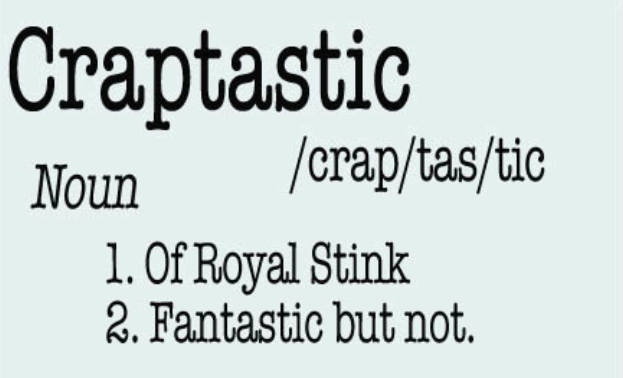












 professionals.