Blog

Data for Good, Data for Evil and the Aggregation of Everything

Data for Good, for Evil and the Aggregation of Everything

“In today’s world the main role of talent acquisition is to give enough information to the C-Suite to enable them to build a company where people want to work.”

If you’ve been recruiting at least a few weeks, you know the top two complaints we hear from recruiters are. First, the hiring manager “wants to see a few more” people before making an offer. Second, the hiring manager won’t give me feedback on this submittal. Both of which stop recruiters dead in their tracks, rendering them useless in the hiring process. It’s not so much that they can’t move forward, it’s that they can’t move at all from here.

I’m of the belief that an ounce of prevention is worth a pound of cure and in this case, recruiting data is prevention for these kinds of stopping points in the world of hiring. We can kill 2 birds with one stone.  If we educate our hiring managers and clients with data so that they have some sense of how rare what they are looking for is, we can help get them to move and better understand our process.  Plus, if we are the only one’s at the table with data, we own the conversation… and that damn table.

Bill Boorman will lead a discussion about what surrounds us, that can be used for different things and how we can aggregate it from different sources in order to see the big (or at least bigger) picture. What does data mean? Why is the recruiter experience vitally important? How can you distinguish coincidence from cause? Attendees will learn the answers to these questions and more in this webinar.


3 Tips for Pre-Employment Testing

What Type of Pre-Employment Test Should we Use? pre-employment testingThere is an adage in sales. “Buyers are Liars.”  What this means is, “sales reps are disappointed when they return to buyers with the proposal, and it is only then they find out, the customer never had the money for the product, is not the right person to talk to or never really had a need for the product offered.

The same can be said all too often about candidates. Everyone looks great on paper.  But when you turn the rocks over, you find a snake.  Sometimes, the information on a resume can be well…embellished. In the candidate’s pursuit of a better job, you can never be sure that everything on their resume is entirely accurate.

Questions to consider when choosing a pre-employment testing method or assessment program include:

  1. Why should we do pre-employment testing in the first place?
  2. What type of testing/assessments should we administer?
  3. How do you address testing with our candidates?

What is the point of testing candidates before making a job offer?

The main reason is to justify that the candidates that you have submitted to a hiring manager is the best of the bunch. Yes, testing can add expense to your hiring cost. However, the benefits of the information gleaned far outweigh the cost of a bad hire.

High Turnover:

Testing can help prevent some hiring mistakes. In the article “Pre-Employment Test Myths”, “The costs associated with a bad hire that leads to turnover are significant. When you factor in additional recruitment costs, training costs, management costs, low productivity, and poor morale, most HR professionals would agree that these costs would run at least twice that person’s yearly salary.”

Who is the Best Candidate:

Maybe you are blessed with having too many good candidates! By using pre-employment testing, you can narrow your candidate pool and submit the top candidates without second guessing yourself.

Hiring Laws:

Particular industries such as childcare, cosmetologists, public workers education, healthcare require all employees take a pre-employment test in one way or another.

What Type of Pre-Employment Test Should we Use?

While the laws detailing what types of testing you can conduct, routine pre-employment testing and assessments include:pre-employment testing What Pre-employment Test should we use?

  • Cognitive
  • Physical ability
  • Sample job tasks
  • Medical inquiries and physical examinations, including psychological tests, assess physical or mental health
  • Personality and integrity tests
  • Criminal background
  • Credit checks
  • Performance appraisals English proficiency tests determine English fluency

How do you address testing with our candidates?

While the technology for pre-employee testing is great, remember to put the human in human resources.  It is widely known that changing jobs is stressful.  In fact, starting or changing jobs has been listed as one of the top 40 of life’s most stressful events (Spurgeon, Jackson & Beach, 2001.)

What Type of Pre-Employment Test Should we Use? pre-employment testingEnsuring that candidates have a positive experience when completing assessments is not only an ethical issue; it can influence individuals’ perceptions of your organization and the job. Studies have shown that perceptions of fairness influence attractiveness of the position and intention to accept the job offer. Never forget, as a recruiter, the person you interview during the recruiting process may be the one who signs your check or the person interviewing you when making your career change.

Dr. Charles Handler put it best when he wrote: “If companies are actually serious about treating candidates as customers, they need to give serious consideration to extending the following rights to their job applicants.” 

A Pre-Employment Assessment Candidate Bill of Rights

Right #1: Candidates have the right to a proper introduction to the assessment and why they are being asked to take it.

Right #2: Candidates have the right to an assessment experience that is of a reasonable length.

Right #3: Candidates have the right to know where the assessment fits within the overall hiring process, and what they can expect next.

Right #4: Candidates have the right to a good user experience.

Right #5: Candidates have the right to technical support, no matter when they are applying.

Right #6: Candidates have the right to assessment content that appears job-related.

Right #7: Candidates have the right to an enjoyable assessment experience.

Right #8: Candidates have the right to know what to expect in terms of feedback from the assessment

It is not enough to rely on “gut instinct” or hire people you simply like. On the opposite end of the spectrum, you don’t want to be so dependent on tests that you scare away the candidate. If you wish to recruit, hire and retain the right people every time, decide on the necessary job skills and educational level. Outline the soft skills and traits would boost employee performance. Once you know what you want, implement consistent, telling, and fair pre-employment testing to make smarter employment hiring decisions.

About the Author: Jackye Clayton is recognized as a people expert who puts the Human in Human Resources.Jackye Clayton Contributing Editor Recruiting Tools An international trainer, she has traveled worldwide sharing her unique gifts in sourcing, recruiting and coaching. She offers various dynamic presentations on numerous topics related to leadership development, inclusionary culture development, team building and more.Her in-depth experience in working with top Fortune and Inc 500 clients and their employees has allowed her to create customized programs to coach, train and recruit top talent and inspire others to greatness. Follow Jackye on Twitter @JackyeClayton or connect with her on LinkedIn.

Can Twitter Product Pages Change the Recruiting Landscape?

TwitterLet’s get right to it. The new functionality of Twitter product pages will make it easier not only to find candidates that will fit into your company’s culture, but will make it easier for candidates to find you. While the focus for now is on e-commerce and items for sale, the product roadmap will allow you to do what all companies want: have a new platform to sell themselves. Social media ROI, anyone?

There is no doubt that I am a big Twitter fan. Heck, I am the RT Queen of #HR and the Recruitosphere according to @animal.  When Twitter announced that they were starting to test a new product, it piqued my interest. Bear with me, but I’ve got an idea and by the end of this article you will be as excited (or at least as interested) as me. If you’re one of the Twitter haters, don’t run just yet.

Twitter Tech Breakdown

Twitter announced in June that they have slowly begun rolling out product pages. A Twitter product page will organize related tweets and brands on one dedicated page. For example, say we have a RecruitingTools product page. On it, you could see curated information as well as who is tweeting about RecruitingTools, different products or webinars we are offering, etc. If we are selling something, we can even add a “buy” button or link to a page of our choice to direct you to the information we want you to know.

Oprah_memeThe other feature being tested by Twitter is a Collections feature. The Collections feature allows brands and celebrities to curate products and recommend them to people. Remember Oprah’s favorites list? Picture that, but on Twitter. To bring it down to the lowest common denominator, Product Pages = Information Collections = Shopping.

But wait, there is more. Twitter also announced that they have a news platform called “Project Lightning” that will allow users to follow events, instead of people. So you won’t have to follow me to see all of my #SHRM15 tweets, you can just follow #SHRM15.

The reason for all of this sudden innovation is obvious; they need moola, paper, cash money – it is, in fact, all about those benjamins. Dick Costolo, CEO of Twitter is leaving. Ironically, the company also was just a few million (like 20 million) short projected earnings. Mr. Costolo said that the recent lack of revenue has nothing to do with why he is leaving, but it sure as hell doesn’t sound like an incentive to stay.

Whats In It For Me?

Whats In It For MeYou’re probably wondering what’s in it for recruiters, since you’re reading this on a recruiting blog and all. Here’s the bottom line:

  • Better Marketing
  • Information Beyond the Google Search
  • Targeted Content
  • More Access to Passive Candidates

1.) Better Marketing

With a company focused product page, you have more control as to what candidates see. So what does this have to do with recruiting? Nothing yet, but it could be the new hottest social platform to recruit on. The “Product” that you would be selling is your company and culture, why it is a great place to work, the cool benefits that you have and the people who love to work there.

2.) Information Beyond the Google Search

Here’s a scenario. I am JC Candidate and I saw an open job posting at your company. I’m doing my research because I’m “passive”, which really means I’m open to a new job but not sure if you and your company are worth the change. I decide to check your brand out on Twitter. *Boom* I see a product page. Suddenly, instead of the standard information I get from a typical Google search, I get gold! I can see who is tweeting about the company, what current employees are tweeting about and perhaps what is being said about your company in the news or from stockholders. As a Twitter user, having the ability to get all of the information I am seeking on one properly curated page could be awesome. No longer would I have to search through zillions of tweets; it is all on one page.

 3.) Targeted Content

If everything works out right, JC Candidate is no longer on the fence about working at your company; she is EXCITED to work at your company! So you make it easy, on your product page with an “apply now” button that can take users from Twitter, directly to an application or career page.

4.) More Access to Passive Candidates

As of Q1 2015, Twitter reported an average of 236 million active users per month. That was not a typo. That is per month. It sounds crazy. There has to be at least 10 people out of those 236 million that is either the perfect candidate or knows your perfect candidate. We just have a better way to find them now.

I can see using the “Collections” and “Project Lighting” the same way. It definitely would be a new opportunity for recruiting on twitter and I’m excited to see what the future holds for the Twitter product page.

The real question is: when will Twitter see that maybe it is time to bust into the recruiting market? Everyone else is doing it! Shoot, we have all seen the financials – trying it can’t hurt.

This post originally featured on RecruitingTools.com 

Jackye Clayton Contributing Editor Recruiting ToolsAbout the Author:

Jackye Clayton is recognized as a people expert who puts the Human in Human Resources. An international trainer, she has traveled worldwide sharing her unique gifts in sourcing, recruiting and coaching. She offers various dynamic presentations on numerous topics related to leadership development, inclusionary culture development, team building and more.Her in-depth experience in working with top Fortune and Inc 500 clients and their employees has allowed her to create customized programs to coach, train and recruit top talent and inspire others to greatness. Follow Jackye on Twitter @JackyeClayton or  connect with her on LinkedIn.

For Better or For Worse: How Marriage Equality Impacts HR.

gay marriage hrI still vividly remember the day when the New York State Legislature finally passed the Marriage Equality Act, which effectively overturned the draconian Defense of Marriage Act (DOMA); it was for me, and so many people I love, one of those seminal moments where it felt like the walls of injustice were beginning to crack.

When Governor Andrew Cuomo signed the bill into law the same day, it was cause for celebration. Which, coming a mere matter of days before the NYC Pride Parade, was quite impeccable in terms of timing.

I was lucky enough to catch a last minute flight into the city to take part in what felt like history in the making – and there are those moments that you just don’t want to miss. There we were, just a few blocks and a few decades removed from the Stonewall Riots, and I realized that what I was watching unfold was much bigger than a pride parade.

I am in no way ashamed to admit in the midst of the sequined tiger costumes, banana hammocks and assless chaps surrounding me, I actually shed a tear – and it wasn’t because of the poor outfit choices or the blatant disregard for manscaping for many of those decked out in man thongs. I could see the forest through the trees, pun partially intended – and I was swept with this overwhelming realization that for once, the universe was smiling on the LGBT community. Justice for all had prevailed for a group long marginalized by mainstream society, and for the first time, that marriage equality would become a reality across the country seemed at the time like an imminent inevitability.

And if that’s not worth shedding a tear over, I really don’t know what is.

A Peculiar Institution

420207590031479482_222299083I know that to many of you who have long taken access to this institution for granted, marriage seems like a silly thing. It’s just a piece of paper, really – but denying that document to LGBT families around the world has created a litany of challenges. The inability to share custody of a child; not being able to participate in medical decisions or even enter the hospital room of a partner; lack of access to insurance benefits, to name a few of the most egregious and tragic examples of institutional oversight.

But now, some corner of my universe had relief from the stress of fighting these injustices and remaining perpetually hidden in the shadows of society – and there is no understating the significance of having these burdens, great and small, finally lifted from your shoulders after living under such a weight for such a long time.

Fast forward four years, and finally, the wait for federal recognition was over – the Supreme Court, in a 5-4 decision, lived up to its name in passing this landmark legislation. While I’m still waiting for the guy who threatened to set himself on fire if gay marriage was legalized to actually go through with his promised self-immolation, I’m having another one of those moments where I’m recognizing that finally, the world has shifted from antipathy to acceptance of the LGBT community – my community.

I don’t think many straight people fully comprehend exactly why this decision is such a big deal – and recognize all the things that come with that recognition. Think about your awful mother-in-law, you know, the one who mean mugs you every time you see her, being able to prohibit you from attending the funeral of the loved one you just lost hours before. That evil bitch could get away with that, you know, even if you were legally married in another state. That is, until last week.

Or, the amount of paperwork I’ve seen couples draw up – along with the associated inordinate legal fees – simply trying to preempt these and a million other contingency plans because, well, the law was not on their side, at least not yet. Hell, I think about people going through the acrimony of a divorce – as painful for LGBT couples as straight ones – in a state that doesn’t see them as married in the first place. These are not religious issues, these are not political issues; these are Civil Rights issues, and finally, those rights have been issued.

For better or for worse, in sickness and in health, and all that jazz.

The Struggle Isn’t Over.

06dec012b2ea7518129f7218d5f8a7efI know I’m probably unique in thinking, despite the momentous magnitude of this moment, that while we’ve emerged victorious in this particular battle, the war for equality is far from over.

It’s easy to forget about the manifold challenges we still face even in the face of positive change, inevitably, and be so overcome with excitement that we forget that the struggles our community continues to face irrespective of legally recognized marriages.

I also understand that the majority of the population – which is to say, all of you old fashioned heterosexuals out there – don’t really think the way that I do, because, well, who you sleep with is pretty passe when it comes to who you are as a person. Sure, you maybe marched in a parade or changed your profile picture on Facebook like some 24 million other people – which is awesome.

Rainbow it up, y’all – I think unilaterally, the collective LGBT community appreciates your very public displays of support, which has been, for the last week or so, both unprecedented and awesome.

But in forgetting the challenges that inevitably come with change, we’re forgetting what comes next: moving from legislation to implementation and enforcement of the newest law of the land. And, believe it or not, one of the biggest of these changes will actually start, inevitably, with your HR department.

Who, as you’re probably aware, aren’t really used to being on the cutting edge of breaking down barriers and changing up the status quo. But that, it just so happens, is where the responsibilities for corporate compliance clearly land. Hell, it’s half of HR’s job.

What Gay Marriage Means for HR and Recruiting.

2738767813c3c18c56af5cbfcfdfb03d70da12e4160d6652de2c7e109b054d5eI can’t take credit, admittedly, for the inspiration behind this post, because in the midst of all the hullabaloo,my favorite reformed HR renegade, the inimitable Robin Schooling, was the first to post the million dollar question:

“I wonder when HR will start whining about all the work they have to do.” 

Bitching, of course, is one core competency most practitioners have pretty much nailed by now, and I’m just waiting to bust out the cheese for the inevitable whine party that’s on the horizon.

Now, I’m going to guess that the complaints, the resistance to change and reticence to work, aren’t necessarily going to happen today, or tomorrow, or maybe not even for a couple of months. But be warned, there’s plenty of work ahead for HR in light of this legislation – and most of it will come, inevitably, in the form of policy rewrites.

If you’ve ever had to suffer through this exercise, you already know that policy writing is a bitch – it’s boring, draining, monotonous and it detracts from the stuff that really impacts business strategy and bottom line, like, I don’t know, recruiting and retaining your employees. Or performance reviews, or employee relations, or whatever it is they’re handing out SHRM certification credits for these days.

But be warned: if your state hasn’t already recognized gay marriage, or you haven’t been part of an organization progressive enough to have independently incorporated this into your personnel policies, you’re looking at a pile of paperwork, ranging from benefits administration to payroll deductions and all that really sexy stuff that makes HR, well, HR.

Gay Marriage & HR Policy: 5 Things Every Practitioner Needs To Review

samesex1I know my area of expertise lies in marketing, not the intricacies of HR compliance or employment law, but I am speaking not as an expert, but from having had the first hand experience of being a gay person who’s gotten burned by policies in the past.

Yeah, I know there’s a flaming joke in there, but I digress.

As an openly gay employee, I’ve always had to play the “what if” game every single time I’ve applied for a job – as if that weren’t stressful and complicated enough already.

What if they don’t offer same sex partner benefits? What if homophobia is an underlying part of their company culture? What if my new manager will subtly shun me because of their personal or political beliefs? 

That’s the kind of shit that doesn’t come up in Glassdoor reviews, employer branding collateral or mission, vision and value statements. So, you just kind of had to guess – and hope it all works out. And, for me at least, that hasn’t always been the case.

With that in mind, here are 5 things every HR practitioner should consider when considering the implications of implementing marriage equality into their employee policies.

1. Retirement and Reproductive Benefits: 

Review your benefits to ensure that when defining relationships, your definitions defy gender specificity. Be sure to review any policies pertaining to family planning – I know for a fact that there are some global consulting firms (think: Big 4) who offer financial assistance for artificial insemination and other fertility treatments to straight employees – but now, such firms must broaden their definition to include gay couples, too.

I’m not naming names, but I can tell you that these firms, with their unlimited resources and core business offering advisory services, are already working on rolling out new benefits internally as well as for their consulting clients.

2. 401(k) and Pension Distribution: End of life benefits are one area that have seen something of a spotlight recently, thanks in large part to Edith Windsor’s Supreme Court case (United States v Windsor), which held that the Defense of Marriage Act’s interpretation of marriage as being between a man and a woman violated the Due Process Clause of the 5th Amendment. Because of the fact that gay couples were not previously recognized as married, they were also denied the same end of life benefits of straight couples. Now that marriage is fully recognized, so too must these imperative end of life policies.

3. Vocabulary: OK, finally – gay marriage is now just ‘marriage’ – so drop the modifier, and make sure that this is similarly reflected in policy definitions of “spouse” and “marriage” in any related documentation, such as an employee handbook, where these terms might arise.gay marriage

4. Healthcare Benefits: Every organization will now have to give their employees the ability to change and update their policies, such as group health insurance plans or FSA allocations, to reflect the fact that in redefining marriage, we must also redefine ‘family’ for the purposes of health care policies – and who can access these benefits. Similarly, tax reporting for these benefits will also change; previously, same sex couples were taxed on benefits for their partners, while heterosexual couples were able to pay for these benefits pre-tax.

5. Family and Medical Leave Act (FMLA): Same sex couples are now entitled to take all the leaves protected by the FMLA, from caring for a spouse suffering from a serious medical condition, or a military same-sex couple facing deployment, or maternity/paternity leave. This is a huge deal – and one that if you overlook, will put your company at serious risk of litigation and create the kind of significant compliance violation HR is pretty much paid to preempt.

If you’re an HR or talent management practitioner, the ball is in your court. But no matter how you feel personally, be warned – professionally, you’ve got a responsibility to your employer (and your employees) to make sure that you comply with all laws – and this, as it turns out, is a big one.

So, better get started rewriting those policies now – as painful as that might be, getting sued or fined for non-compliance is probably far worse. Just don’t say I didn’t warn you.

katrinaAbout the Author: Katrina Kibben is the Director of Marketing for Recruiting Daily, and has served in marketing leadership roles at companies such as Monster Worldwide and Care.com, where she has helped both established and emerging brands develop and deliver world-class content and social media marketing, lead generation and development, marketing automation and online advertising.

An expert in marketing analytics and automation, Kibben is an accomplished writer and speaker whose work has been featured on sites like Monster.com, Brazen Careerist and About.com.  A graduate of Pennsylvania State University, Kibben is actively involved in many community and social causes – including rooting for her hometown Pittsburgh Steelers.

You can follow Katrina on Twitter @KatrinaKibben or connect with her on LinkedIn.

Tomorrow’s Recruiting Solutions Today: How NBC Universal Innovates

Tomorrow’s Recruiting Solutions Today: How NBC Universal Innovates

First of all, NBC Universal has been on quite the journey in our digital age. They are evolving from a traditional media company to a multi-platform digital content hub. How do they attract top talent and maintain company culture in an ever-evolving landscape? What does it mean for their candidate experience?  Candidate experience is important.  Thanks for joining our live webinar.  We look forward to hearing your questions and learning from the experts.  Although recruiting can be difficult, we’d like to make things a bit easier for you. Because some companies struggle with digital hiring, hence this webinar.  Maybe you thought you knew everything about tech talent, guess again.

We meet with the experts to explore what the best companies do to hire the best employees.  While some companies are on the right track, most aren’t.

Don’t miss this special webinar as Bill Boorman speaks with Michelle Hord-White. She is the Vice President of Talent Acquisition and Campus Programs at NBC Universal.  Ty Abernethy is the Cofounder of Take the Interview. He will discuss the recruiting challenges and solutions they face.  Especially relevant in today’s community -you’ll learn the following:

  • Either you attract technology talent or you dont
  • What are the best tools available for identifying and assessing top talent?
  • How is NBC Universal approaches campus recruiting?

most of all, most noteworthy, especially relevant

A Roguish Culture: Keeping It Real In Recruiting.

han soloWhen we played Star Wars back when I was a kid, I always pretended to be Han Solo. I mean, Han was the ultimate badass, after all – a hero, sure, but a flawed one (and, for a kid who played Star Wars, the fact that he got the girl at the end didn’t hurt, either).

Fast forward a few more years than I’d care to admit, and after working my way through the Harry Potter series, I’d found another favorite character: Sirius Black, who despite his lineage from a long line of Slytherins, fought the good fight against the Dark Arts as the sorting hat sent him to Gryffindor instead.

I’ve got a roll call of fantasy role models, from Tangled’s Flynn Rider to Sawyer in Lost, the Man With No Name of X-Files fame, not to mention Indiana Jones (let’s just go ahead and admit that until he added that earring and Calista Flockhart as accessories, he was pretty much the most awesome man alive). I know what you’re thinking, and yeah – I’m not afraid to let my geek flag fly.

In fact, if you bust out your 12 sided die and are down for some D&D, my alignment will always be with Chaotic Good (if you don’t know what that means, you probably had a much more pleasant high school experience than I did). But here’s the thing about Chaotic Good, or any of the characters who I’ve identified with over the years, this recurring theme of constant contrarianism.

Dirty, Rotten Scoundrels.

plus-escroc-des-deux-1988-01-gMy heroes don’t necessarily always follow the rules, but ultimately, they still tend to end up doing good and casting light in an otherwise dark and nihilistic world. In their code, there’s a reason they don’t always follow the rules – it’s because the rules aren’t fair, and the whole damn system is broken.

Which is why it should come as no surprise to you that this whole concept of Chaotic Good is kind of an extended metaphor for the way I feel about recruiting and talent acquisition in general.

Very early on in my career, back before video conferencing moved from the margins to the mainstream, before the concept of “video interviewing” had even emerged, much less become commoditized, one of Wall Street’s most venerable firms tasked my contingency firm with somewhat of a Quixotic search.

This blue chip brand wanted an expert with extensive video conferencing experience, someone who had mastered the handful of tools and platforms available back then. The job order also called for someone who not only knew how to implement live streaming and had extensive expertise in deploying these tools, but also a technologist who understood the back end infrastructure of video conferencing and could code his way around the limitations of the plug-and-play options then available on the market.

Sounds pretty simple and straightforward today, but the thing is, there was only one catch: it was 1998, and no one – I mean no one – had the requisite professional experience the client was looking for.

Well, almost no one. But I was able to come up with one candidate to present to the client. He fit the bill: he had a great background, although this was not someone who would stand out in a crowd. He looked like any other gentleman in their mid 40s in a shirt and tie, a little bit bland, for lack of a better term, but then again, that’s par for the course when conducting searches for the financial services sector. Snooze alert, but he fit the bill, his references were excellent, and best of all, his requested salary was actually under what the firm was willing to pay.

I was already cashing in my commission check in my head until I got a call informing me that this WASPy, well dressed guy who looked like the average Dad, frankly, the kind of minivan driving, golf playing corporate drone who are the cogs more or less turning the wheels of corporate America was not what he seemed. He was, in fact…SHOCKER…a pornographer.

Check that. He was someone who worked in the pornography industry, and I’m not talking about in front of the camera, which, in fact, is kind of cliche – that whole reformed porn star thing that’s the staple of most Lifetime Original movies and forgettable paperback memoirs with suggestive names you find in airports. Nope. He just happened to have picked up his live streaming experience in a very particular niche.

Obviously, if he had worked for, say, Vivid or Larry Flynt Enterprises, I’d have red flagged him immediately, but the name of the company he worked for, his title and his responsibilities listed on his resume were as bland as he was. But after the company poked around (pun intended), plowing deep into his background (pun intended, again) and found out what was really happening, they decided that while everything about him fit (pun), they were going to pull out of considering his candidacy (and I’m spent).

What did this guy do wrong? He wasn’t a gold chain wearing, Bob Guccione type. He wasn’t delivering profanity laced, misogynistic tirades like Al Goldstein, and he certainly didn’t have the on screen, uh, credentials of a Ron Jeremy or Peter North.

Don’t Google those references if you’re at work, but the point is this: he was just some schlub who happened to spend 2 years of his career as a videographer focused primarily on live streaming naked women for a living. I mean, he had the skills, he had the personality, he had everything – but he didn’t get the job.

Postcards From the Edge.

628x471That was only the first in a long series of candidates I’ve worked with where I like to look for something a bit, well, roguish about them; when I interview, I don’t want another cookie cutter candidate. I’m probing around for someone who, like Han Solo or Sirius Black, has a bit of a dark side underneath that polished facade.

For example, a few months back, I spoke to a guy living in Thailand who had spent two years creating some of the most innovative mobile apps out there – and was making a killing since, again, they were focused on the cash cow that is the adult entertainment industry. Sex sells, but not to mainstream tech companies, apparently – they say they want top talent, but if that talent has even tangentially gone topless, then they’re screwed.

It’s not that I actively seek out people with a little blue period in their professional background, it’s just that I’m looking for people who aren’t, you know, boring.

I always give extra props to the UI/UX expert who’s tatted up with some badass sleeves, or the engineer with the mohawk and facial piercings – they’re not traditional, sure, but I’ll take memorable over mundane any day of the week. And a lot of the time, my hiring managers, do, too.

Now, when I’m interviewing and looking for that little bit of an edge, I know that conventional wisdom holds that you’re not supposed to talk shit on previous employers or managers, but I actively encourage it if their shitting on their ex-boss or former company is for the RIGHT reasons.

“She micromanages me to the point where I can’t actually do my job, because I’m too busy taking care of hers,” or “the company’s so profit driven and money hungry, they cut all our benefits and perks to free up enough cash to give investors a dividend.” 

These are not only reasonable reasons for wanting to leave a job or company, but familiar ones, if we’re being honest with ourselves here. Hell, I’m a bit of a rogue, too – but contrarianism is sometimes preferable to convention.

Business As Unusual.

horriblebosses-9to5-590x350In my last post, I wrote about my most recent job search for a recruiting position, which consisted mostly of wasting hundreds hours of my life filling out elaborate applications for hundreds of posted positions.

A recurring theme of these recruiting-related JDs was something to the effect of, “Do you go beyond LinkedIn to find those purple squirrels?” or “Are you the kind of recruiter who takes an innovative approach to talent acquisition?”

And the other kind of trite crap that’s generally in those job ads that are way less cool than they think they sound – and trust me, there are a shit ton of those out there.

Sadly for our profession’s professed preference for forward thinkers and alternative mindsets, while these might be a mainstay of job ads, turns out almost no one really wants recruiters who are willing to challenge the status quo or do anything other than, well, post really trite job ads and review resumes or LinkedIn profiles all day.

When something actually is unusual in recruiting, it’s usually dismissed or derided. For example, one of my favorite sourcing techniques is the targeted e-mail. Since you’re likely like most recruiters and don’t know what ‘targeted’ means (judging from my InMails and inbox), let me walk you through a sample campaign:

  • Step 1: Use an X-Ray Search to target a person. Here’s one I have been using for GitHub. site:github.com (“front end” | Javascript) “joined on” “public activity” “San Francisco” -tab.activity
  • Step 2: Check out the links. From there, maybe you’ll be lucky and there will be a blog link, or twitter making your search easier… If not, look them up on LinkedIn (do that anyway, it makes a cold contact a wee bit warmer).
  • Step 3: Comment on their blog. Tweet at them, Facebook friend them, find them on Quora, About.me, or wherever there might be some information about the person, not just the professional.
  • Step 4: Send them an e-mail that’s personal, funny, attention getting and ORIGINAL.

I know this is anathema to most of you – dare I even say roguish. But you know that’s how I roll.

Call and Response.

mediumleapoffaithHere’s an example of my approach – and yes, this is actually an e-mail I sent, only the names and companies have been changed to protect the innocent.

The profile I’m referencing I found on LinkedIn; his e-mail address I found through Prophet, which makes avoiding InMails awesomely easy – hint, hint. It went a little something like this:

Subject: “Question on this line from your profile: “big focus on design, I implement everything I design..”

Body:

How do you find the time to do both ends of it? Many people struggle with the UI end, or they struggle with the code.

Your background looked fantastic and if you don’t mind the solicitation from an in-house recruiter I’d be excited to speak. I am not your typical recruiter, much like you’re not the typical UI Architect. Let’s bring the 2 together and blow minds. (note: in this case, I actually wasn’t making a porn pun, for once).

Or we can talk about how awesome XXXX is and how we NEED UI people…

Or, if both of those bore you I am always open to discussing Star Wars, if you’re into that.

Look forward to connecting.

Jeff

Sure, the e-mail might not exactly be the most corporate sounding, company line toeing message out there. It might even be considered low brow, overly cavalier or just unprofessional by many “professionals” whose profession consists of spamming everyone in their database with the same generic, shitty message.

In fact, I’m pretty sure that someone reading this right now, probably working at some white shoe Wall Street firm or stuffy consulting company is huffing and puffing and saying, “That’s not what recruiting’s about,” or “I’d never hire that Jeff Newman fellow in a million years.” 

The thing is, though, this approach gets results. There’s a reason that those cookie cutter templated send outs and boring LinkedIn messages have such a low response rate – that’s because doing the same thing as everyone else means that you’re inevitably going to be lost in the noise of a million recruiters all doing the same thing. These recruiters are out there in packs – and they breed. Which is why so many candidates, you know, hate us.

But if you want someone who asks inane questions like, “If you won a million dollars in the lottery tomorrow, would you come to work the next day?” or “If you were a type of car, what would you be and why?,” good news is recruiters like that are a dime a dozen.

I was actually asked both of these questions when I was interviewing, and the only thing worse than the script they came from was that a recruiter actually expected to gain any meaningful information to such meaningless questions.

Culture and the Rogue.

18305514-18305517-largeWhich brings us to the concept of Culture and the Rogue. My friend Steve Levy wrote an article, “Trees, Culture and Recruiting” where he states:

“Almost everyone speaks of their culture in terms of its uniqueness, how special it is, how different it is from all others – using the same words as everyone else.”

And that’s exactly what I’m talking about: if you want someone unique, well, why do we keep using the same tired cliches and well worn words as everyone else out there?

What if you actually are looking for the outlier? What if your culture supports the rogue, the contrarian, the rule breaker? What if you hire people who don’t fit into a tightly defined box or aren’t afraid to flaunt convention in order to produce results? Crazy talk, I know.

Let’s take an example of the litany of articles out there propagated throughout our space: the concept that Millennials are somehow different and should be treated as such. I think that’s a steaming load of batshit (not bullshit, because everyone says that, and I’m trying to prove a point). I think that no matter what year you were born, when you’re in your twenties or thirties, you’re going to have some sort of self-righteous streak and sense of entitlement or inflated self-worth.

There’s nothing unique about Gen Y in particular; it’s the human experience, and like everything else in history, has a weird way of repeating itself. When you’re 25, this stuff is just part of the deal, and ultimately, you grow old, cynical and boring like the rest of us. That is, the one thing I don’t think Millennials are likely to age out of is their willingness to be open minded, inclusive or open to alternative viewpoints, lifestyles or ideas.

Whether it’s issues like gay equality, the right to smoke weed, wondering why you can’t bring a dog into the office or whatever else we might smack with the “liberal” label liberally, the fact is that Gen Y realizes that everyone can play the game – and win – with a set of rules that works best for them. The wisdom of youth, as they say.

I’m encouraged that being a rogue – or this whole concept of “authenticity” and “transparency” that seems so novel in the recruiting industry – is one trend that’s not going anywhere, and that as these twentysomethings start entering the ranks of our hiring managers, they’re going to be open to rogues, and eventually, being roguish won’t even be roguish anymore. It will just be the way people are – however they are.

What Keeping It Real Really Means.

b0754e320f2a4cd1141ccb475a38784bWhich brings me back to my main point: be yourself. Be honest. And most of all, be unique. Not everyone will like you. Not everyone will agree with your approach.

Let’s face the fact that most people who say they’re looking for someone ‘outside the box’ are lying – and if they find someone who’s outside the truck carrying the boxes, they’re going to turn and run the other direction.

But if you’re lucky enough to find that place where thinking different is actually encouraged, where you can be yourself and do your job your own way, as long as the job gets done, then things will come together, and you’ll find out that the key to professional satisfaction is when you get to do your own job your own way, because when we do what comes to us naturally, we excel.

It’s rare that people wear suits or neckties to work – not so a few years ago. Similarly, the thought of working anywhere but an office was ridiculous in the not too distant past. The carefully maintained facade is starting to chip away, and it won’t be long before the walls come crashing down.

For now, though, I’ll do my thing and deal with all the candidates sending my outside the box e-mails to my manager, asking something to the effect of, “Why is this Jeff Newman fellow so damned unprofessional?”

Well, as Han Solo said, “You like me, because I’m a scoundrel.”

unnamed (5)About the Author: Jeff Newman has been a full life cycle recruiter for over 17 years. He has never limited myself to one industry or one skill set. His staffing philosophy is simple: Interview to hire as opposed to looking for reasons not to hire and to speak with each person instead of simply pushing paper.
He prides himself on always making sure that what he is offering a candidate is an opportunity and not just another job. He is always honest about the pluses and minuses and tries to not just be a recruiter but a career adviser. He is currently using his own advice as Recruiting Manager at Tripping.com.

Follow Jeff on Twitter @Apikoros18 or connect with him on LinkedIn.

Freebie Friday: Sourcing Tool VibeApp Review

When sourcing, it is important to get as much data as you can. Researching contact information and learning information about candidates takes time.  A lot of time. Any sourcing tool or recruiting tool that can make researching faster and easier is worth looking at.  Here is one sourcing tool that is impressive.

Tool:                             Vibe App

Headquarters:         Startup Village, Kalamasserry, Kochi, Kerala 683503, India

What it does:          Vibe is a free people search technology available in Chrome. Search and research people right inside Chrome. Vibe combines Linkedin Search, Facebook Search, Twitter Search and others in one plugin. (Vendor Description)

The Sizzle:

  • Saves time by looking up social data for you
  • Able to connect to people through application window
  • Offers Enterprise Edition
  • Free!

The Drizzle:             

  • Inaccurate data
  • A little slow and clunky
  • Sometimes no information comes up at all

Screenshot Vibeapp.coVibeApp, when it works, is an app that can help you extra information about your candidates. This sourcing tool will create a comprehensive collection of information including social media profile links and employment information.

You can also discover what websites to which the email you are researching is related. Another neat feature is that it looks at all of the keyword information associated and tries to tell you what it thinks you should know about the person although that information is pretty rough.

This app is described as an alternative to Rapportive.840e0f99d9782a40b8de2e031667865d Rapportive kind of sucks right now and is so buggy since LinkedIn got a hold of it. VibeApp is a little clunky, the information is a little hit or miss but, they offer some capabilities that are really impressive. The main feature that is a game changer is that it works in your browser as well as your email.  You can get information based on their email no matter where it is displayed. All you have to do is hover and click. The other cool thing is that you can look up ALL of the emails within an email message rather than just the sender.  I think VibeApp can be totally helpful as a Recruiting Tool…when it works!

I think you should take a look at VibeApp.  I am curious what your experience is with it. If there are other tools that you love that help you with your recruiting and sourcing, please tell us about it!

Jackye Clayton Contributing Editor Recruiting Tools


About the Author: Jackye Clayton is recognized as a people expert who puts the Human in Human Resources. An international trainer, she has traveled worldwide sharing her unique gifts in sourcing, recruiting and coaching. She offers various dynamic presentations on numerous topics related to leadership development, inclusionary culture development, team building and more.Her in-depth experience in working with top Fortune and Inc 500 clients and their employees has allowed her to create customized programs to coach, train and recruit top talent and inspire others to greatness. Follow Jackye on Twitter @JackyeClayton or connect with her on LinkedIn.


5 Flipping Brilliant Ways to use Flipboard for Employer Branding

Flipboard LogoFlipping brilliant! 100 million downloaders can’t be wrong. Yes, there has been over 100 million downloads of Flipboard.  This loved app offers an interesting way to add to your employer branding  and enhance your recruiting tool portfolio. Please, step out of the box with me! Flipboard was created to help users create aggregated content viewable in a magazine type style. (Think Pinterest on crack and swipeable!)

Tips to Turn Your Corporate Brand into a Flipping Success

Too many business applications can be overwhelming. Flipboard can streamline the process and showcase your business in unique ways:

Picture Perfect:

Take pictures of the office, of the cool break room and the restaurants in the area. Then, add to your Flipboard! You can show how your company is a cool place to work. Also and show benefits that you can offer that are not always reflected on a job posting.

Presentations:

fbpresentations
Has your company offered a webinar lately? Maybe one of your company’s leaders recently gave a presentation about where the company is going. If you have those presentations up on SlideShare, Flipboard will allow you to add both private and public presentations to your “magazine.” Also, it would make sense to share the good one’s candidates that you are courting to show them more information about the company than they can learn from the typical social media sources

Relo Info:

When trying to negotiate a relocation with a candidate, there are some standard questions that are usually asked. Let candidates see in a creative and visual way information about the city you are in, real estate information and school districts. This makes it a great add for the candidate but also will illustrate a neat way to show their family cool things about the place they are considering moving. Another cool thing about adding Flipboard to your recruiting strategy is that you can embed Flipboard onto your website using a widget

Employer BrandingEmployer Branding:

Trying to create a corporate brand is worthless if no one can see it. I am sure you have information about your company in websites already. The cool thing about Flipboard is you can add content from sources you may already use like Instagram and Tumbler. Also, keep your magazine up to date by adding your press releases blogs and social media updates to your Flipboard.

Thought Leadership and Research:
In the last year, Flipboard has become essential for our business research. If you need to keep up-to-date on business trends, activities, events or check what your competition is doing, there is a magazine for that!

Organize your information according to the new enhanced “Topics,” and yes, there are topics for everything and anything you need. Once you have organized your preferences to suit your needs, you will be able to read from your mobile device.

Conclusion

In case you are new to Flipboard, just know the rest of the world isn’t. Flipboard is one of the most recommended apps on iTunes and Android. Why do you ask?

Because it is so flippin’ awesome! (Pun intended!) The trick is, content is king. You don’t have to re-invent much
these days, just give people a single source to find out about you and why you should be an employer of choice. PS – it is also good information if you are chasing angels and venture capital!

If you want to learn more about Flipboard they offer a #flipboardchat on Wednesdays at 10 pm EST on Twitter.


Jackye Clayton Contributing Editor Recruiting ToolsAbout the Author: Jackye Clayton is recognized as a people expert who puts the Human in Human Resources. An international trainer, she has traveled worldwide sharing her unique gifts in sourcing, recruiting and coaching. She offers various dynamic presentations on numerous topics related to leadership development, inclusionary culture development, team building and more.Her in-depth experience in working with top Fortune and Inc 500 clients and their employees has allowed her to create customized programs to coach, train and recruit top talent and inspire others to greatness. Follow Jackye on Twitter @JackyeClayton or  connect with her on LinkedIn.


Twitter Product Pages Could Change the Landscape of Recruiting

Twitter Product PageThe functionality of Twitter product pages will make it easier not only to find candidates that will fit into your company’s culture, but will make it easier for candidates to find you. While the focus for now is on e-commerce and items for sale, the future will allow you to do what all companies want to do, have a new platform to sell themselves.

There is no doubt that I am a big Twitter fan. Heck, I am the RT Queen of #HR and the Recruitosphere! (Thanks @animal!) When Twitter announced that they were starting to test a new product, it piqued my interest. Bear with me, but I got an idea and by the end of this article you will be as excited (or at least as interested) as me. I am from the school of thought that there are two kinds of people in this world, those who get Twitter and those who don’t. Twitter haters, stay tuned.

Twitter-Adds-Product-Pages-And-CollectionsJune 19, 2015, Twitter announced that they have slowly begun rolling out product pages. A Twitter product page will organize related tweets and brands on one dedicated page. So say we have a RecruitingTools product page, on it, you could see curated information as well as who is tweeting about RecruitingTools, different products or webinars we are offering. If we are selling something, we can even add a “buy” button or link to a page of our choice to direct you where we want you to know.

The other item being tested by Twitter is a Collections feature. The Collection feature allows brands and cool celebs to curate products and recommend them to people. Remember Oprah’s favorites list? Picture that but on Twitter. To bring it down to the lowest common denominator, Product Pages = Information Collections = Shopping.

But wait, there is more. Twitter also announced that they have a news platform, “Project Lightning”, that will allow users to follow events, instead of people. So you won’t have to follow me to see all of my #SHRM15 tweets, you can just follow #SHRM15.

The reason for all of this sudden innovation is obvious; they need moola, paper, dead presidents. Dick Costolo, CEO of Twitter is leaving. Ironically, the company also was just a few million (like 20 million) short projected earnings. Mr. Costolo said that the recent lack of revenue has nothing to do with why he is leaving, but it sure as hell is not an incentive to stay.

wiifm_logo_cmyk_text1WIIFM?

  • Better Marketing
  • Information Beyond the Google Search
  • Targeted Content
  • More Access to Passive Candidates

1.) Better Marketing

With a company focused product page, you have more control as to what candidates see. So what does this have to do with recruiting? Nothing yet, but it could be the new hottest social platform to recruit on. The “Product” that you would be selling is your company including culture, why it is a great place to work, the cool benefits that you have and the people who love to work there.

2.) Information Beyond the Google Search

So I am JC Candidate, and I saw an open job posting at your company. I am doing my research because I am not sure if I am ready to change jobs yet. I decide to check you out on Twitter. *Boom* I see you have a product page. Suddenly, instead of the standard information I get from a typical Google search, I get gold! I can see who is tweeting about the company, what current employees are tweeting about and perhaps what is being said about your company in the news or from stockholders. As a Twitter user, having the ability to get all of the information I am seeking on one properly curated page could be awesome. No longer would I have to search through zillions of tweets; it is all on one page.

 3.) Targeted Content

If everything works out right, JC Candidate is no longer on the fence about working at your company; she is EXCITED to work at your company! She is completely pumped about working for you. So you make it easy, on your product page, you have an “apply now” button that can take users from Twitter, directly to an application or career page.

4.) More Access to Passive Candidates

As of the first quarter of 2015, Twitter reported an average of 236 million active users per month. That was not a typo. That is per month. It sounds crazy. There has to be at least 10 people out of those 236 million that is either the perfect candidate or knows someone who is the perfect candidate. This is just a better way to find them.

Cool right!?!?! I can see using the “Collections” and “Project Lighting” the same way. It definitely would be a new way to look at Twitter as a recruiting tool. So I am excited to see what the future holds for the Twitter product page. The question is, when will Twitter see that maybe it is time to bust into the recruiting market. Everyone else is doing it! Shoot, we have all seen the financials trying it can’t hurt.


Jackye Clayton Contributing Editor Recruiting ToolsAbout the Author: Jackye Clayton is recognized as a people expert who puts the Human in Human Resources. An international trainer, she has traveled worldwide sharing her unique gifts in sourcing, recruiting and coaching. She offers various dynamic presentations on numerous topics related to leadership development, inclusionary culture development, team building and more.Her in-depth experience in working with top Fortune and Inc 500 clients and their employees has allowed her to create customized programs to coach, train and recruit top talent and inspire others to greatness. Follow Jackye on Twitter @JackyeClayton or  connect with her on LinkedIn.

Job Descriptions that Land You Great Hires

Recording coming soon!

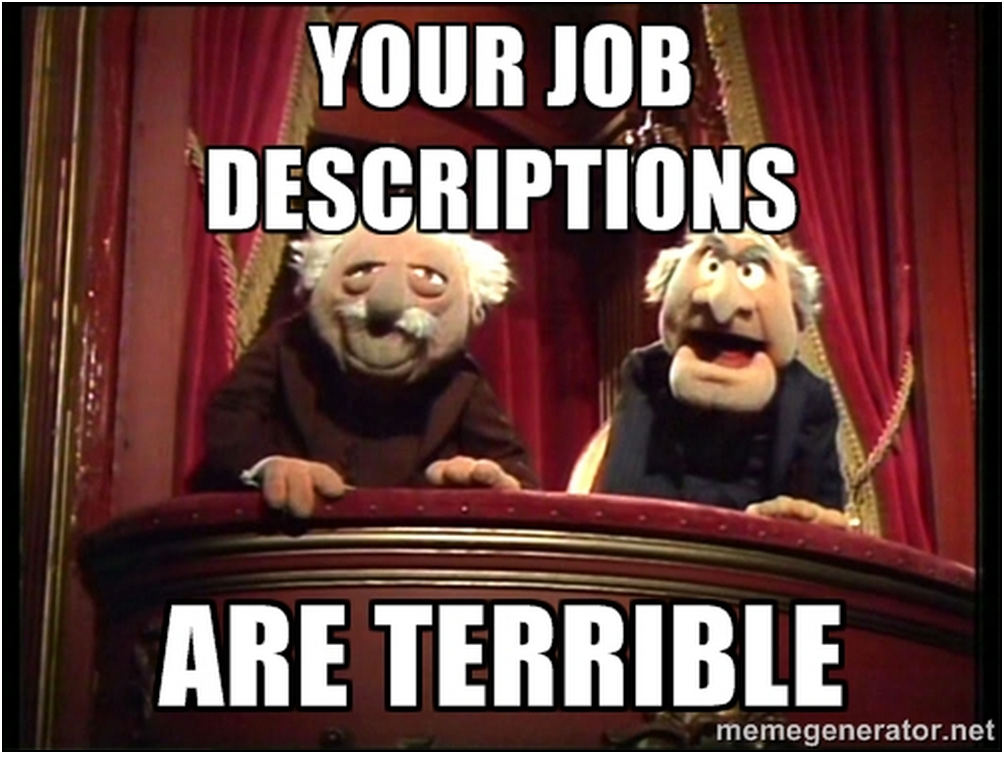
Are you considering upgrading your job descriptions?

Assume for a moment, that most descriptions are poorly structured.  They are completely generic, overly complex and excruciatingly worded documents.  Hiring managers obsess far too much over their contents. Candidates can send in resumes that are just as meaningless  as the position description for one they’re applying for.

You can’t blame them for bothering with the fine print when the big picture remains essentially inscrutable. We might be coming a long way in the business of hiring. Most job descriptions are almost always some ancient HR relic created for compensation.

So why do bad job postings happen to good companies?  It’s hard to tell.  Have you considered working directly with the hiring manger?

By the time hiring managers can turn those dreams into a real hire, they often have a tendency to be go a bit overboard – which is why the average intake meeting involves mostly requirement gathering and talking through preferred and basic qualifications.

Our entire hiring process starts with job descriptions. You can’t find what you’re looking for if you don’t know what it is.

Unfortunately, too many employers are looking for everything. They think they’ll know it when they find it, but the problem with that is this generally tends to turn off any candidates worth finding by asking not what the company can do for the candidate, but rather, what the candidate can do for the company.

Wild & Crazy Kids: Millennial Hiring Trends Every Employer Needs To Know.

andy_rooney_quoteWe all have pet peeves. You know, those little things that people do that piss you off big time. Like that annoying loud talker in the next cube over, motivational speakers trying to sell books on leadership or those candidates who keep on talking after you’re pretty clearly done.

Come to think of it, actually, almost everything candidates do piss recruiters off, including, you know, wanting to know where they stand in terms of next steps, how much a position actually pays and that kind of thing.

I mean, who do these people think they are, anyways? Don’t they know you’re too busy tweeting resume advice to look at resumes, or too busy engaging a talent community to actually engage talent?

Seriously – I know this to be true, because, well, I asked what candidates do that really pisses recruiters off on the RecruitingBlogs Facebook page, and people really let it out there. And obviously when a candidate declines an offer or doesn’t show up for an interview on time because they weren’t told where to go, it’s entirely their fault.

And everyone wonders why recruiters are the Rodney Dangerfield of professions. They get no respect, but turns out, that’s a two way street – at least judging from the Facebook conversation that somehow, recruiters weren’t too overwhelmed with reqs and resumes to take time to weigh in on.

Some responses were funny, some were horrifying (like the one where a candidate somehow thought bringing up poop in an interview was a good idea – this must be #TheMovement Top Recruiter keeps tweeting about).

Millennials Myths, Misconceptions and Recruiting Reality.

37677171But in reading through the posts, I noticed another trend that’s just as alarming as the fact that candidate experience seems to be more of a commoditized catchphrase than an actual cause d’celebre. Now, I’m admittedly not a recruiter, although I’ve spent years closely watching and working with this industry.

I’m also not a data scientist, since I’m as good at math as most people in marketing, but I realized in reading through this recruiter whine party that quantitative measurements and metrics aside, there’s a lot of anecdotal evidence that there’s something rotten going on in the state of talent acquisition today.

These trends were confirmed by the recent release of the Jobvite 2015 Hiring Trends report (or at least the associated infographic):

1. People out there are pretty much still f-ing crazy.

2. A lot of the recruiting pet peeves are associated with classic millennial traits. And that’s a problem.

Stay with me here. Follow a few of the comments on the thread: accepting an offer, then declining it because there was a better one. Trying to tell you, the recruiter, that they know more about the job market than you do. Applying for a bilingual job because they had just purchased a copy of Rosetta Stone. 

These are all obnoxious and annoying, sure, but the truly cloying part of all of this is that these all come back to this “shit millennials do” conversation that’s older than the actual workforce segment being discussed.

Millennial Recruiting: Wild & Crazy Kids.

A3F7t56CMAEd-CIWhile there’s no real evidence that the stuff we ascribe to this much maligned generation has any actual statistical validity beyond age (which ain’t nothing but a number), looking at Millennials purely through that lens, the fact is that this year, Gen Y officially became the largest age-related demographic in the workforce in 2015.

The Millennials are no longer coming – we’re here, and we’re your co-workers, colleagues and clients (and the bylines on most best practices blog posts, in case you hadn’t noticed).

Crap.

Well. Clearly, we’ve been thinking about Gen Y long before now, but considering we’re halfway through the year I’m going to guess at whatever strategy meetings or touchpoints have gone on since your last workforce plan was planned, Gen Y has had absolutely NO real relevance for your organization in terms of tangible talent management takeaways or actionable action items.

If the word “Millennial” came up in your last planning meeting, I can almost promise that you either work in market research or are selling consulting services. In recruiting and retention, though, as much as we like to wax philosophical on this theoretical abstract, the fact is when put in practice, having to align the right candidate with the right role and overcoming process limitations and hiring manager objections is in no way impacted by Millennial theory or sweeping generational stereotypes.

It’s not just the younger generation that expects basic stuff like mobile enabled application processes or feedback from employers – it’s just they’re the ones openly challenging the often inane staffing status quo. Add in an entire buzzword bingo board worth of stuff to worry about (engagement, talent communities, big data, etc.), and you come to the conclusion that no matter how good we get at analytics, the math around Millennials adds up to nothing more than a pastiche of myths and misconceptions with as much foundation in reality as most LinkedIn profiles.

Which is to say, we’re just making shit up without actually addressing the critical problems behind what we perceive to be critical problems. But since you’re so damn sure that big data is going to somehow overcome endemic apathy and end user stupidity, I took a look at the numbers to pull out what’s actually going on with Gen Y talent today.

2015 Hiring Trends: 5 Things You Need To Know About Millennials.

Hey, numbers don’t lie. They’re just spun into whatever story is the most expedient for whatever it is your providers and partners happen to be selling – and the quarterly quota of crap is continually exceeded. Ergo, a deep data dive by yours truly.

1. They’re Going To Quit.

Have you stopped worrying about attracting Gen Y workers long enough to concentrate on keeping them? If not, might be high time to brush the dust off that retention strategy and start planning a new playbook. That’s because Millennials are twice as likely to leave an employer voluntarily within three years of accepting a job.

tumblr_n6r060cw5n1r7ufkeo1_500

2. Millennials Are Mobile (Like Everyone Else).

Let’s make this clear: mobile isn’t an emerging category or best practice in recruiting – it’s not even optional if you’re actually committed to hiring top talent. 47% of Millennials report using their mobile devices exclusively to search for jobs, according to Jobvite data. Let’s do some quick math on that.

If most Millennials are using their “mobile devices” to look for jobs (a number that’s up 4% year over year), and Gen Y statistically represents a majority of the job market…

i_car_auto_gifs_015_55279060acb28

3. Gen Y Wants To Work In A Dorm Room, Not An Office.

Have you ever seen the kinds of facilities that Division 1 athletes have access to at big time programs? To say that they’re state-of-the-art would be understatement. From the new lazy river at LSU to the PS4s installed in every Notre Dame player’s locker, the average D1 football program – this is just football, folks – according to the US Department of Education. That’s up there with the average cost per hire of a LinkedIn Recruiter licence. 

Why are schools splurging on these spurious white elephants? Duh. Because everyone’s going after the same set of five star studs, and 18 year olds are pretty easy to impress if you’ve got enough cash to invest in silly stuff like having a Sorbonne trained chef on call 24-7, as is the case at two SEC programs.

Millennials, similarly, are the workplace equivalent of that star running back on National Signing Day. If your facilities fail to impress, you’re going to lose that recruit to the competition, and it’s going to come back and bite you in the ass on Game Day.

Don’t believe me? One example of this phenomenon: Los Angeles based startup Scopely, competing with the likes of SnapChat for Silicon Beach tech talent, is offering new hires custom tuxedoes, spearguns and a year’s supply of free beer.

tumblr_m3vfnyhYxv1qgcpvv

4. Gen Y are a bunch of loud mouthed little jerks.

Millennials are more likely than their, uh, “overqualified” counterparts to actually talk publically about your candidate experience, and share it with their friends (and the world, vis a vis that magical social media thingie). WIth the rise in employer branding in recruiting and the increase of culture as a competitive differentiator, Millennials are not necessarily going to say nice things to try to score some Brownie points with your business; they’re just as likely to share their negative experiences, even if they’re still in process.

63% of job seekers report talking about their job search experience at any given employer with their professional and personal network – which are probably the same set of candidates you’re actively trying to attract with that pretty careers site and your “social recruiting” efforts. The thing is, the echo chamber reverberates much more loudly than the “tactical transparency” most companies think they’re getting away with.

tumblr_n3rtpbrHJz1s266z3o1_500

5. More LIke Job Bored.

Bad news for anyone recruiting Millennials using that old post and pray strategy that’s been the go-to for so many recruiters for so long: Gen Y aren’t hanging around the job board jungle. That is, with the exception of Indeed, which far outperforms all other job boards with Gen Y job seekers.

That’s because, you know, there’s this thing called Google that kids today use to find information about everything you’d probably ask Jeeves. In fact, less than 40% of Millennials reported using a traditional job board like Monster or CareerBuilder in their most recent job search. Hey, I don’t make the news, i just report it – and this is the reality of recruiting tomorrow’s talent today.

gen y workers


But then again, what the hell do I know? I’m really just another one of those loud mouthed Millennials. And if you’re like most recruiters, you’re probably too busy stereotyping me and my ilk to actually do the stuff you need to for recruiting and retaining us.

It’s OK – you can’t teach an old dog new tricks, and there’s nothing older than employers fixating on generational theory while completely ignoring the facts. Which, like Millennials, isn’t a new phenomenon among recruiting and HR professionals – but in this case, don’t say I didn’t warn you.

Now, if you’ll excuse me, I’ve got to use my mobile phone to engage my talent network on social media. Or some shit like that.

Healthcare Recruitment: Curing Today’s Talent Challenges.

healthcare recruitmentHealthcare, as an industry, is sort of the antithesis of recruiting – as a profession, healthcare practitioners are treated with innate respect and inherent trust, and their expertise or judgement goes unquestioned – we literally put our lives in their hands.

While work directly impacts our quality of life, the work of those working in healthcare is literally a matter of life and death. Which means, of course, that those of us recruiting healthcare professionals serve a profoundly important purpose.

Ask any medical professional why they chose their career path, and almost without exception, you’ll get an origin story far different than recruiters; their calling came as a result of a deliberate choice and years of dedicated preparation. Unlike talent acquisition, these careers aren’t the result of some existential accident, and there are certainly barriers to entry, barriers that keep all but the most dedicated and driven people from being able to deliver the quality of care required for the most critical of roles.

The Current State of Healthcare Recruitment.

The origin story of healthcare practitioners, from doctors to nurses to therapists, are as unique as the professionals giving their lives to save the lives of others. All were inspired to pursue healthcare because of a profoundly personal experience: an early childhood disease, perhaps, or a relative or sibling forced to live with a congenital defect or condition. In short, someone they knew, likely, faced a life-altering disease or injury that, for whatever reason, inspired that individual to aspire to make a difference and dedicate themselves to a career in healthcare.

While we make cold calls, this kind of calling doesn’t happen very often in other industries. That’s not to say, of course, that everyone else’s professional passions are accidental or happenstance. At this very moment, there could be someone who decides to get into recruiting because they realize that they’d be better at filling jobs than subjecting themselves to the experience of looking for jobs, or someone who direct sourced that impossible hire and got just enough of a rush from closing that req to get hooked on recruitment for life.

But, let’s face it – that’s probably a stretch, and more anecdotal than actually reflective of recruiting reality. Our industry, or most every other segment of the workforce, from marketing to construction to finance, chose our particular paths precisely because it was something we were good enough at to make a good living. Our job choices are made largely not because of passion (that often manifests itself a little later on) but because of pragmatism.

And let’s face it, being a hypocrite (an epidemic of sorts within the ranks of the rank and file) is far easier than living by the Hippocratic oath. Helping ourselves is easier than helping others, and therefore, there’s a certain degree of solipsism required for survival – which is all fun and games until someone gets hurt. Literally.

Healthcare Recruitment: Growing Demand, Dwindling Supply.

health-insurance-deductible-pills-e1301425078499The impact of the Affordable Care Act has been pretty well documented within the HR industry, but the provision of universal coverage, coupled with increasing costs and average life expectancy, have created a perfect storm for healthcare, and demand is only projected to continue rising for the foreseeable future. But just because legislation and demographics have increased access to healthcare services, it hasn’t increased the number of professionals responsible for providing those services – that number, in fact, has remained more or less stagnant, creating a skills gap that makes those famously faced by the tech sector seem pretty manageable by comparison.

In fact, according to the Association of American Medical Colleges, the United States faces an emergency that, if left untreated, could become a pervasive and persistent pandemic. The association predicts that by 2020, the US will face a shortage of 90,000 physicians, and 130,000 by 2025. Coupled with the fact that physicians are being actively courted by the private sector (think pharma, biotech, medical devices) and have the pick of more professional paths not involving primary patient care than ever before, if we don’t find a cure to this disorder now, we’re screwed, societally speaking.

TW_Healthcare_Recruitment_socialshare_720X90.ai

The Race for the Healthcare Recruitment Cure.

The demand for physicians, not to mention registered nurses, medical administrators and the bevy of other roles that are just as critical for healthcare as the MDs these jobs support, provides recruiters today with a significant set of challenges – and unlimited opportunities for the ones who can figure out how to overcome these pervasive problems. So, how do you find candidates who are not only motivated and mission oriented, but also so busy that responding to recruiters is becoming almost impossible as their caseloads only continue to increase?

Even for those recruiters who can get these purple unicorns on the phone long enough to make a pitch, engagement is only half of the battle: the fact is, these candidates have options, and are acutely aware that the market demand far outpaces supply – meaning that few need recruiters more than recruiters need them.

Even if you’re calling with the most amazing opportunity out there, there’s a good chance that candidate is going to feel out other options before continuing with the process, since, while they’re looking, it’s impossible for them not to find a million other potential choices in the cutthroat competition for one of the most valuable commodities in talent today.

So, what’s a recruiter supposed to do? It all comes down to the same discipline that every human is hard wired for – storytelling. Keeping the attention and limited focus of a healthcare professional requires every recruiter to be able to tell a compelling enough story about any job opening to compel candidates to take action. It’s not about sourcing or finding candidates, or even engaging them. Nope – you’ve got to have a narrative that’s going to speak to healthcare practitioners’ professional aspirations and personal altruism alike. That’s one happy ending that can be pretty tough to write.

Generic just won’t cut it. Everyone tells candidates about how their opportunities will lead to more upward mobility, or increase their exposure and abilities to advance up the ladder – it’s a trope that’s so overused, it’s become cliche. Candidates in this space know they can advance their careers simply by sticking around and letting the market conditions play themselves out independently.

Not to mention the fact that every candidate you source likely has heard from dozens of recruiters with similarly specious messages that don’t speak to what they actually care about. Remember, their vocational calling supersedes any cold call you’ll ever make. Getting them to answer your call to action means speaking specifically to the things that drove these professionals into healthcare in the first place.

The best approach is often featuring real stories from real professionals making a real difference. For example, telling about a previous hire who joined an employer out of medical school used their passion for robotics to create a solution for microsurgery that just got patented, or an RN who’s pursuing her passion for travel in a role which requires working in many markets and not having to pull swing shifts in the same hospital day after day. These are the kinds of tangible tales that will not only resonate with healthcare candidates, but also leave them feeling excited and inspired.


This outcome is what successful healthcare recruiting increasingly requires. And it’s not easy.

Dammit, Jim, I’m A Doctor, Not A Candidate.

deforest-kelley-bones-behind-the-scenes-leonard-bones-mccoy-7759463-600-4804Even the most dedicated healthcare professionals, of course, also have personal lives and obligations to others besides their growing roster of patients. This shouldn’t come as any surprise, but turns out, recruiting in healthcare, like real estate, is all about location. If you’re recruiting LRNs for a concierge practice in Seattle, you’re going to fare far better than if you’re looking to place them in, say, Marysville, Kentucky.

Not only does demand in less sexy areas surpass those in major cities, but the fact that so many of the hardest to fill healthcare roles require relocation, making issues like having to deal with school age children or a trailing spouse compound the challenges healthcare recruiters face.

These are obviously just examples, but ones that likely will come up whenever you’re trying to fill any sort of clinical role sooner or later.

Many of the challenges facing healthcare recruiters are unique to the industry, but some are the same as any other function or segment. Take those infamous Millennials, for example, whose demand for work/life balance and flexibility is antithetical to the expectations of more experienced healthcare professionals who have sacrificed weekends, nights and holidays to being on call for years simply as a matter of course.

Or the fact that getting skilled workers often requires work sponsorships on visas whose quotas were met months ago, meaning you have to fight for a much smaller pool of qualified candidates who already have the right (and license) to work in the US.

These are only a few of the symptoms that recruiters have to try to find a cure for in every industry; compound this with healthcare’s unique challenges, and you’ve got a Stage 4 candidate crisis. How do recruiters deal with such a grim diagnosis and beat the odds?

The good news is, there are new tools and strategies to help.

TW_Healthcare_Recruitment_socialshare


The Prescription for Healthcare Recruiting Success.

It’s clear that recruiters in the healthcare field, facing financial and candidate supply restraints, have to work with issues that are far outside the scope of their role – although being able to control things like employee engagement and retention make preventative care the easiest way to preempt problems before they happen.

These include a host of new and emerging technologies to help source and select the right candidates, from social networks dedicated to healthcare professionals to pre-employment assessments to video interviewing technology, to name just a few of the many solutions now available to help make healthcare recruiters’ lives a little easier.

Of course, technology can’t overcome the limits of poor strategic workforce planning. If you haven’t created a human capital strategy, healthcare employers should start by taking a critical look at the answers to a few critical questions:

1. What are our strategic business goals 6 months or a year from now? What can we do today to make sure we have the talent we need 5 years from now?

2. Where can we find the talent we need to support those goals? Can we train our current employees for the skills we need or do we need to hire external workers?

3. Where are our current talent gaps and how can we fill those the most effectively and efficiently?

4. What contingency plans do we have in place and how can we plan for the unexpected?

5. How can we make sure we’re able to retain, retrain and engage our current workforce?

6. What metrics are necessary for benchmarking, monitoring and optimizing our progress?


The answers to the above questions will determine which software and technologies are worth investing the time and money it takes to implement them and realize real recruiting ROI. Of course, these superficial questions are just scratching the surface.

If you want to go deeper and find out what software is right for  you, we’ve got your back. Check out Recruiting Daily’s newest eBook, brought to you in partnership with our friends at Talentwise.

This brand spanking new resource will provide an overview of the challenges facing healthcare recruiters today, along with actionable advice and expert insights from real practitioners who have found real solutions to manifold issues confronting healthcare employers and recruiters in talent acquisition today (and what you can do to get ahead of the competition tomorrow, too).

Click here for your full copy and get the cure for what’s ailing your talent acquisition.

2dbae9fAbout the Author: Noel Cocca oversees the business end of Recruiting Daily as CEO, using his powers as a master negotiator and his entrepreneurial experience from years spent running an executive search and staffing firm focused on healthcare recruitment to oversee budgeting, billing and the bottom line.

Noel is a huge recruiting and technology geek who splits his time between hitting the slopes as an avid skier and raising the two best kids in the world.

Follow Noel @NoelCocca or connect with him on LinkedIn.


Is CareerBuilder trying to become a SourcingBuilder?

I guess it was bound to happen eventually. Since there has been a decline in effectiveness of job boards for sure, (Read Death to Job Boards) what is a job board to do? On Wednesday, CareerBuilder kicked off their new recruiting platform. Yet another recruiting tool that promises it is the best thing ever.  Allow me to introduce you to CareerBuilder1, the new SaaS recruiting management system. I was shocked to see that the way CareerBuilder decided to “stop the bleeding” of an already saturated market, was to go into another all to saturated market! I have not tested it but believe me I can’t wait to get my hands on “A Pre-Hire Platform More Powerful Than Anything The Recruiting Industry Has Ever Seen.” Sounds sexy right!?!? To me, it sounds too good to believe.

So this is what they say will blow our minds:

CareerBuilder1 combines:

  • Candidate Experience
  • Actionable Analytics
  • One Search
  • Intuitive and Easy Workflow
  • Candidate Relationship Management
  • Comprehensive Customer Support

None of these seem very original, am I right? “Current application-tracking systems have not kept pace with shifts in the recruitment landscape toward mobile computing and functionality like CRM and analytics,” said Matt Ferguson, CEO of CareerBuilder and co-author of The Talent Equation.

 Matt Ferguson Chief Executive Officer
Matt Ferguson Chief Executive Officer

“The result is that many organizations turn to outside tools, leading to a hodgepodge of different products being patched together for recruiting purposes.

“Most enterprises are not happy with their current system,” Ferguson said.”A good analogy is where sales customer relationship management was years ago before Salesforce made a backbone to tie all the disparate pieces together,” he said. “Recruitment doesn’t really have that solution today,” he added. “We aim to bring together that whole process for recruitment in one place.”

CareerBuilder1 also boasts to offer a great candidate experience. Candidates can look forward to:

  • Career site: Enable candidates to apply or join a talent network.
  • Mobile: Enable job seekers to apply on mobile.
  • Automated candidate remarketing: Notify candidates when relevant jobs open.


Someone,  please tell me I am not crazy.  I feel like I went to sleep and woke up in 2008.  Don’t all ATS systems say they do the same things bulleted above?  Isn’t a bit late in the game to try to push this out? I don’t look to CareerBuilder to help me do my job better.  I want them to do THEIR job better. I don’t want to post a job and search resume databases.  I want a Job Board that rather than fancy algorithms, a person yes a real live person in the country that I am recruiting in and look at the search results, clean them and THEN send me the candidate.  Maybe a JobBoard that can match up jobs with candidates and tell me why exactly, they have found a good match. I know Dice is doing it.  Monster is doing it.  But just do your job better and get out of the race, it has already been won.

https://www.youtube.com/watch?v=-j4hUbneJak


Jackye Clayton Contributing Editor Recruiting ToolsAbout the Author: Jackye Clayton is recognized as a people expert who puts the Human in Human Resources. An international trainer, she has traveled worldwide sharing her unique gifts in sourcing, recruiting and coaching. She offers various dynamic presentations on numerous topics related to leadership development, inclusionary culture development, team building and more.Her in-depth experience in working with top Fortune and Inc 500 clients and their employees has allowed her to create customized programs to coach, train and recruit top talent and inspire others to greatness. Follow Jackye on Twitter @JackyeClayton or connect with her on LinkedIn.

What A Trip: Recruiting, Retention and Your PTO Policy.

52b72d2e6ce4255d9976f4a9248eedffAs if there weren’t already enough reasons for us to love Chipotle, the restaurant chain recently gave us one more, announcing it would be extending such benefits as sick leave and paid time off to its hourly workforce.

These kind of benefits are unspectacular for most full time workers, but for the part time workers who will receive these perks under the expanded program, it’s nothing short of miraculous.

In an industry dominated by high volume, high turnover hiring, the fastest growing employer seems to be following the same strategy that’s helped it become the hottest brand in an extremely competitive business.

Whereas former owners McDonald’s has found itself in the harsh spotlight of public scrutiny for its concerted efforts to fight an increase in the federal minimum wage, Chipotle is embracing the concept of expanded benefits as a way to engage and retain its workforce and stop the revolving door from spinning quite as fast as it does for its direct competitors.

The precedent setting move by this chain will likely create a ripple effect that’s felt by any large company largely reliant on hourly workers – many of whom are already looking for help wanted signs while standing in line for their burritos. The question is, will people who only work part time actually have the time to use their paid time off? Based on the precedent set by their full time counterparts, it’s not looking likely.

All Work and No Play: A $150 Billion Problem.

fig4A recent report from Glassdoor revealed that only 51% of the 2300 employees surveyed used all of the PTO they accrued, and of the half that did manage to get out of the office, 61% admitted to working while on vacation.

Meanwhile, fully a third of all workers (33%) reported not using paid time off simply because there was no one else to do their work or cover for them.

But while this might seem, on the surface at least, to be one benefit that really benefits employers, it turns out that taking time off actually leads to tangible benefits in engagement, productivity and satisfaction for the workers who actually use their PTO as intended instead of flushing vacation days down the drain.

The US Travel Association reports that taking at least one vacation a year reduces a worker’s risk of a heart attack by about 50%, which makes sense, considering the cardiac inducing stressors so common during an average day at any cube farm anywhere.

Hell, even the incipient buzz of the artificial light fixtures filling most offices is enough to get someone’s pulse up fast. Pile on presentations, performance management processes, planning meetings and ad-hoc projects, and you’ve pretty much got a massive coronary in the making.

Not exactly rocket science there, I know – sitting on the beach is the best way to beat burnout. But being overworked isn’t an issue that only impacts employees. Employers lost $150 billion last year alone that were directly tied to stress-induced absenteeism. If you can’t get out, not showing up is the only other option many workers have.

Yeah, I know it’s summer, and these vacation themed posts are pretty overdone and asinine. But when I read Glassdoor’s study, frankly, I was kind of surprised. I know that if there’s one thing I can consistently say I have done throughout my career without fail, it’s use up every last one of my precious minutes of getting paid to not work. But for whatever reason I find absolutely unfathomable, I’m an exception to the PTO rule.

Listen. Employers love screwing over workers in every way possible. Binding arbitration and at-will agreements be damned, if you’re not going to use the minimal package of perks that are still standard – and there certainly aren’t a whole hell of a lot of them – then you’re really just letting yourself be used.

Because if your company offers PTO, guess what? They have to let you take it, or pay you for it if you can’t come up with a Plan B. Giving up this time is like throwing away cash, and if you don’t use your PTO, then you forever forfeit the right to complain about your compensation, because clearly you’ve got enough. Seriously? Take a damn day.

I know it’s easier said than done. But after reading this report, I decided to do a little digging to see what, if anything, companies are doing differently to make sure their employees get enough rest so that they can reap the associated productivity rewards while stemming stress-related absences and their steep associated costs.

Getting Creative With Your PTO Policy: 4 Employers Getting It Right.

cialisI thought PTO was a pretty boring concept – like, you get time off on a prorated scale based on tenure and job level, simple as that. This is true at almost every company, but there are a few out there who are actually innovating in what’s more or less one of the most mundane areas of HR policy.

Counterintuitively, the ROI of R&R is just good business – and there are a litany of studies out there suggesting that we really all need to take some time sometime.

Here are some companies who are making PTO pay off.

1. Virgin

Richard-Branson-quotes-on-business-e1363005930739Sir Richard Branson, who we can kind of agree is pretty good at that whole innovation thing, has instituted an endless vacation policy. The only reason employees can’t just up and take a day off whenever they feel like it is that doing so would disrupt the company’s business or their own careers. Which, as reasons go, seems like a fairly logical one, really.

The idea that you can trust employees enough to trust them with their own schedules isn’t a new idea.

There’s a growing roster of companies falling firmly on the pro-choice side of the vacation day debate, but as awesome as this policy ostensibly sounds, turns out it also creates some confusion. This is the only natural reaction one can reasonably expect when you declare your team can take time any time , as much time as they want, without any penalty whatsoever.

If you’re going to go all in on this type of PTO policy, you should probably start by defining how you communicate expectations around work performance and what responsibilities need to be covered during any absence, and who will be responsible for filling in (or accountable if they won’t take one for the team).

Determine how much lead time you’re going to need before approving vacation requests, and it’s probably a good idea to get something in writing about how employees who are abusing this policy to the point of not delivering at work might find themselves taking an even longer vacation than originally anticipated.

But if you can swing this one, you’re going to be giving yourself a huge recruiting and retention edge, because as selling points go, this ranks up there on the list.

2. Netflix

GeeksMirageBingeWatching1jpg-3235230_lgNetflix originally offered the traditional 10 days of paid time off, a handful of holidays and some sick time. Pretty standard stuff, until management realized what anyone who’s ever had direct reports probably knows: moderating and regulating employee PTO is a pain in the ass.

So, after a little due diligence, they realized that because the state of California had no legislation regulating employer enforcement of PTO, they decided to do something drastic: trust employees enough to trust them to take as much time off as they need.  Assumedly, this does not cover binge watching House of Cards or Orange is the New Black, which is why so many of us occasionally need to burn a “mental health day” now and again.

Unlike Virgin, however, Netflix put some parameters in place. First, teams were asked to make every effort to make it in when a project, deadline or deliverable is due – because when it’s crunch time, paid time off seems like a pretty enticing alternative. The company also instituted a rule that if you wanted to take a month or more off, you have to talk to HR first. Which, assumedly, means a lot of 29 day vacations, since any time you make employees talk to HR, work seems like a half way decent alternative. Furthermore, managers and senior leaders are asked to limit vacation to more traditional PTO structures (although they’re not required by policy to do so) to set an example to ensure this policy isn’t abused. But given the company’s runaway success, whatever they’re doing to not work seems to be working.

3. Mass Relevance

200_s (2)Mass Relevance, a SaaS company best known for social monitoring tool SpredFast, has what they refer to as a “Free Responsibility” policy, which pretty much says you can work from whereever, whenever, as long as the work gets done.

That means eliminating vacation limits and specific work hours, which is a policy available to every employee at every level, starting at Day One. This, assumedly, is the kind of perk that’s actually going to win top tech talent, as opposed to say, free soft drinks or bean bag chairs.

The philosophy behind this policy is simple: the more you trust someone, the more they’ll reciprocate that trust by stepping up to the plate and actually owning their work. So far, this seems to be a home run – the idea that employment is built on trust and respect is one that’s driven worker productivity, engagement and satisfaction to levels that make bigger players like Google and Facebook look, by comparison, like sweatshops. Which, judging from Glassdoor reviews, might as well be true.

What can other employers learn from this? It’s simple. The Golden Rule rules, and taking a responsible approach by giving employees the freedom and flexibility they need to do their best work while continuing to hold employees accountable for their performance goals creates a culture of top performers who are more focused on the work than where or when that work gets done.

4. Evernote

Living-on-earth-is-expensiveWhile many employees burn their limited allotment of PTO, not every employee refuses to take a vacation simply out of fear of retaliation or keeping up with co-workers in the competition to climb the corporate ladder.

Many, instead, may feel that taking a trip and getting away is simply too expensive to warrant the time, effort and resources that unplugging and unwinding inevitably eat up.

Evernote, however, has figured out a solution to this often unjustified rationale by not only offering PTO, but attaching a monetary incentive to employees so they actually use this perk.

The company pays its employees $1,000 to take a week or more off, more or less subsidizing their vacations so that they’ll actually get a break without breaking the bank.

Granted, this might not be realistic at every employer, but regardless of rationale, enforcing mandatory PTO policies can be tough without some sort of incentive attached. If you can’t pony up a grand for every employee, consider coming up with some other creative approaches to encourage taking a vacation. This could be a smaller cash bonus, a gift card or corporate discount on travel related expenses like airfare or hotels, or the option for employees to temporarily telecommute – not having to go into the office can feel like as much of a vacation for many as kicking it for a week in Cancun.

Whatever it is you’re doing this summer, remember that time off will pay off for your workers – and instituting creative policies like these companies not only helps with retention, but recruiting, too. After all, a culture that embraces that whole life part of work-life balance is one that every worker likely wants, because burning out is just bad business – and bad policy, too.

The Future of Applicant Tracking Systems: A Recruiting Roadmap.

roadmapThere is no single piece of technology that’s more universally despised throughout recruiting’s rank and file than applicant tracking systems.

That these cumbersome, rigid legacy systems, written on a code base that’s about as outdated cuneiform, should find themselves the target of such animosity is mostly deserved.

In fact almost every one of the many potential perils the average recruiter out there today faces on the talent battlefield can be more or less directly traced to the system that they’re forced to rely on, even at the expense of recruiting efficacy, efficiency and optimal outcomes.

Recruiting Isn’t Broken. Applicant Tracking Systems Are.

1342289829500_4475179Most of what we refer to as “candidate experience” focuses largely on the phenomenon that applying for a job sucks, and knowing where you are in any given hiring process proves to be the overwhelming exception rather than an anomalism to the rules.

Similarly, whether or not your organization is ready for big data, mobile recruiting, or whatever glaring capability gap we’re worrying about this week can’t really be attributed to the fact recruiters don’t know any better; the thing we forget is, almost everyone in the talent trenches is acutely aware, through content marketing and vendor scare tactics, how broken recruiting really is.

But while we can overlook the obvious by saying specious stuff like, “technology can’t fix a broken recruiting process” or “no tool on the market can close an offer – that’s up to recruiters” make for really good retweet fodder (guilty as charged), they are completely erroneous and, pragmatically, a piss poor philosophy to begin with.

The best recruiters can overcome the limitations of any system, but those same limitations too often keep recruiters from being their best. Similarly, you can engage every social network and talent community out there, but if those candidates can’t apply because they (like most people) happen to be accessing these networks via mobile, then you’re really wasting everyone’s time.

If employer branding, recruitment marketing or inbound sourcing – activities that occupy a disproportionate amount recruitment’s relatively limited allocation of time and money – work as intended, they serve as the spokes to the hub that, technologically speaking, turns the talent acquisition wheels at every organization.

You don’t have to be an idiot to know that when an integrated talent management system and its integrated point solutions move at completely different speeds, your talent function remains perpetually in peril.

The risk assumed by the recruiters forced to ride along makes keeping hiring running anything but a joy ride, and it’s becoming clear to most talent pros that a cataclysmic crash is all but inevitable, and impending, with ever increasing ominousness.

That was one hell of an extended metaphor, but it leads to the central premise of this post: applicant tracking systems as we know them not only suck, but their traditional customer base is either on their way to aging out of the workforce or finally realize that they don’t actually have to put up with the long term contracts, consulting commitments and complex data governance that came along with on-premise enterprise implementations.

Business As Usual: Legacy Systems, Legacy Problems.ats cartoon

The moment that dotted line with an ATS or HCM vendor was signed, inevitably after a few really expensive steak dinners for your executive team and some golf getaway weekend for the HRIS P&L holder (plus ornate branded swag for the desks of all your associates), the end user’s fate was more or less sealed.

They got wined and dined, but you were the one who ended up getting screwed. Funny how that all works.

At a minimum, the contract had you locked in for generally a fixed period of 3-5 years, with a penalty for quitting early.

Not that you would, since it was such a pain in the ass putting it in to begin with, and admitting that you’d made such an epic mistake was absolutely unthinkable for the senior leaders who so passionately advocated for the system they actually took the time to slap together a Powerpoint about how awesome it would be to get buy in.

Nope. If that isn’t working, that’s not their problem. Hell, when user guides come in three ring binders, there’s no way you don’t have enough information to figure out how to use the damn thing.

This meant no matter how crappy the product support was, no matter how outrageous the downtime or unresponsive their account manager might be (he seemed awesome on the 18th at Pebble), enterprise HR technology buyers were trapped.

Once the vendor’s services team had finished their onsite and left you with nothing but a manual and bill for implementation-related T&E expenses and other miscellaneous charges.

For example, I once saw a domain registration billed at $480, since ostensibly this took a Fortune 500 company’s consulting team a full billable hour to fill out those forms. The only problem was, that same company published a ton of research related to ATS selection and pricing and end user adoption, so it was kind of a Sysyphysian effort to even attempt arguing the seemingly exorbitant surcharge.

The thousands of dollars I spent to bypass their research firewall only confirmed this was the going market rate for a fully hosted landing page. This is a fancy way of saying setting up a Go Daddy account, which itemizes “usury” as “user fee.” Man, I should have gotten that MBA.

Fighting the System: The Product Roadmap to Nowhere.

national-lampoons-vacation-1-1983This was business as usual for longer than usual in the world of HR Technology. Companies like Oracle or SAP didn’t really have to innovate, because they didn’t sell to the people who suffered most when bad decisions were made.

And there was no way that any recruiter could go make a case to their CIO that maybe the system you use for A/R or inventory might not actually be the best system for recruiting.

Recruiters learned what workarounds were needed to kind of follow the process required to pretend to be compliant, which meant doing absolutely nothing in a centralized system except make sure the candidate who was getting an offer had applied online and that the manifold fields required for simply uploading a resume on the back end were properly populated.

You kept records on a notepad, engaged almost exclusively over the phone, and used your inbox as a database so that you didn’t have to deal with that POS ATS anymore than absolutely necessary.

This created a big problem, because while processes were standardized, anything outside of a candidate record existed largely based on unstructured data that was only available to one recruiter.

The 99% of candidate interactions and meaningful pre-screen or hiring manager notes that should have been shared in a centralized location were kept off the books. This meant any recruiting intelligence or institutional knowledge acquired by talent acquisition to walk would walk right out the door along with the recruiter who found the pain in the ass associated with offline, manual record keeping somehow less painful than using that seven figure a year system.

The other big problem this created was that simultaneously, these systems swung deals with the major job board providers who diligently partnered with them to figure out ways to work paid distribution directly into the ATS workflow, which meant that either you signed another exorbitant contract to lock in a flat fee or get stuck with no available inventory in no time flat.

HR Technology: Vertical Integration and Vendor Collusion.

oracle hcmThis was, as you can imagine, a sales bonanza for both industries, and the fact that major players tended to monopolize large swaths of the recruitment marketing, applicant tracking and candidate record keeping.

The math was pretty simple: more parts of your process any vendor owned, the more reliant you were on them and thus, the more likely you would be to renew, even if you hated everything about your customer experience and wanted to blow chunks every time you so much as saw the god awful UI/UX on the backend of that thing.

Collusion between job boards and ERP providers became so pervasive that two big fish could more or less rule any pond they wanted for as long as they wanted, using the term “channel sales” as an innocuous euphemism to describe what amounted to the systemic stifling of free trade and product innovation while everyone lined their pockets and let the good times roll.

Sure, the recession sucked, but once you got rid of the software and sales guys, any HR Tech vendor could clear up the necessary overhead to sponsor yacht races, boozy boondoggles (“user conferences”) and other obviously necessary brand building and thought leadership activities.

Every public or larger enterprise HR technology provider was forced to keep face, which meant they had to allocate the budget required to have such ridiculously elaborate trade show and industry events that there was no way the other companies rubbing their last two pennies together on some stupid tweet up was in the exact same sinking ship as everyone else.

Like the sting quartet offering a superficial distraction on the deck of the Titanic, somehow the people orchestrating the HR Technology purchasing process somehow got everyone to temporarily ignore the iceberg, playing just the right notes to keep everyone’s minds off of the fact that business as usual was unusually screwed.

These tactics included stuff like having some PR agency ghost write content for your senior leader for a placement on a publication no one but product marketers read in the first place, or hiring some kid straight out of school to start some perfunctory social media initiative involving curating and creating career advice content that was little more than thinly veiled product marketing.

The ATS Black Hole: Time for A Big Bang.

big bangThis worked like a charm back when everyone needed a job – if you’re a job board who makes most of their money referring existing customers to their ATS counterparts, and to some lesser degree vice versa, putting resources behind creating as much best practices fodder around properly formatting your resume for the rules of whatever parsing provider your systems partner worked with just made sense.

Go back to 2008 and look at really any of that “hang in there” genre of content created to quiet the disquieted masses who had directed their blame (unfairly, at the time) on the platforms responsible for posting jobs, not the companies and institutions responsible for creating them.

Of course, when there were no jobs to be filled, the black hole was largely irrelevant to employers – and candidates could bitch all they wanted, which was why sites like Glassdoor existed in the first place (conventional wisdom is almost always really dumb). Experience really didn’t matter, because there was nothing to do with referrals and the economy kind of allowed retention to sort itself out without much intervention.

Of course, the 99ers are long gone – at least as an officially counted element of the official US workforce, helping bring down that embarrassingly high unemployment number a little bit. In their place are another ‘other,’ this time in the guise of Gen Y Workers, who are replacing those “overqualified” workers simply because when you’ve already set the precedent that every worker is dispensable when every dollar counts.

Gen Y workers are far less expensive than their predecessors, which explains why they’re suddenly so coveted. Employers have caught onto the concept of a widgetized workforce of marginally knowledgeable knowledge workers, and suddenly realized that University Relations are just like offshoring, but way better for that all important “employer brand,” which, let’s face it, is just another way to commoditize common sense and package it as a product.

It’s also a great way to hide the mentality of the new recruiting normal, one designed to do “workforce planning” with the data driven approach of a CEO and the same sociopathic disregard for worker wellbeing as an outplacement consultancy. The result is employer brands are a great way to gloss over the fact that workers have transformed from being our “greatest assets” to our biggest liabilities, at least from the looks of your average P&L statement.

Why pay a pension when you can pay a penalty for not paying for group coverage, and why retrain when you can restructure for a fraction of the cost? Why go to a search firm when you can build an internal sourcing function for less than one C-Level placement fee? The economics of the industry are changing as our understanding of economics as an industry changes.

Survival of the Fittest: The Future of Applicant Tracking Systems.

time_travel_dayWhile every on-premise or Tier One ERP provider out there pretends to embrace this disruption, the fact is, they’re terrified of change, which is why the days of having to talk about PeopleSoft or VirtualEdge as relevant technologies are numbered.

Hell, even their product web pages look like they’re a .midi file and a hit counter away from partying like it’s 1999.

You might as well focus on MySpace, fax machines or coding in DOS, frankly, because these are about as relevant to anyone outside the industry as the anachronisms powering many talent functions today.

The instincts of these ATS companies, ironically, is the same as their former job board partners in crime, who are feeling the same trends pushing their margins even tighter. At first, the standard defense against any problem was ignoring it and, worst case scenario, paying some analyst firm for some award everyone but potential buyers know are total BS.

But when financials keep falling because customers either aren’t renewing or are shifting their spend to really visible stuff like AdWord campaigns, search and social marketing and CRM point solutions that’s outside the purview of most ATS or job board vendors’ product positioning, then the only way to fight fire is with fire.

This first means repositioning the product through marketing (from ATS to “recruitment marketing platform,” for example, although both are still just poorly coded, largely unsearchable and highly inflexible databases that only run on Windows. But since they can log into the same shitty software by using the same credentials to see the same “custom configuration” as everyone else who’s played around with the drag-and-drop dashboard, but do so on different PC desktops (Macs are on the roadmap, and will remain there indefinitely), then boom.

For now, that means that you can keep offering the same crappy codebase and customer service as long as your sales material, marketing messaging and totally fake demo environments you stage to show customers “under the hood,” and stay solvent for another couple quarters under whatever combination of buzzword bingo happens to be successful at the moment. They’ll even change a couple times without actually changing from an ATS.

Then, the scramble will begin, and it will look a whole lot like what’s already gone on within the job board segment – rather than improve a feature set, function or capability, these businesses hedged their bets by broadening their product offerings in pursuit of becoming that holy grail: the integrated talent management system that’s THE one stop shop for everything even tangentially touching talent.

Piece of Ship: How The Market Shakeup Will Shake Out.

Even if they can’t do anything more than what BrassRing was doing when that was a thing, these vendors will say they’re capable of configuring anything around any employer who can pony up the cash to justify the development costs of building what’s already being actively sold to the customer in question as a competitive differentiator (although everyone is playing the same shell game, ironically).

The problem is, those customers have already figured out that the system you buy doesn’t matter nearly as much as the scalability, sustainability and flexibility that system can offer in terms of integrations, implementations, configurations, pricing and partnerships.

And you don’t need to be a technologist, or even know anything about technology, to look at the UI/UX of any Taleo, eRecruit or any of the other major enterprise ATS providers to realize that the biggest players in the market are about to lose at their own game.

Who’s going to replace TOP on top? The market shakeup is only just beginning, but you can rest assured that when ADP will publically go to court to fight a company like Zenefits for a market as relatively staid and simple as benefits administration (yawn), it’s going to be a catfight for the way more lucrative, way more cutthroat competition to take over the next generation ATS market.

For the record, my money at the moment is on Greenhouse, but that’s another post entirely.

No matter which startup companies successfully capture the most market and mindshare away from the traditional ATS and HCM providers, the real winners will be recruiters and candidates whose future job searches will be enabled, not inhibited, by the technology powering our processes.

At least the losers can sail off into the sunset on a pretty damned impressive yacht. Or schooner. But talent organizations would be wise to do everything they can to make sure they don’t go down with that ship. Hey, there are some times you don’t need an Oracle to see the future. You just need some common sense.